Press Conference at the Bank of Korea Annex on the 25th
A member of the Monetary Policy Committee of the Bank of Korea stated that the situation for lowering the base interest rate is approaching.
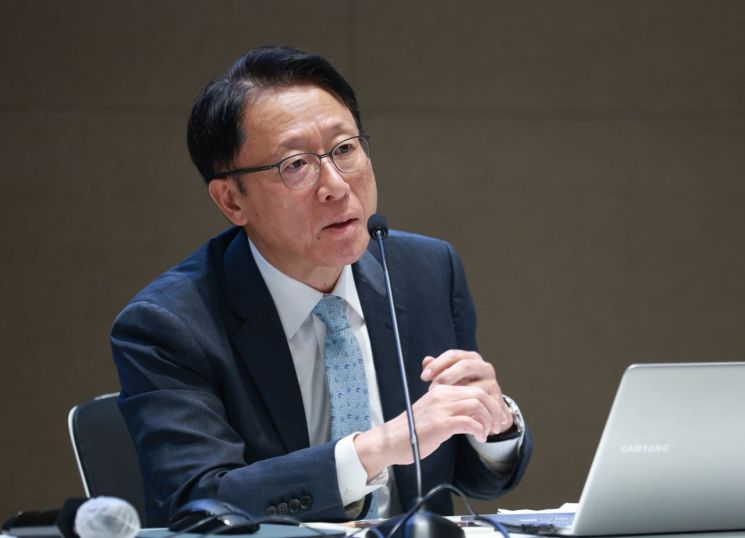
On the 25th, Shin Sung-hwan, a member of the Bank of Korea's Monetary Policy Committee, held a press briefing at the conference hall on the 2nd floor of the Bank of Korea annex building in Jung-gu, Seoul, under the theme "Major Issues Related to Future Monetary Policy," saying, "It is not that we will lower the base interest rate only after housing prices have fully stabilized," and added, "From the domestic demand perspective, there is a need to lower the interest rate."
He continued, "Our country's situation is not relaxed enough to wait until housing prices have clearly slowed down," implying a rate cut within the year.
When asked how the recent big cut in the U.S. (a 0.5 percentage point cut in the base interest rate) would affect next month's rate decision, he said, "The U.S. big cut is a very preemptive move," but added, "Personally, I thought Korea could have lowered rates around July, but because risks such as housing prices were significantly highlighted, preemptive action was not taken."
Regarding criticism that Korea is lowering interest rates quite belatedly, he explained, "From the domestic demand perspective, the rate cut is considered belated," but also said, "However, if the rate cut is made solely based on domestic demand, the risk could spread to an uncontrollable situation."
When asked whether lowering interest rates would improve domestic demand, he said, "Lowering interest rates will definitely help domestic demand," but drew a line by saying, "However, there may be differences of opinion on how much it will improve."
Regarding calls for rate cuts from the Presidential Office and the Korea Development Institute (KDI), he said, "I do not think macroprudential policy and interest rate policy necessarily have to go in the same direction," emphasizing, "The government basically likes to step on the accelerator and rarely applies the brakes, but someone has to apply the brakes when necessary, and that entity is the central bank."
He added, "That is why the independence of the central bank is important," and said, "If the central bank also steps on the accelerator, it would be an uncontrollable situation, so the Bank of Korea, as the risk manager of the Korean economy, sees it as premature to shift fully to the accelerator."
He explained, "I don't know how long this situation will last, but if the weakening of risk factors becomes visible, we will probably move in the same direction."
It is too early to judge that the momentum of housing price increases has been broken... Incentive to consider exchange rates in monetary policy weakens
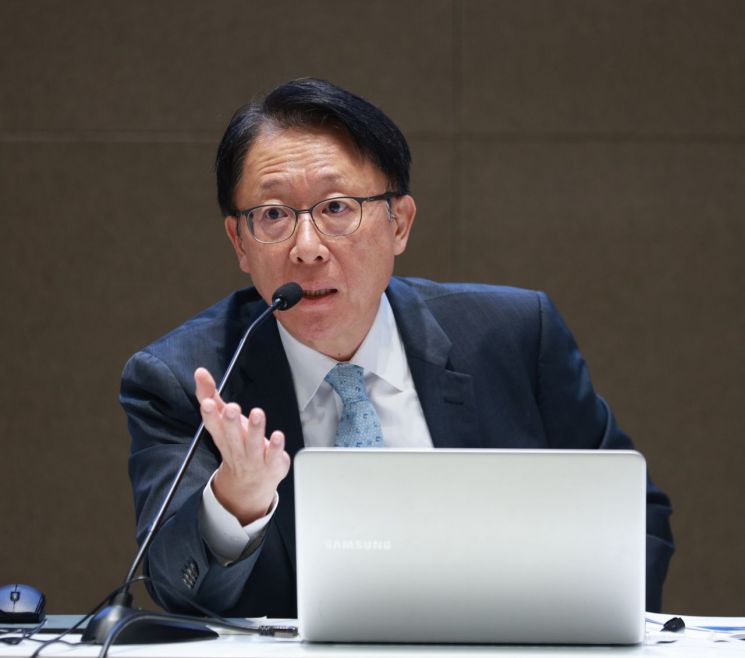
On the same day, Commissioner Shin also shared his views on the housing market and foreign exchange market. He said, "Housing prices rose until August and have recently started to decline, but there remains a question as to whether the decline is a trend reversal," adding, "Basically, once housing prices rise, the market is very likely to continue rising for a considerable period, so although the momentum of price increases in Seoul has recently weakened, it is very recent, so it is difficult to judge that the momentum has been broken based on this alone."
He continued, "The recent speed of apartment price increases in the metropolitan area is similar to the rising periods in 2005 and 2015, increasing the possibility of a housing price bubble," and explained, "If housing prices rise sharply and then fall, problems can occur in all households, so it is risky, and we maintain a stance of watching the situation."
He emphasized, "Monetary policy is a powerful tool that indiscriminately affects economic agents," and said, "Currently, risks are highlighted in the specific area of 'housing,' so it is appropriate to use specialized policies for this area first, and when those do not work, then use interest rate policy."
He added, "Since July, the Monetary Policy Committee has faced more difficulties than expected, and the tough situation continues," and said, "However, since housing has emerged as an important risk factor in interest rate policy, we have applied the brakes for now." He further added, "We need to comprehensively judge by observing the policy capacity and effects of authorities related to housing."
Regarding the recent won-dollar exchange rate, he said, "It is on an upward trend and at historically high levels," adding, "The won-dollar exchange rate is greatly influenced by the U.S. dollar index movements, and especially since 2014, synchronization has intensified."
He assessed that the incentive to consider exchange rates when conducting monetary policy has weakened recently. Commissioner Shin diagnosed, "Considering the scale of foreign exchange reserves and external borrowing conditions, external soundness is good, so the possibility of capital outflows due to changes in financial conditions is low," and added, "At this time of abundant global dollar liquidity, the incentive to consider exchange rates when conducting monetary policy has weakened."
However, he noted, "Regarding the U.S. presidential election on November 5, it is necessary to be cautious about the possibility of increased exchange rate volatility in the short term," and added, "Especially if Trump is elected, tariff policies and geopolitical risks are expected to be highlighted, leading to increased volatility."
© The Asia Business Daily(www.asiae.co.kr). All rights reserved.
![Clutching a Stolen Dior Bag, Saying "I Hate Being Poor but Real"... The Grotesque Con of a "Human Knockoff" [Slate]](https://cwcontent.asiae.co.kr/asiaresize/183/2026021902243444107_1771435474.jpg)

















