Briefing on Pension Reform on the 25th
The Ministry of Health and Welfare announced on the 25th that even if an automatic adjustment mechanism is introduced to the National Pension, recipients will receive more than the insurance premiums they have paid.
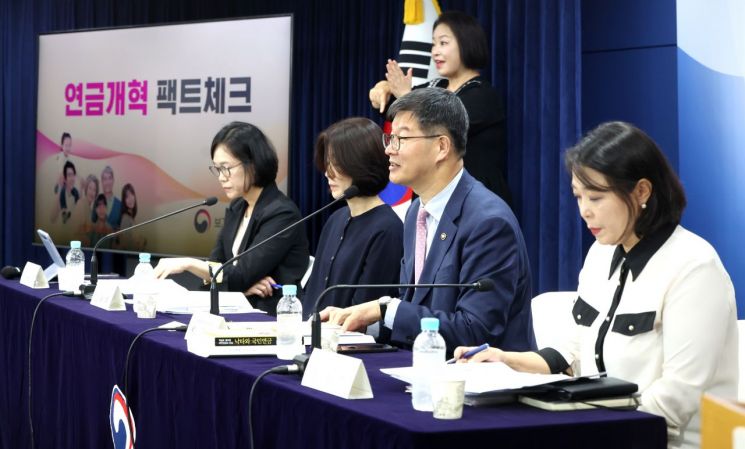
On the 25th, the Ministry held a briefing on pension reform and explained the 'automatic adjustment mechanism' announced on the 4th. The automatic adjustment mechanism is a system that automatically adjusts pension benefits based on the average number of subscribers over the past three years and changes in life expectancy to ensure the financial stability of the National Pension.
The National Pension re-evaluates pension amounts each year according to the consumer price inflation rate to maintain the real value of pensions. For example, if the existing pension is 1 million won per month and the inflation rate is 2%, the pension for the following year increases by 20,000 won (2%) to 1.02 million won. However, if the mechanism is triggered, the increase may be smaller. According to government estimates, an average income earner making 3 million won per month currently receives 356.37 million won (present value as of 2024) over their lifetime under the current system with a 9% insurance premium and a 40% income replacement rate.
However, the Ministry of Health and Welfare stated that it will set a lower limit for the automatic adjustment mechanism. Even if the increase due to inflation is reduced, compared to the existing pension system, recipients would end up receiving less money. The Vice Minister stated that a lower limit will be set so that recipients receive more than what they have paid in premiums.
The Ministry expects that the automatic adjustment mechanism could extend the depletion point of the pension fund up to the year 2088. The Vice Minister said, "If this is not done, all costs will be borne by young people and the youth," adding, "It reduces the pension burden on future generations." Regarding the differentiated speed of premium rate increases by generation, the Vice Minister explained, "It is a measure to resolve the generational gap in premium burdens and benefit payments."
© The Asia Business Daily(www.asiae.co.kr). All rights reserved.

















