If No Active Acts Like Document Forgery Occurred
Bank Employee's Insufficient Review to Blame
Reaffirmation of Existing Supreme Court Position
Even if a ghost company was created for the purpose of transferring an account and a corporate account was opened in the company's name, the Supreme Court has ruled that if the account was issued due to the bank employee's inadequate examination without any active deception such as document forgery by the applicant, the crime of obstruction of business does not apply.
This ruling reaffirms the Supreme Court's previous stance, which judged whether the account opening process was obstructed based on whether the employee conducted sufficient examination assuming the possibility that the documents submitted by the applicant were false.
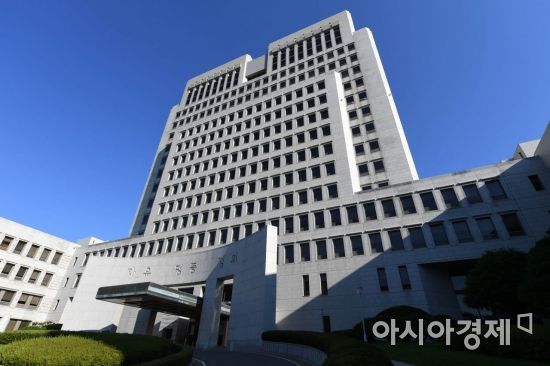
On the 25th, according to the legal community, the Supreme Court's First Division (Presiding Justice Shin Sook-hee) overturned the original sentence that sentenced Yoon Mo (26), who was indicted on charges of obstruction of business, violation of the Electronic Financial Transactions Act, and embezzlement, to one year in prison, and remanded the case to the Seoul Central District Court.
The court stated, "It is highly likely that the opening of the corporate account was due to the insufficient examination by the financial institution's business officer, and therefore, the applicant's deception did not cause the risk of obstruction of business, so it should be considered that the crime of obstruction of business by deception is not constituted."
It added, "Nevertheless, the original court's judgment that found this part of the indictment guilty was made without sufficient investigation, violating the rules of logic and experience, exceeding the limits of free evaluation of evidence, or misunderstanding the legal principles regarding the establishment of obstruction of business by deception, which affected the judgment," explaining the reason for the reversal and remand.
Yoon was indicted for obstructing the bank's business and violating the Electronic Financial Transactions Act by establishing a non-existent company and transferring the company’s account to others after receiving a proposal from an unknown person in May 2022 that "you can make money by selling accounts."
He was also charged with embezzling 4 million won deposited into the account in July of the same year.
The first and second trials found all of Yoon's charges guilty and sentenced him to one year in prison.
However, the Supreme Court ruled that the crime of obstruction of business could not be established against Yoon and overturned the second trial's ruling on the grounds of acquittal for obstruction of business.
The Supreme Court's position is that even if the account opening applicant submits false information regarding the purpose of financial transactions, if the bank employee did not thoroughly verify it, it cannot be considered that the applicant obstructed the bank's business by deception. This judgment takes into account that the qualification examination is based on the premise that the submitted documents may be false.
Previously, in 2004, the Supreme Court stated, "In the work of deciding whether to accept an application only when the applicant meets certain qualifications, it is assumed that the reasons stated in the application may not correspond to the facts. Therefore, if the business officer accepts the false application reasons or false supporting documents submitted by the applicant without sufficient verification, it is due to the business officer's insufficient examination, and the applicant's deception does not cause the risk of obstruction of business, so the crime of obstruction of business by deception is not constituted."
Also, last year, in a case involving the opening of a corporate account as in this case, the Supreme Court ruled, "If the account opening applicant opened a corporate account with the financial institution with the intention to transfer the access medium and falsely stated the purpose of the financial transaction or the intention to transfer the access medium in the deposit transaction application, but the financial institution's business officer in charge of account opening simply believed the false answers in the application without requesting additional verification documents or taking further confirmation measures and opened the corporate account, the account opening is due to the financial institution's insufficient examination, and the applicant's deception does not cause the risk of obstruction of business, so the crime of obstruction of business by deception is not constituted."
In this case, the court stated, "The defendant only took passive actions such as submitting the deposit transaction application form, which is a form prepared in advance by the financial institution, and marking 'explained' on the explanation that transferring the passbook or cash card to others may result in liability for damages and punishment under the Electronic Financial Transactions Act during the process of opening a corporate account."
The court also said, "The documents submitted by the defendant when applying for the corporate account were only business registration certificates, corporate seal certificates, and full certificates of corporate registration, which merely prove the business registration of the company as the account holder or that the company was established according to the Commercial Act and related laws. There is no indication that the financial institution's business officer requested or confirmed additional documents to verify the truthfulness of the financial transaction purpose."
Regarding this matter, the court concluded, "The account opening application form prepared by the defendant when opening the corporate account cannot be considered a document guaranteeing the truthfulness of its contents, and the submitted documents appear to be only the basic documents required for opening a corporate account. They do not verify that the company as the account holder is operating normally or that there is a genuine financial transaction purpose indicating normal operation."
It continued, "In this regard, even if the financial institution's business officer in charge of account opening had conducted appropriate examination procedures such as requesting additional objective documents to verify the truthfulness of the financial transaction purpose stated in the deposit transaction application, there is no special circumstance where the defendant forged or submitted false documents, causing the officer to fail to detect the falsehood and open the corporate account. Therefore, it is difficult to recognize the establishment of the crime of obstruction of business."
© The Asia Business Daily(www.asiae.co.kr). All rights reserved.
![Clutching a Stolen Dior Bag, Saying "I Hate Being Poor but Real"... The Grotesque Con of a "Human Knockoff" [Slate]](https://cwcontent.asiae.co.kr/asiaresize/183/2026021902243444107_1771435474.jpg)
















