The three major indices of the U.S. New York stock market showed a slightly positive trend in early trading on the 24th (local time). With the consumer confidence index falling the most in over three years, investors are taking a wait-and-see approach to the market as they digest messages from Federal Reserve (Fed) officials and key economic indicators throughout the week.
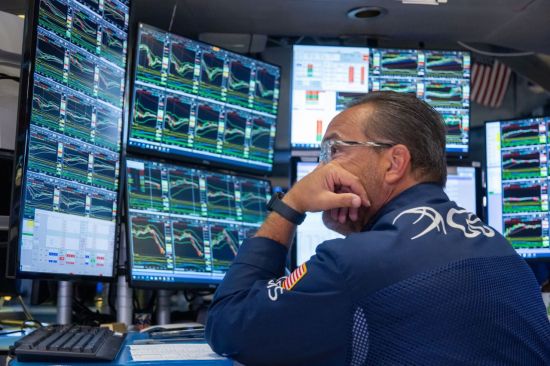
As of 11:12 a.m. in the New York stock market, the Dow Jones Industrial Average, centered on blue-chip stocks, was up 0.35% from the previous trading day, standing at 42,272.61. The S&P 500, focused on large-cap stocks, rose 0.06% to 5722.501, and the Nasdaq Composite, centered on tech stocks, increased 0.09% to 17,989.77.
The Conference Board's consumer confidence index for September was released at 98.7, marking the lowest level in about three years. It fell from 105.6 in the previous month and also missed market expectations of 103.9. Concerns about a slowing U.S. economy caused the stock market to temporarily reverse into a decline.
Quincy Crosby, Chief Global Strategist at LPL Financial, said, "Traders welcomed the large rate cut, but the market is likely to experience increased volatility over the coming weeks. Since stock valuations rose on the Fed's momentum, if signs of a rapid economic slowdown appear, the market will react very sensitively."
Following some Fed officials opening the door to an additional 'big cut' (0.5 percentage point rate cut) the previous day, investors are taking a wait-and-see stance, awaiting messages from other Fed officials and additional economic data due this week. Fed Governor Michelle Bowman expressed concerns about inflation and criticized the Federal Open Market Committee (FOMC) members who implemented the big cut on the 18th, saying they should have taken a more cautious approach to rate cuts. Bowman was the only dissenting voice against the big cut, arguing that a 0.25 percentage point rate cut was appropriate at the time.
This week, public remarks are also scheduled from Fed Chair Jerome Powell, Fed Governor Adriana Kugler, and Fed Governor Lisa Cook. Investors are expected to digest these additional comments from Fed officials to seek clues about the scale and pace of future rate cuts.
Among investors, there is a split between expectations of a 25 basis point cut and a 50 basis point cut at the next FOMC meeting. According to the Chicago Mercantile Exchange (CME) FedWatch tool, the federal funds futures market currently reflects a 52.6% probability of a 0.25 percentage point rate cut and a 47.4% probability of a 0.5 percentage point cut at the regular November FOMC meeting.
Other economic indicators will also be released consecutively this week. The August Personal Consumption Expenditures (PCE) price index, the Fed's most closely watched inflation gauge, will be released on the 27th. It is expected to provide further evidence of easing inflation, supporting the big cut on the 18th. Market forecasts suggest the PCE price index rose 0.1% month-over-month and 2.3% year-over-year in August. Notably, the year-over-year increase is expected to be the smallest since early 2021. One day earlier, on the 26th, the final figure for U.S. second-quarter real Gross Domestic Product (GDP) growth will be released. It is expected to show a 3% annualized growth rate, more than double the 1.4% growth in the first quarter, consistent with the preliminary estimate.
By stock, Chinese shares are strong due to large-scale economic stimulus announcements such as reserve requirement ratio cuts and interest rate reductions. JD.com is up 10.1%. Alibaba Group is up 6.56%. PDD Holdings and Baidu are up 9.2% and 5.69%, respectively. Tesla is also rising, up 1.3% following a 4.93% jump the previous day after forecasts that its third-quarter electric vehicle deliveries will exceed market expectations.
Government bond yields are rising. The U.S. 10-year Treasury yield, a global bond yield benchmark, rose 6 basis points to 3.8% compared to the previous trading day, while the 2-year Treasury yield, sensitive to monetary policy, increased 4 basis points to around 3.61%.
International oil prices are strong. West Texas Intermediate (WTI) crude oil rose $1.84 (2.6%) to $72.21 per barrel, and Brent crude, the global oil price benchmark, increased $1.76 (2.4%) to $75.66 per barrel. Expectations of increased demand due to China's economic stimulus, heightened instability in the Middle East, and supply concerns from a U.S. hurricane landfall are combining to push oil prices higher.
© The Asia Business Daily(www.asiae.co.kr). All rights reserved.

















