It has been over three years since the immune checkpoint inhibitor Imfinzi was approved as a first-line treatment for cholangiocarcinoma, but it still has not been covered by the National Health Insurance. Meanwhile, a petition from a patient’s guardian demanding rapid insurance coverage has emerged.
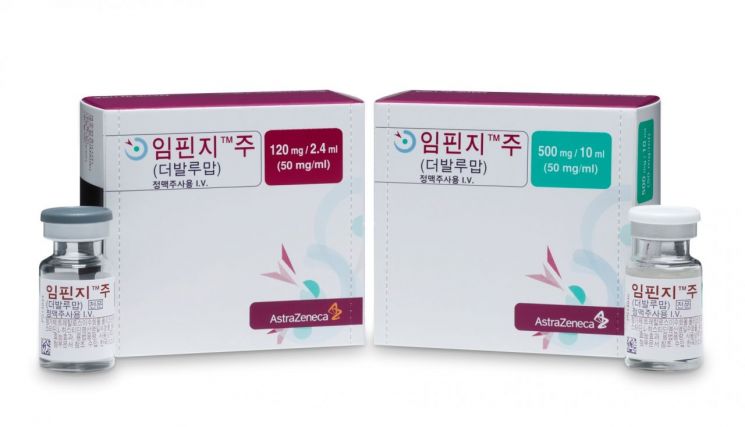
A petitioner, who identified themselves as the child of a 55-year-old patient with stage 4 intrahepatic cholangiocarcinoma, recently submitted a petition on the National Assembly’s electronic petition platform requesting the prompt inclusion of Imfinzi for cholangiocarcinoma under insurance coverage. They emphasized that "Imfinzi saved my mother," adding, "My mother is surviving healthily thanks to Imfinzi treatment, but the treatment cost burden of about 10 million KRW per month is enormous." They appealed, "Insurance coverage for Imfinzi is urgently needed so that my mother and other domestic cholangiocarcinoma patients can survive healthily for a long time." As of the 24th, the petition had received 3,025 signatures.
The petitioner stated, "When I looked up cholangiocarcinoma, I found only bleak information that even after starting treatment, the life expectancy is only about eight months." They continued, "I learned about the immune checkpoint inhibitor Imfinzi, and although my mother was about to give up treatment due to financial reasons, I started treatment based on private insurance to avoid regrets." They added, "It has now been eight months, and my mother has surpassed the expected life expectancy and is by my side in good health." However, since the cost of Imfinzi is not covered by insurance, they have had to pay about 10 million KRW monthly for treatment, and as of September, they have exhausted their private insurance limits, making it difficult to afford further treatment.
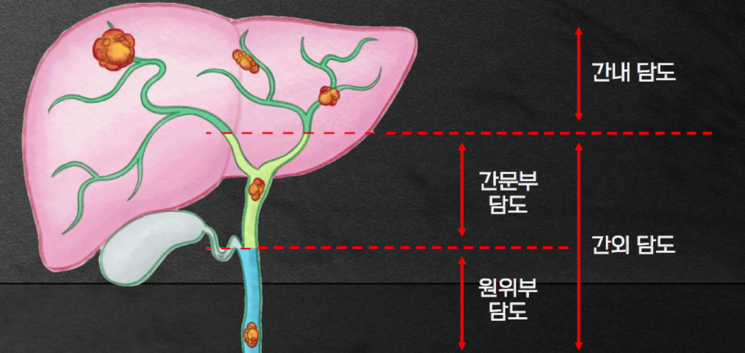
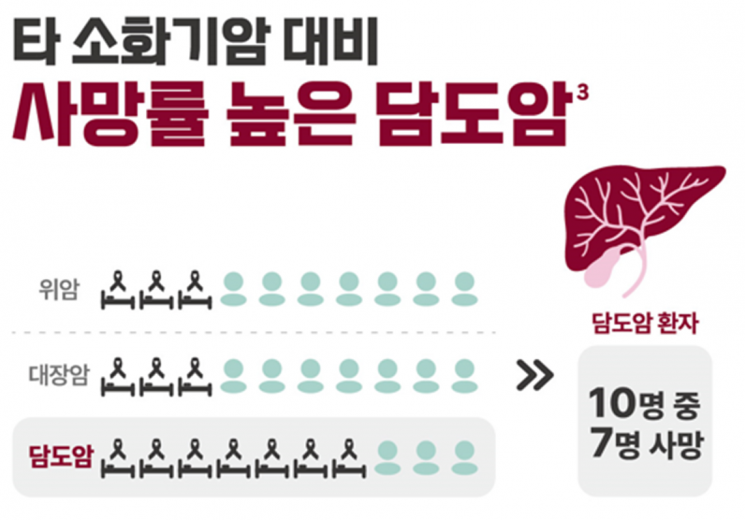
Cholangiocarcinoma is known to have a poor prognosis due to the anatomical characteristics of the bile ducts, which resemble thin branches extending across the liver and duodenum. Moreover, because there are no symptoms that raise suspicion of cancer in the early stages, 7 out of 10 cholangiocarcinoma patients are diagnosed at an advanced stage where surgery is no longer possible or metastasis has occurred, so-called 'terminal' stage.
As a result, unlike other cancers in Korea where treatment environments have steadily improved and patient survival rates have rapidly increased, the mortality rate for cholangiocarcinoma remains among the lowest worldwide. The domestic mortality rate for cholangiocarcinoma is 11.64 per 100,000 patients, ranking first globally. The 5-year relative survival rate (the survival rate of cancer patients compared to the general population) is also only 28.9%, about one-third of the 72.1% for all cancer patients.
Imfinzi, an immune checkpoint inhibitor developed by AstraZeneca (AZ), is the first immune checkpoint inhibitor to demonstrate efficacy in patients with advanced cholangiocarcinoma. It is a newly introduced treatment option after 12 years in cholangiocarcinoma, where chemotherapy (gemcitabine and cisplatin combination therapy) was previously the only treatment alternative.
In the phase 3 clinical trial 'TOPAZ-1,' adding Imfinzi to standard chemotherapy resulted in an overall survival rate of 24.9% at the two-year mark, which is 1.5 times higher than the 10.4% survival rate with chemotherapy alone. Furthermore, recent three-year overall survival follow-up results confirmed a more than twofold difference, with 14.6% versus 6.9%.
Based on these results, Imfinzi was approved by the U.S. Food and Drug Administration (FDA) in September 2022 and subsequently approved by the Korean Ministry of Food and Drug Safety in November as a combination therapy for cholangiocarcinoma. It also received approval last June for dual immune checkpoint inhibitor therapy with Imjudo for liver cancer. However, the application of National Health Insurance coverage for Imfinzi has faced difficulties. Although coverage was applied for last year regarding cholangiocarcinoma, only chemotherapy was covered despite Imfinzi being a combination drug, and the costly Imfinzi treatment remained uncovered. Korean AZ reapplied for insurance coverage review for cholangiocarcinoma and liver cancer indications in June.
Currently, Imfinzi combination therapy for cholangiocarcinoma patients is covered by insurance in major countries worldwide, including the United States, the United Kingdom, Japan, Germany, and Australia. Additionally, at the 2024 European Society for Medical Oncology (ESMO) conference held recently in Barcelona, Spain, the Pan-Asian cholangiocarcinoma patient guidelines were announced, strongly recommending this therapy as a first-line treatment for advanced cholangiocarcinoma and emphasizing the need for rapid insurance coverage.
© The Asia Business Daily(www.asiae.co.kr). All rights reserved.
![Clutching a Stolen Dior Bag, Saying "I Hate Being Poor but Real"... The Grotesque Con of a "Human Knockoff" [Slate]](https://cwcontent.asiae.co.kr/asiaresize/183/2026021902243444107_1771435474.jpg)


















