Gallery Representative and Two Others Detained, 11 Referred Without Detention
Fourteen members of a group, including the gallery representative of an art investment fraud company that swindled 90.5 billion won from about 1,000 victims under the guise of 'Art Tech,' have been arrested by the police.
On the 24th, the Financial Crime Investigation Unit of the Seoul Metropolitan Police Agency announced that they had arrested three people, including Jeong Mo, a man in his 40s and the representative of Gallery A, on charges of fraud and violation of the Act on the Regulation of Conducting Fund-Raising Business without Permission. Additionally, 11 others, including sales managers, were sent to prosecution without detention, and 12.2 billion won of criminal proceeds were seized and preserved before indictment.
According to the police, the suspects recruited investors through internet advertisements, deceiving them by saying, "If you purchase artwork and consign it to the gallery for safekeeping, we will pay a 1% monthly royalty and guarantee the principal," and received 90.5 billion won from 1,110 victims.
Art Tech is a compound word of art and finance and is known as a recently spotlighted investment method. The group, including Mr. B, exploited this point to reassure victims that it was a safe financial investment method, resulting in large-scale damages. The number of artworks fraudulently sold by them reached about 4,000.
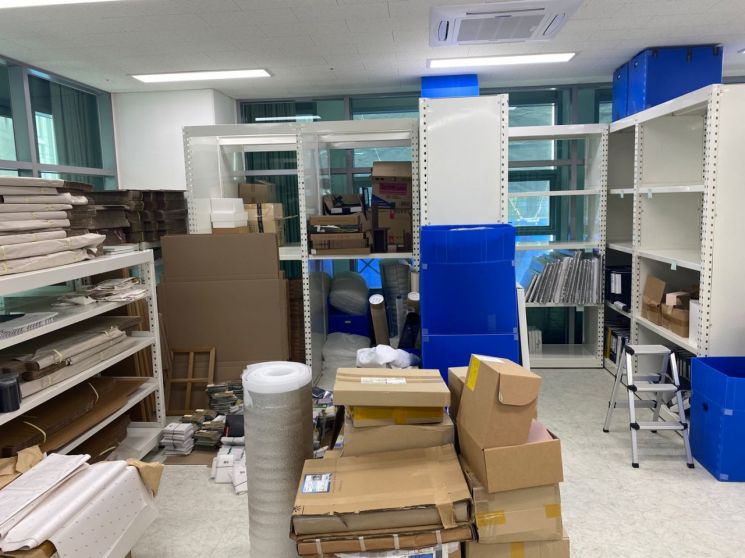
Jeong and his group took advantage of the loophole that artworks were consigned to the gallery immediately upon purchase, and most buyers neither received nor verified the actual items. They obtained images of works in file form from artists who had no significant income and deceived investors into believing these were actual paintings held by the gallery.
The money sent by the victims was used for Jeong’s personal business expenses, allowances for the suspects, and luxury consumption. The principal and royalties owed to investors were paid using funds from new customers in a Ponzi scheme format.
In particular, Jeong’s group coerced artists into making ordinary works appear as high-priced pieces, thereby obtaining large-scale investments from victims. They inflated the prices of artworks by creating false price verification documents such as per-piece price certificates issued by the Korea Fine Arts Association or fake 'invoices.'
Police investigations confirmed that the artists of the artworks used in the crimes were not involved in the criminal activities. The police judged that the artists only provided photographs of their works and were unaware that the artworks were being sold.
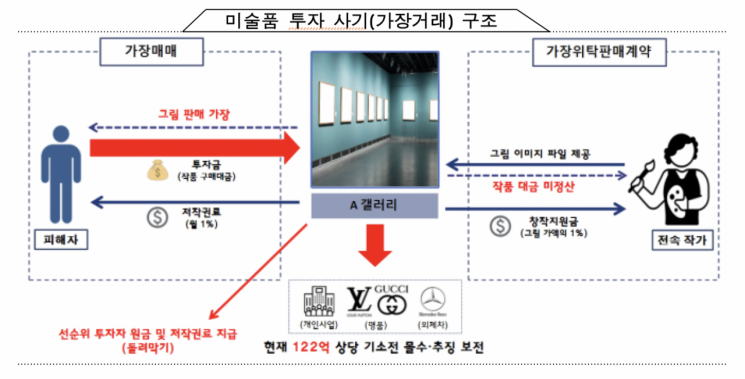
In February, the police consolidated 91 cases reported nationwide, including in Gwangju and Taean County, Chungnam Province, and conducted raids on seven locations including galleries, storage facilities, and residences. They investigated 30 related persons, including the suspects and exclusive artists. During this process, luxury watches and bags worth tens of millions of won found at the suspects’ homes were seized, and through account tracing, 12.2 billion won of criminal proceeds were preserved before indictment.
A police official advised, "If you approach art solely for investment purposes, it can be risky, so you must verify whether the actual artwork exists and confirm the authenticity of price certificates." He added, "It is safer to invest after appraisal by experts or institutions." He emphasized, "Especially if there is a place recruiting investors by boasting higher returns than commercial bank interest rates and guaranteeing the principal, you should approach it cautiously."
© The Asia Business Daily(www.asiae.co.kr). All rights reserved.


















