Different from Small Shareholders with Chaebol Interests
Passive in Boosting Stock Prices Due to Inheritance Tax Burden
An analysis has emerged that South Korea's stock market structure, centered on conglomerates, is a factor hindering the resolution of the 'Korea Discount.'
Jackie Wong, a columnist for The Wall Street Journal (WSJ), presented this view in a column titled "South Korea Faces Limits in Imitating Japan's Market Reforms" on the 23rd (local time).
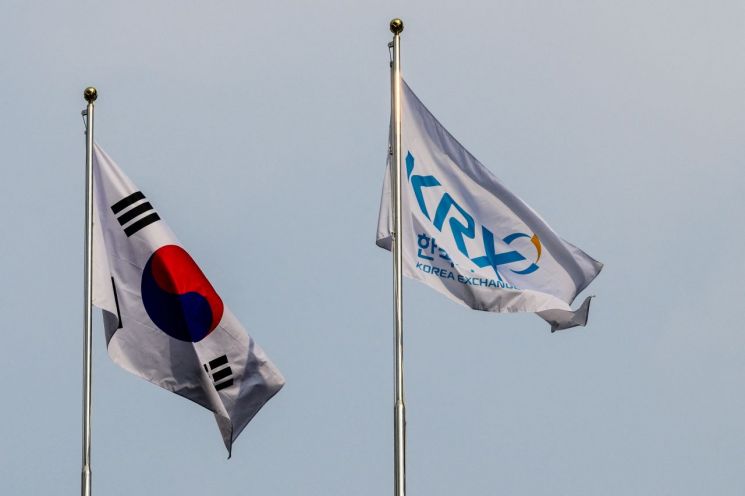
Wong pointed out that the South Korean government has been promoting a shareholder-friendly corporate value-up program since February. The government believes that the main cause of the Korea Discount lies in Korea's stingy shareholder return policies and has started benchmarking Japan's successful cases. The Korea Exchange will disclose today (24th) the constituent stocks and selection criteria of the 'Korea Value-Up Index,' inspired by Japan's JPX Prime 150 Index.
Japan's stock market revitalization through corporate value-up programs is regarded as a model case. Japan's comprehensive stock index, TOPIX, has risen 40% since the end of 2022, and this rally is evaluated to have been underpinned by Japan's corporate governance improvement and shareholder return enhancement policies initiated in 2014. During the same period, South Korea's KOSPI rose only 16%.
Wong also saw that South Korea's corporate value-up program has achieved some results. He stated, "So far this year, the scale of share buybacks excluding Samsung Electronics has already exceeded twice that of last year," and added, "In particular, financial companies have actively engaged in share repurchases and cancellations." Share buybacks and cancellations are considered representative shareholder return policies along with dividends because they increase the value of existing shareholders' equity.
However, Wong predicted, "Since conglomerates ultimately dominate Korea's economy and stock market, with Samsung Group accounting for 20% of the KOSPI, although improvements in returns can be expected through the corporate value-up program, the influence of conglomerates like Samsung and Hyundai will limit the extent of stock price increases." He pointed out that conglomerate groups, which exert strong influence over the business and political sectors, have little incentive to relinquish their interests for the overall stock market revitalization.
Wong emphasized, "The interests of conglomerate families ruling corporate empires generally do not align with those of minority shareholders," and added, "Especially due to Korea's high inheritance tax rates, conglomerate families may not want to boost stock prices." He further argued, "Unlike Japan, Korean conglomerates have maintained control through complex corporate structures such as cross-shareholdings," and "It will not be easy for the government to pressure conglomerates to dismantle these governance structures."
© The Asia Business Daily(www.asiae.co.kr). All rights reserved.

















