Seoul City-People Power Party Budget Policy Meeting Held
Realizing National Fiscal Support... Addressing Livelihood and Safety
Revising National Heritage Regulations and Improving Preliminary Feasibility Study System
On the 23rd, Seoul Mayor Oh Se-hoon met with key officials of the People Power Party to request an expansion of national treasury support for major Seoul city policies. These issues, including the improvement of aging subway infrastructure and the expansion of rental housing supply, are directly related to the lives and safety of citizens. Mayor Oh plans to strengthen cooperation with the party to enhance urban competitiveness.
Seoul City announced that it held the 'Seoul City-People Power Party Regional Livelihood Budget Policy Council' at the National Assembly Main Building in the afternoon, where Mayor Oh made these requests to party officials.
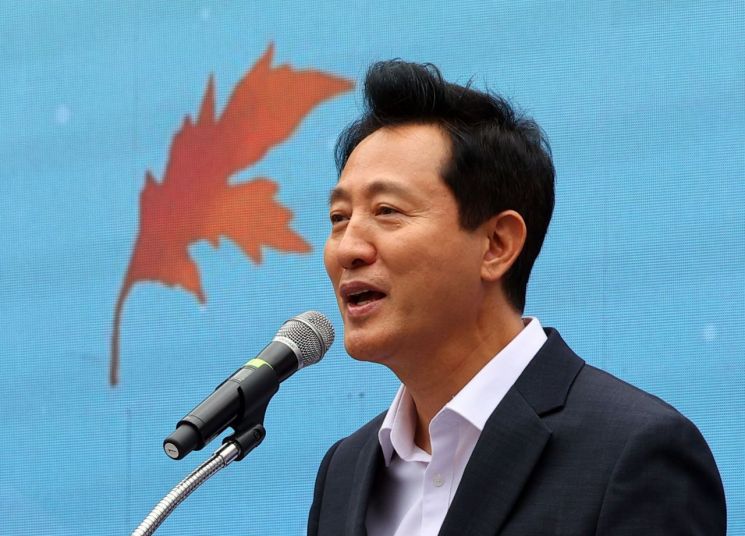
The 'Seoul City-People Power Party Regional Livelihood Budget Policy Council' is a forum where the Seoul Mayor and key party officials, including the People Power Party floor leader, discuss major Seoul issues and requests for national treasury support.
This budget policy council was held for the first time since the launch of the 22nd National Assembly, attended by key officials such as Floor Leader Choo Kyung-ho, Policy Committee Chairman Kim Sang-hoon, National Assembly Budget and Accounts Committee Secretary Gu Ja-geun, as well as Mayor Oh and other senior Seoul city officials. The council proceeded with explanations of Seoul City's requests for national treasury support and major administrative issues, followed by discussions between attending lawmakers and Seoul city officials chaired by Floor Leader Choo.
At this meeting, Seoul City strongly requested an expansion of national treasury support for a total of nine projects directly related to citizens' lives and safety, including the improvement of aging subway infrastructure, expansion of rental housing supply, and low birthrate countermeasures. These include ▲public transportation cost support (Climate Companion Card, K-Pass) ▲reinvestment in aging subway facilities ▲long-term lease housing supply ▲maintenance of deteriorated sewage pipelines ▲compensation for legal free rides on urban railroads ▲realistic adjustment of public construction rental housing support standards ▲realistic adjustment of multi-family purchase rental business support standards ▲support for wages of childcare staff at national and public daycare centers ▲and the Regional Innovation-centered University Support System (RISE).
Currently, despite Seoul having the second-highest per capita local tax burden after Jeju Province, its per capita budget ranks only 14th, indicating insufficient resource replenishment. Accordingly, Mayor Oh has repeatedly requested the government to realize financial support and improve the national treasury subsidy rate, considering the responsibility of local governments at the forefront of responding to the livelihood crisis.
For example, in the case of the 'K-Pass project' proposed this time, the national treasury subsidy rate is 50% for other cities and provinces, but only 40% for Seoul. Similarly, the aging deteriorated sewage pipeline maintenance project receives 30% support in metropolitan cities (60% in other cities and provinces), but Seoul receives no support at all.
Meanwhile, besides national treasury support, Mayor Oh also sought active interest and cooperation from the party on major issues to strengthen urban competitiveness and realize a citizen-centered 'Companion and Attractive Special City,' including ▲revision of regulations and laws related to national heritage ▲relaxation of statutory local tax transfers to education offices ▲improvement of preliminary feasibility study systems for balanced development of railway-deprived and underdeveloped areas ▲enhancement of effectiveness in video record management at private construction sites ▲and improvement of social security consultation systems for low birthrate policies.
© The Asia Business Daily(www.asiae.co.kr). All rights reserved.
![Clutching a Stolen Dior Bag, Saying "I Hate Being Poor but Real"... The Grotesque Con of a "Human Knockoff" [Slate]](https://cwcontent.asiae.co.kr/asiaresize/183/2026021902243444107_1771435474.jpg)
















