Trade Association Interviews Korean Companies Entering China
"Slow to Respond to Changes... Urgent Need to Strengthen Localization Strategy"
"China now surpasses South Korea in almost all industries except semiconductors."
This statement from a Korean entrepreneur active in China vividly reflects the sense of crisis felt locally. In a recent in-depth interview conducted by the Korea International Trade Association with about 30 Korean businesspeople operating in China, they emphasized that "the rapid growth and innovation of Chinese companies pose a serious threat to Korean industries." Amid the COVID-19 pandemic and the US-China conflict, China has accelerated technological innovation and industrial growth, surpassing or reaching parity with South Korea.
Entrepreneurs from various sectors including automobiles, parts, batteries, petrochemicals, aviation, distribution, gaming, bio, and finance shared vivid voices about the rapidly changing environment they experience in China and the crisis facing Korean industries. They noted, "While 60-70% of people in China recognize the sense of crisis due to China's rise, only 30-40% do so in Korea."
China Overwhelms with Technology and Speed... South Korea Tied Down by Strict Regulations
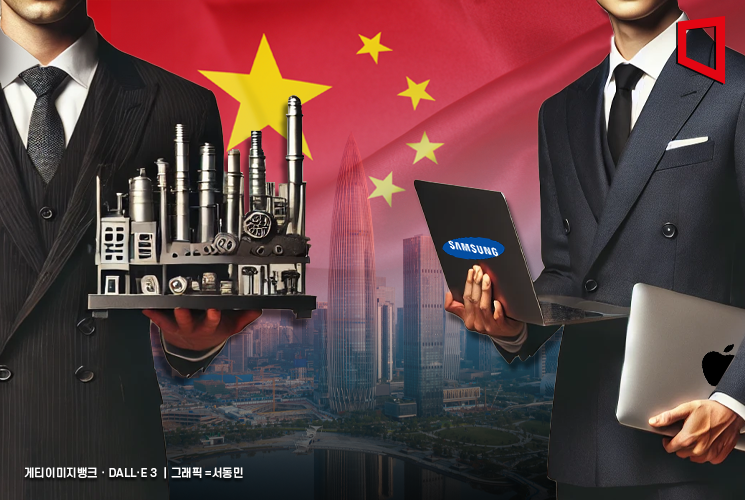
A head of a car parts company said, "In China, even if the technological completeness is only 70-80%, products are immediately launched into the market, and technology improvements are made based on market feedback," adding, "In Korea, strict regulations cause delays in market preemption and innovation." According to local entrepreneurs, in the case of autonomous vehicles, while US company Tesla operates robo-taxis in some regions of China, domestic companies cannot conduct test drives in China due to the absence of data systems and restrictions on data transfer, making it impossible to utilize Korean centers.
An executive in the automobile industry said, "In China, many companies are created and dissolved with direct government support, and about 90% of them fail to produce finished cars and are liquidated," adding, "Nevertheless, the remaining 10% of companies absorb the technologies and skilled personnel of these firms, and with concentrated government support, industrial development accelerates." A head of a car parts company said, "Chinese electric vehicle and battery company BYD changes 5-6 suppliers for each part every six months based on delivery costs to reduce expenses."
An executive in the petrochemical industry said, "There is even talk that Korean conglomerates are no bigger than unknown startups or small and medium-sized enterprises in China," adding, "The growth speed of Chinese companies is so fast and the industrial ecosystem so densely established that competition is becoming increasingly difficult."
One factor enabling the rapid growth of Chinese companies is a flexible work environment and fast decision-making. A culture has been established where employees voluntarily work overtime if adequately compensated. Most Chinese IT companies finish work around 11 p.m. Although there are legal working hours, employees work as long as they are paid. Overtime pay is 150% for daily extra hours, 200% on weekends, and 300% on holidays.
An executive in the electronics industry said, "Chinese companies innovate very quickly based on active government support and flexible organizational culture." He added, "In China, the basic working time is 40 hours per week, with a maximum of 36 hours of overtime per month plus additional hours, allowing up to 150 hours per week." An automobile industry executive said, "If compensated, employees can work through the night for several weeks, focusing intensely on their tasks," adding, "As work speeds up, innovative ideas are immediately realized."
On the other hand, South Korea faces difficulties in rapid response due to strict labor hour regulations and labor-management consultation processes. A manufacturing industry official said, "Even small changes require consultation with labor unions in Korea, which takes a lot of time," adding, "During that time, market opportunities are often missed."
The Chinese government's industrial promotion strategy also plays a significant role. In new technology fields, initial regulations are minimized, and regulations are introduced only when the market matures or side effects appear. A bank's China branch head said, "The Chinese government does not regulate advanced industries such as all-solid-state batteries and semiconductors until the technology and industry mature, intervening only when the market matures or side effects occur," adding, "This helps promote growth in new industrial sectors."
Korean Companies Need Localized Response Strategies
Local entrepreneurs emphasized that Korean companies need organizational culture innovation, establishment of rapid decision-making systems, and strengthened localization strategies to respond to the changing market environment.
They also suggested that the government should support companies through accurate information collection and analysis and expand high-level exchanges with China to explore cooperation measures.
One entrepreneur said, "We are told to widen the technological gap with China, but except for semiconductors, we are actually falling behind, so this is an inappropriate response," adding, "It is important to invest effectively in China-related research and development (R&D)."
An executive of an aviation company’s China branch said, "Chinese companies flexibly adjust prices according to demand changes, but in Korea, bureaucratic decision-making processes and prejudice against China cause delays of several months," adding, "In short, we are failing to respond to environmental changes."
The Korea International Trade Association plans to prepare a report based on this interview and hold a related forum at the end of November to continue in-depth discussions.
© The Asia Business Daily(www.asiae.co.kr). All rights reserved.


















