Shine Muscat Export to China Drops from 22% to 3%
Competitiveness Declines as China Increases Domestic Production
Once known as the "noble fruit" among China's high-income class and enjoying great popularity, Korean Shine Muscat grapes are rapidly losing sales to Chinese-grown grapes.
On the 22nd, Yonhap News reported that the reason for the decline in sales of Korean Shine Muscat grapes in China is due to increased domestic production and improved quality in China, which has caused Korean grapes to lose their competitiveness. According to export-import statistics from the Korea Customs Service, the value of grapes exported from Korea to China last year was $1.38 million (approximately 1.84 billion KRW). This is a 49% decrease compared to the previous year ($2.73 million). In particular, the share of China in total Korean Shine Muscat exports plummeted from 22% in 2021 to 3% last year.
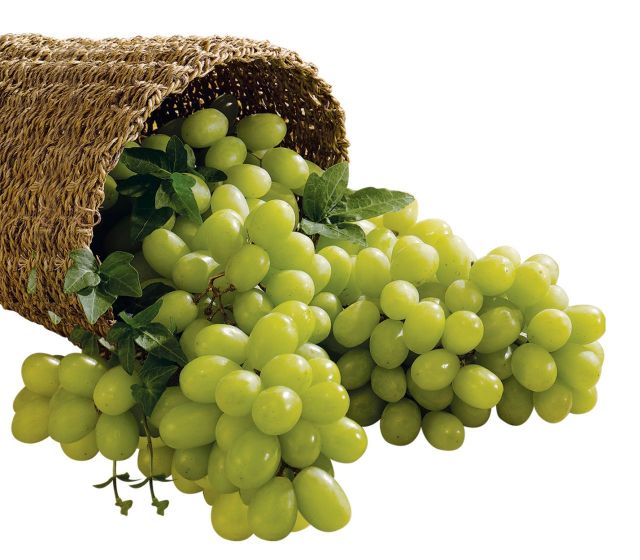
Korea's grape export value to China was less than $100,000 until 2017. However, it surged more than 16 times in one year to $1.62 million in 2018 and peaked at $8.34 million (approximately 11.1 billion KRW) in 2021. But compared to 2021, grape export value has sharply declined to about one-sixth in just two years.
Among all grapes exported from Korea last year, Shine Muscat accounted for 91%, making up the majority. The reason Korean Shine Muscat was popular in China was due to its high quality. Although Korean Shine Muscat was priced several times higher than Chinese grapes, its superior quality attracted mainly affluent consumers. However, as more farms in China are cultivating premium and first-grade Shine Muscat grapes, Korean Shine Muscat is losing its position. Hwang Ui-chang, head of the Korea Grape Export Association, told Yonhap News, "Currently, Korean Shine Muscat holds only an 8% market share in China's premium market, with most being Chinese-grown. Some of the grapes produced in Shandong Province even surpass the quality of ours."
According to Chinese local media, the cultivation area of Shine Muscat in China was 1.2 million mu (approximately 800 km²) as of last year. This is 60 times larger than in 2013, over ten times the size of Korea's cultivation area. Until a few years ago, Shine Muscat in China was priced as high as 300 yuan (about 57,000 KRW) per 500g. However, with the explosive increase in production recently, prices have plummeted to 10 yuan (about 1,900 KRW), which is one-thirtieth of the previous peak price. Additionally, the increase in production and a contraction in Chinese consumption appear to have contributed to the reduced demand for Korean Shine Muscat.
However, Korea's total grape export value decreased from $3.86 million in 2021 to $3.43 million in 2022, then rose again to $4.61 million last year. Taiwan has emerged as the largest market for Korean Shine Muscat, replacing China. Korean grapes exported to Taiwan last year were worth $10.68 million (approximately 14.3 billion KRW), a 20-fold increase compared to $510,000 in 2021. During the same period, Taiwan's share of Korean grape exports rose from 1.4% to 24%.
Shine Muscat, originally from Japan, has become one of the representative grape varieties in Korea since the 2010s, enjoying widespread popularity. However, concerns are emerging domestically about overproduction and price crashes due to the Shine Muscat cultivation boom. The price of Korean Shine Muscat sold in overseas markets such as Southeast Asia is roughly between that of Japanese and Chinese Shine Muscat grapes.
© The Asia Business Daily(www.asiae.co.kr). All rights reserved.

















