Release agreement difficult and Hamas uncooperative
"Waiting until the presidential election ends"
The United States has been actively coordinating ceasefire negotiations between Israel and Hamas over the Gaza Strip war for several months, but opinions are spreading that a negotiation settlement within President Joe Biden's term is impossible.
On the 19th (local time), The Wall Street Journal (WSJ) reported that senior Biden administration officials unofficially acknowledged this.
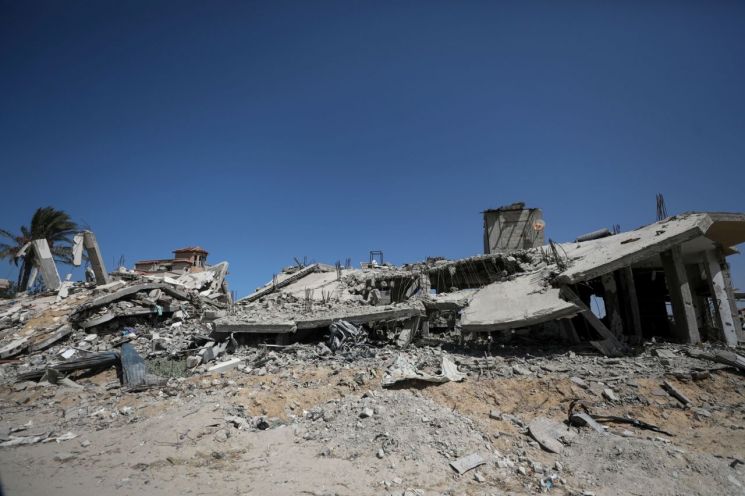
The Biden administration previously stated that Israel and the Palestinian armed faction Hamas had agreed 90% on a ceasefire negotiation. However, among senior officials at the White House, State Department, and Department of Defense, the prevailing view is that Israel and Hamas will not agree to the current negotiation proposal. One official told WSJ, "No negotiations are imminent," adding, "In the end, I’m not even sure if (the ceasefire) will happen."
President Biden, whose term expires in January next year, aims to make a ceasefire between Israel and Hamas in the Gaza war a major achievement before stepping down, but the current negotiations are stalled.
There are two main reasons why senior Biden administration officials view the possibility of a negotiation settlement within the term negatively. First, Palestinian prisoners must be released in exchange for the release of Israeli hostages kidnapped by Hamas, but there is no agreement on the number of Palestinian prisoners to be released. To make matters worse, a wireless pager and radio explosion attack targeting Hezbollah, the pro-Iran armed faction in Lebanon, has occurred, increasing the possibility of a full-scale war and making negotiations between Israel and Hamas more distant.
Hamas’s attitude is also an obstacle to negotiations. Even after the United States and Israel accepted the demands Hamas presented during the negotiation process, Hamas changed its stance again. Due to this attitude, voices from the U.S. side say Hamas is not serious about the ceasefire negotiations. Some also point out that Israeli Prime Minister Benjamin Netanyahu is not actively negotiating to appease conservative forces within his right-wing coalition.
Some U.S. officials believe that since President Biden has only a few months left in his term, a breakthrough between Israel and Hamas can still be made.
However, considering these circumstances, the dominant view is that the ceasefire negotiations are likely to be postponed until after the next president takes office. A Middle Eastern official involved as a mediator in the ceasefire negotiations said, "Everyone is waiting until the U.S. presidential election is over. It will be decided by the next administration," adding, "There is no possibility of (a negotiation settlement) happening now."
However, there are also criticisms about postponing the negotiations to the next administration. One official said, "(Giving up on an agreement) is irresponsible," and emphasized, "Leadership and compromise are needed."
© The Asia Business Daily(www.asiae.co.kr). All rights reserved.