Market Research Firm TrendForce Forecast
"Impact of Edge AI Wafers and Cloud AI Expansion"
With the advent of the artificial intelligence (AI) era and the recovery of the semiconductor supply chain, the foundry (semiconductor contract manufacturing) market value is expected to grow by 20% by 2025.
On the 19th, market research firm TrendForce forecasted that the annual growth rate of the foundry market will rise from 16% this year to 20% next year. TrendForce explained, "This positive outlook comes amid a situation where component manufacturers are adopting conservative inventory strategies due to weak demand for consumer products, and the average foundry utilization rate this year is expected to fall below 80%." They added, "Factors such as increased wafer consumption per unit driven by edge AI and the continuous expansion of cloud AI infrastructure will drive foundry market growth next year."
Foundry orders next year are expected to remain at a similar level to this year. However, as inventory levels of parts for automobiles, industrial control, and general-purpose servers gradually return to normal this year and restocking resumes next year, the utilization rate of mature foundry processes is expected to increase by 10 percentage points, surpassing the 70% mark.
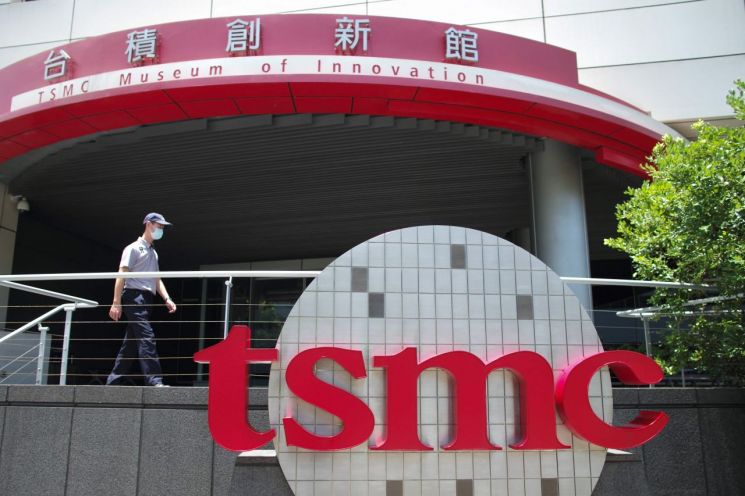
Above all, Taiwan's TSMC, which holds the number one position in the foundry industry, is likely to show revenue growth exceeding the industry average through advanced processes and packaging. While other foundry companies excluding TSMC still face constraints from consumer end demand, TSMC's constraints are considered minimal.
TrendForce stated, "TSMC's revenue growth rate next year is expected to reach 12%, attributed to healthy component inventories of integrated device manufacturers (IDMs) and fabless semiconductor design customers across various sectors, power demand driven by cloud and edge AI, and the low base effect from this year." They also predicted that the 3-nanometer (nm; one billionth of a meter) process, which has been in the capacity expansion phase for the past two years, will become mainstream for flagship PC central processing units (CPUs) and mobile application processors (APs) next year.
Currently, the 3-nanometer process is known as the most advanced technology in foundries, with only TSMC and Samsung Electronics mass-producing it. However, TrendForce pointed out that economic uncertainties, the potential impact of high costs on AI deployment intensity, and increased capital expenditures due to capacity expansion plans could pose risks to the foundry market.
© The Asia Business Daily(www.asiae.co.kr). All rights reserved.
![Clutching a Stolen Dior Bag, Saying "I Hate Being Poor but Real"... The Grotesque Con of a "Human Knockoff" [Slate]](https://cwcontent.asiae.co.kr/asiaresize/183/2026021902243444107_1771435474.jpg)
















