Poor Charging Infrastructure Compared to Electric Vehicle Adoption Rate
Shortage of Chargers... Increased Waiting Times
Even Scarcer Electric Vehicle Chargers for Transportation-Disadvantaged Users
While the domestic electric vehicle (EV) adoption rate continues to increase, the charging infrastructure is found to be significantly insufficient.
According to data submitted by the Korea Expressway Corporation to the office of Ahn Tae-jun, a member of the National Assembly Land, Infrastructure and Transport Committee from the Democratic Party of Korea, as of last month, there were a total of 1,287 EV chargers operating at 220 highway rest areas and shelters nationwide. This means that one charger must serve 494 electric vehicles. Considering the cumulative number of EVs in the country reached 635,847 last month, according to the Korea Automobile Mobility Industry Association (KAMA), EV owners complain that chargers are severely lacking.
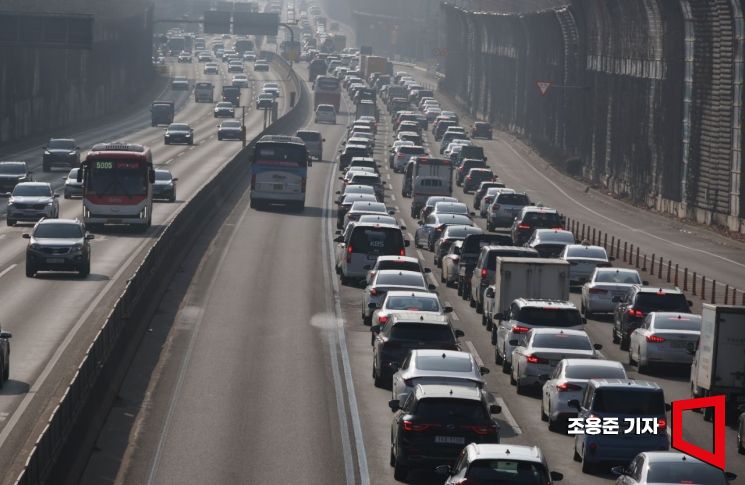 On the 8th, one day before the Lunar New Year holiday, the full-scale homecoming battle began as vehicles crowded the southbound lanes toward Busan on the Seoul Gyeongbu Expressway, causing traffic congestion. Photo by Jo Yongjun jun21@
EV drivers usually charge their vehicles as much as possible before entering the highway, but during long traffic jams such as those on holiday return trips, they feel anxious about unexpected situations. Due to the shortage of chargers, waiting times for charging inevitably become longer.
Chargers designed to accommodate transportation-vulnerable groups are even more insufficient. Among the 220 rest areas and shelters nationwide, only 45% (100 locations) have such chargers installed, totaling just 312 units. These chargers for transportation-vulnerable users feature lowered charging cables and monitor heights, as well as secured vehicle spacing, to consider the convenience of people with disabilities or the elderly.
Meanwhile, the current domestic EV charger deployment has reached about 85% of the government’s target level. The government plans to add 1,500 more EV chargers by the end of this year and increase the number of chargers for transportation-vulnerable users to 809 units.
© The Asia Business Daily(www.asiae.co.kr). All rights reserved.

















