Specialized Dog Meat Restaurants Flourish... Diverse Cooking Methods
Useful Protein Source in North Korea Where Beef and Pork Are Scarce
Unlike South Korea, which is about to ban the sale of dog meat, North Korea is known to promote dog meat as a ‘traditional ethnic dish.’
On the 15th, Yonhap News reported that numerous ‘danggoogi’ (the North Korean term for dog meat) specialty restaurants are thriving in North Korea, and every summer, they become especially popular among residents, attracting large crowds.
The North Korean authorities also encourage this by holding nationwide danggoogi cooking competitions annually and introducing the results through domestic and international media. In July this year, the Central Committee of the Korean Cuisine Association held a national danggoogi cooking contest at the Ryomyong Street Cooking Festival in Pyongyang.
The variety of dishes is also diverse. Besides danggoogi-jang, also called ‘bosintang’ or ‘gaejangguk,’ there are dishes such as steamed danggoogi sirloin, steamed danggoogi ribs, steamed danggoogi chunks, stir-fried danggoogi innards, and danggoogi rice porridge.
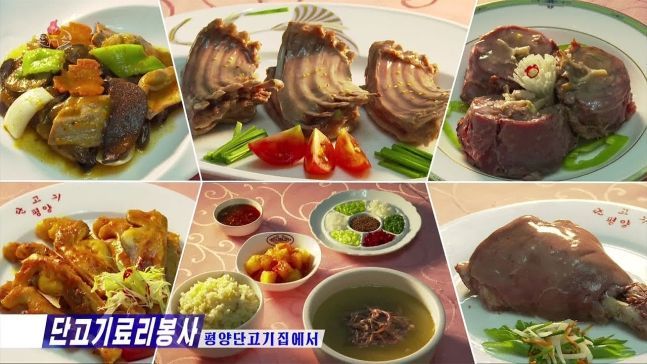
North Korea propagates that dog meat cuisine has richly developed under the leadership of Kim Il-sung and Kim Jong-il during the Workers' Party era. In fact, Kim Il-sung and Kim Jong-il are known to have held dog meat in special regard. However, unlike Kim Il-sung and Kim Jong-il, Kim Jong-un rarely makes direct mentions or evaluations regarding dog meat.
North Korea’s former anti-South propaganda media, Uriminzokkiri, published an article in July 2010 stating, “South Koreans and overseas compatriots who tasted danggoogi-jang at the Pyongyang Danggoogi Restaurant came to the homeland and were amazed, giving thumbs up after tasting the authentic danggoogi-jang served in a traditional stone bowl filled with the unique flavor of our nation.”
The reason North Korea promotes dog meat is not merely to develop traditional food culture but also because it is a useful source of protein. Beef is scarce in North Korea, and even relatively affordable pork is difficult for ordinary households to raise directly. In contrast, dogs can be easily raised and consumed by rural commoners.
Yonhap News quoted defectors saying that unlike in South Korea, there is almost no aversion to dog meat even among the younger generation in North Korea. A North Korean defector working in a public institution, Mr. A, said, “Dog meat is recognized as a summer health tonic or nutritional supplement for patients, and there are many enthusiasts.”
Meanwhile, in South Korea, the National Assembly passed the ‘Special Act on the End of Breeding, Slaughter, and Distribution of Dogs for Food Purposes (Dog Meat Ban Act)’ in the plenary session last January. According to this law, from 2027, breeding, slaughtering, distributing, and selling dogs for food purposes will be prohibited. Those who slaughter dogs for food purposes may face up to three years in prison or a fine of up to 30 million won, and those who breed, propagate, or distribute dogs may face up to two years in prison or a fine of up to 20 million won.
© The Asia Business Daily(www.asiae.co.kr). All rights reserved.

















