Ministry of Health and Welfare Holds 4th Biohealth Innovation Committee Meeting
First Half Health Industry Exports Achieve 51.9% of This Year's Target
Discussion on Improvement Plans for Regulatory Innovation Tasks
The government will intensify support for mRNA (messenger ribonucleic acid) vaccine development projects starting next year to prepare for future pandemics. Exports of pharmaceuticals and cosmetics, which achieved record performance in the first half of the year, have raised their year-end target to $25 billion.
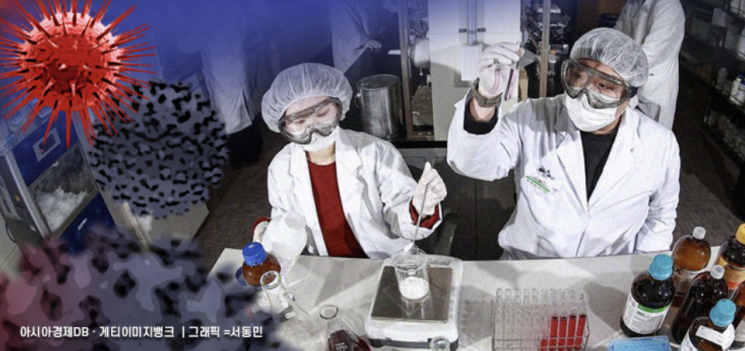
On the 13th, the Ministry of Health and Welfare held the '4th Biohealth Innovation Committee' meeting to discuss ▲ securing sovereignty over mRNA vaccines ▲ expanding healthcare industry exports in the second half of the year ▲ removing regulatory barriers in biohealth and revising related laws and regulations.
First, the mRNA vaccine development project was recently exempted from preliminary feasibility study due to its recognized challenge, innovation, and urgency. Accordingly, detailed project plans including total project costs will be finalized after appropriateness review by the Korea Institute of S&T Planning and Evaluation (KISTEP). The government aims to secure an mRNA vaccine platform over four years from 2025 to 2028, supporting research and development from preclinical to phase 3 clinical trials. The Korea Disease Control and Prevention Agency will establish a full-cycle vaccine development strategy and oversee the project, while multi-ministerial cooperation will support rapid resolution of regulatory issues such as approvals and patents. Additionally, various technology support packages necessary for mRNA vaccine development will be provided centered on the National Institute of Infectious Diseases.
According to the Ministry of Health and Welfare, this project will enable rapid development and supply of vaccines within 100 to 200 days even if the next pandemic occurs, by utilizing the verified mRNA vaccine platform.
Meanwhile, healthcare industry exports in the first half of this year reached $12.2 billion, achieving 51.9% of the initial annual target of $23.5 billion. In particular, pharmaceuticals recorded $4.46 billion and cosmetics $4.81 billion, marking the highest half-year performance ever. With export growth expected in the second half, the government has raised the annual healthcare industry export target to $25 billion and plans to provide full support through cross-ministerial cooperation, including fostering an innovation ecosystem and developing customized sales channels.
To this end, the government will establish a 'K-Bio Mega Fund' worth 600 billion KRW within the year, concentrating over 100 billion KRW investment in biohealth companies such as pharmaceutical firms, and provide various policy financing totaling 4.2 trillion KRW, including preferential interest rates and expanded loan limits. Furthermore, efforts will be made to expand R&D investment for innovative new drugs, intensively nurture skilled bio-specialists ready for immediate deployment, promote technology exchange between domestic companies and global research institutions, and simplify approval processes in promising export markets.
At the meeting, measures to remove regulatory barriers in biohealth and revise laws were also discussed. The Regulatory Reform Forum under the committee identified 106 new tasks and received 67 tasks, completing review on 38 of them. Among these, institutional improvements will be pursued for 18 tasks, with in-depth discussions on improvement plans for six tasks selected as killer regulations.
Following the legal amendment in July allowing research-oriented hospitals' medical technology cooperation groups to establish corporations, amendments to the Corporate Tax Act, Enforcement Decree, and Restriction of Special Taxation Act will be pursued to permit tax deductions for donations and business income set aside as reserves for corporation establishment and securing R&D funds. Also, although doctors and pharmacists currently cannot receive wage support through the SME research personnel wage support project, guidelines were revised in June to include medical and pharmaceutical majors as eligible, thereby expanding wage support.
Kim Young-tae, Vice Chairman of the Biohealth Innovation Committee and Director of Seoul National University Hospital, said, "The biohealth industry is the second semiconductor industry and a field whose importance is growing for national health and security. We will monitor and strive at the Innovation Committee level to ensure that the discussed contents are reflected in government policies and lead to tangible outcomes."
© The Asia Business Daily(www.asiae.co.kr). All rights reserved.

















