Only Executive Promotions Announced... Year-End Personnel Changes Expected
Generational Shift Anticipated from Department Heads to Executives
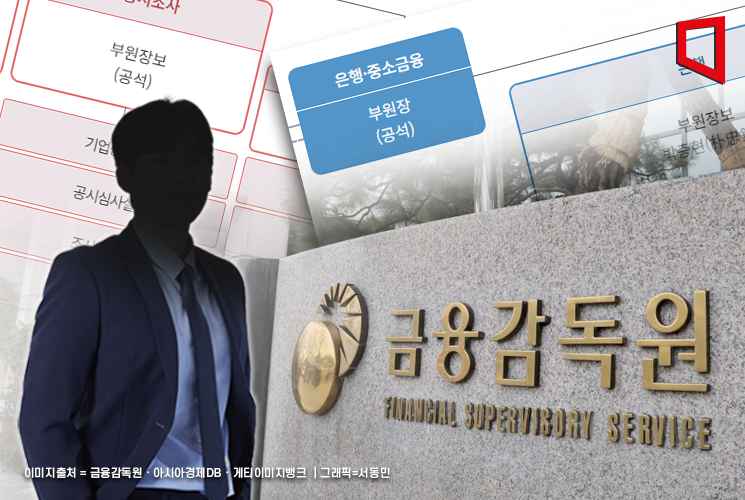
The Financial Supervisory Service (FSS) is set to make executive appointments to fill vacant positions. There is growing anticipation within the organization for the promotion of executives from the first cohort of open recruitment since its establishment. Until now, the FSS has been led by executives who previously worked in various financial sectors. The appointment of executives from the first open recruitment cohort symbolizes a significant 'generational shift' across the organization.
According to financial authorities on the 13th, the FSS will announce promotions for deputy heads of banking and small finance divisions, as well as deputy heads of disclosure and investigation, around the Chuseok holiday. However, the scale of the personnel changes is expected to be limited to filling the vacant executive positions, as the year-end personnel reshuffle is about two months away.
There is keen attention both inside and outside the FSS on this personnel move. Since his inauguration, FSS Governor Lee Bok-hyun has been conducting talent-focused appointments primarily from open recruitment cohorts. The first open recruitment cohort has shown remarkable performance in the capital markets and accounting sectors. Notable figures include Seo Jae-wan, Director of Capital Market Supervision, Kim Jin-seok, Director of the Capital Market Special Judicial Police, and Kwon Young-bal, Director of Financial Investment Inspection Division 2.
Among them, Seo is expected to be promoted to an executive position. Born in 1970, Seo is the eldest among the first open recruitment cohort and holds the most critical department head position in the capital markets and accounting sector. He has been involved in key issues such as real estate project financing (PF), short-selling system improvements, value-up initiatives, disclosure systems, and amendments to the Commercial Act. As a result, he is highly regarded for his work ability and leadership even among the first cohort.
If a first open recruitment cohort member is promoted to an executive position, the FSS will achieve a 'generational shift' from department heads to executives. The FSS was established in 1999 through the merger of four institutions: the Bank of Korea, Securities Supervisory Board, Insurance Supervisory Board, and Credit Management Fund. Since then, these four institutions have maintained a ratio of 4:3:2:1 for department heads and executives. This structure has effectively prevented cross-sector transfers, limited information exchange, and intensified a closed organizational culture, drawing criticism.
Even after the first open recruitment cohort members were promoted to team leader level in 2015, this trend did not disappear. Although it is difficult to completely eliminate sectoral barriers within the highly specialized work of the FSS, there is hope that factional conflicts will diminish and a 'performance-oriented' culture will take root. Governor Lee emphasized again at the executive meeting last July that "We will continue to operate so that a performance-centered personnel policy can be established as the organizational culture."
Among the candidates for deputy head promotions in banking and small finance are Kim Byung-chil, Deputy Head in charge of Strategic Supervision, and Park Sang-won, Deputy Head in charge of Small Finance. Previously, former Deputy Head Lee Jun-su resigned and took office as the head of the Financial Training Institute, leaving the position vacant. Although the promotion will create another vacancy, the promoted officials are expected to hold concurrent positions until the year-end reshuffle, which is scheduled in two months.
At the executive meeting last July, Governor Lee stated, "The regular personnel reshuffle scheduled for the end of this year will be conducted based on work performance rather than seniority. In particular, middle management (department heads, team leaders) will be carefully evaluated on organizational and crisis management capabilities, as well as internal and external communication and cooperation skills."
© The Asia Business Daily(www.asiae.co.kr). All rights reserved.

















