'North Korea Nuclear Crisis and Four-Party Diplomacy' Symposium
Emphasis on the Need for Pressure to Denuclearize North Korea
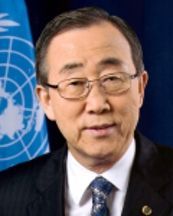 Ban Ki-moon, former UN Secretary-General
Former UN Secretary-General Ban Ki-moon emphasized that ahead of the upcoming U.S. presidential election in November, the South Korean government should exercise diplomatic efforts to build friendly relations with both the Democratic and Republican candidates.
On the 12th, Yonhap News reported that Ban made these remarks while attending the symposium titled "The North Korean Nuclear Crisis and the Diplomacy of the Four Powers: Resolving North Korea’s Nuclear Issue through Four-Power Diplomacy," jointly hosted by Korea University’s Institute for Unification and Peace Studies and the Ban Ki-moon Foundation for a Better Future.
Ban stated, "There are concerns that the U.S.-South Korea alliance may face difficulties in maintaining its current form depending on the outcome of the U.S. presidential election, but I am confident that the alliance will never be shaken," adding, "We must exercise diplomatic efforts to engage with both Kamala Harris and Donald Trump (candidates) and build friendly relations."
He also raised his voice on the necessity of sanctions for North Korea’s denuclearization. He said, "The sanctions have clearly had an effect, as evidenced by North Korea’s recent significant reduction in the number of its overseas diplomatic missions," and urged, "We must not loosen the sanctions and pressure aimed at North Korea’s denuclearization." He further added, "We are serving as a non-permanent member of the UN Security Council from this year through next year, and the three countries (South Korea, the U.S., and Japan) must cooperate to devise effective means to enforce sanctions."
Ban also stressed the need for active communication with China for North Korea’s "Complete, Verifiable, and Irreversible Denuclearization (CVID)." He said, "Under no circumstances should North Korea’s status as a nuclear-armed state be tolerated," and pointed out, "It is important to make diplomatic efforts so that China, which is almost the only country that can exert influence over North Korea, can actively intervene." He added, "If China can be advised to make North Korea act properly, it will be beneficial for South Korea-China relations and help reduce U.S.-China tensions."
Foreign Minister Cho Tae-yul said in his congratulatory remarks, "The most important factor in responding to the increasingly sophisticated North Korean nuclear missile threat is strong deterrence against North Korea, and the core of that is the U.S.-South Korea alliance." He continued, "Another essential pillar in responding to the North Korean nuclear threat is the security cooperation among South Korea, the U.S., and Japan," and stated, "The U.S.-South Korea alliance and the South Korea-U.S.-Japan cooperation are like interlocking gears that work together, so we will continue to make sustained efforts to strengthen South Korea-U.S.-Japan security cooperation."
© The Asia Business Daily(www.asiae.co.kr). All rights reserved.
![Clutching a Stolen Dior Bag, Saying "I Hate Being Poor but Real"... The Grotesque Con of a "Human Knockoff" [Slate]](https://cwcontent.asiae.co.kr/asiaresize/183/2026021902243444107_1771435474.jpg)















