"Security Office Executive Colludes with Broker, Embezzles 1.57 Billion Won"
Unable to Identify Kim Geon-hee's Connection in Vendor Selection Process
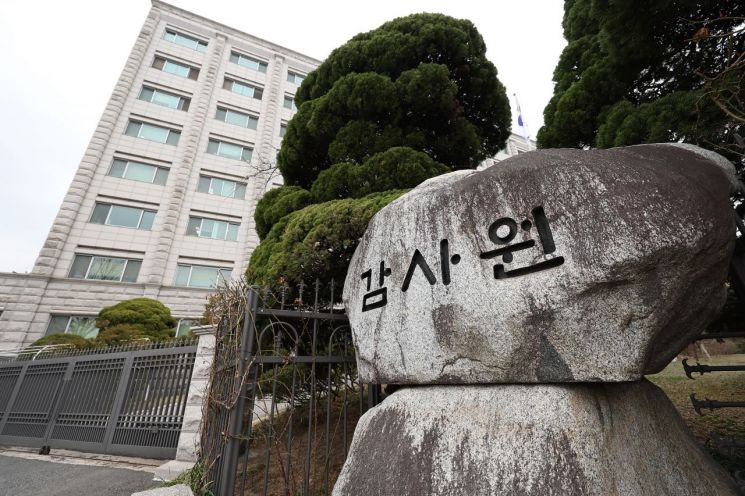
On the 12th, the Board of Audit and Inspection (BAI) revealed that it detected misconduct by a senior official of the Security Office during the construction process of relocating the presidential office and residence, and demanded dismissal. It also confirmed violations of laws and regulations in supervision and completion during the relocation construction of the presidential office and residence. The BAI explained that it did not find any connection between First Lady Kim Keon-hee and the selection process of the construction company.
On the same day, the BAI announced the audit results related to "illegal suspicions regarding the relocation and expenditure of the presidential office and residence," and uncovered misconduct by a senior Security Office official during the installation of bulletproof windows.
A senior official A of the presidential Security Office, who was responsible for the bulletproof window installation project, appointed broker B, with whom he had a close relationship involving meals and trips for several years, as the de facto project manager at the end of March 2022. Although A knew that B was merely a broker, he allowed B to inspect the construction site and arbitrarily negotiated the contract amount. In April of the same year, without consulting the contracting department, A instructed B to begin manufacturing bulletproof glass and window frames.
In particular, between April and June 2022, A was aware that the installation costs demanded by B were likely inflated but did not order any cost calculations or price investigations from subordinates, resulting in a high-priced contract.
B submitted estimates inflated more than five times the actual total cost during three private contracts between the private construction company he introduced and the Security Office and Ministry of the Interior and Safety. Of the total project cost of 2.04 billion KRW for the bulletproof window installation, the actual cost including company profits for manufacturing and installing bulletproof glass, window frames, and film was only 470 million KRW. B, who established a company on paper under his spouse's name, embezzled 1.57 billion KRW through contract brokerage fees via this company.
Moreover, A pushed forward with construction projects not budgeted during the Security Office relocation, inflating costs of other projects to cover expenses, demanding payment of construction costs from related personnel, and forcing related personnel to purchase acquaintances' land at inflated prices, engaging in repeated misconduct.
The BAI stated, "We have requested disciplinary action (dismissal) against A for improperly handling the selection of contractors, cost calculations, and construction supervision related to the bulletproof window installation project," and added, "we requested an investigation by the Supreme Prosecutors' Office last October for A, B, and C, the project and contract manager of the construction company."
Ministry of the Interior and Safety Overpaid 320 Million KRW in Construction Costs
The BAI revealed that national contracts and construction-related laws were not properly followed during the relocation of the presidential office and the repair of the residence.
In particular, the Ministry of the Interior and Safety neglected post-contract cost settlement under the condition of post-cost review, resulting in an overpayment of 320 million KRW in construction costs.
The BAI pointed out that the Secretariat was negligent in supervising the residence repair construction. They did not establish a detailed project plan from the budgeting stage, started construction before securing the budget and signing contracts, and confirmed violations of the "Framework Act on the Construction Industry" such as subcontracting to unqualified companies.
The BAI stated, "In future similar projects, a detailed project plan must be established to ensure that no construction starts before budget securing and design completion, and that national contract-related laws are observed throughout the entire process including contract, supervision, and completion." It added, "We urged thorough verification of contractor qualifications and the submission of accurate drawings reflecting actual construction details from construction and design companies to be used in completion inspections and related tasks."
Furthermore, the BAI took measures to hold accountable a former presidential secretary who oversaw the relocation project from the Presidential Transition Committee task force, notifying personnel records that can be referenced for future public office reemployment.
The Ministry of the Interior and Safety was instructed to devise a plan to recover the overpaid construction costs related to the office relocation and was urged to thoroughly manage related tasks.
The BAI judged that there was insufficient evidence for allegations of abuse of authority and violations of the State Property Act in the decision-making process related to the presidential office relocation.
© The Asia Business Daily(www.asiae.co.kr). All rights reserved.

















