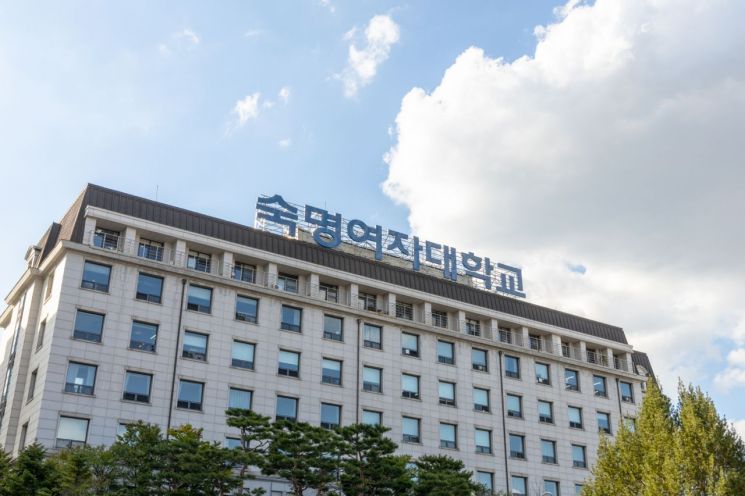
On the 11th, Sookmyung Women's University announced that the research team led by Professor Ryu Won-hee of the Department of Chemical and Biological Engineering successfully developed a core technology that enables sodium metal batteries to last six times longer and charge faster than existing ones.
The research team developed a sodium metal battery technology capable of ultra-long lifespan operation even during rapid charging or discharging by introducing a small amount of vinylpyrrolidone-based polar molecules as an interfacial stabilization additive into the electrolyte. Sodium metal batteries are attracting attention as a promising technology that can achieve both economic efficiency and high energy. Additionally, by using sodium, which is easier to procure instead of rare lithium, there is an advantage of lowering battery costs; however, the low energy density has been a barrier to commercialization.
Through this study, it was revealed that when vinylpyrrolidone molecules are used as electrolyte additives, the metal anode surface remains flat and shows stable sodium crystal growth even under high currents where rapid charge and discharge are repeated, with sodium undergoing repeated deposition and dissolution. It was also confirmed that this contributes to the production of a high-quality solid electrolyte interphase (SEI) and maintains a stable structure. Furthermore, it was found that by introducing only 1% of the polar electrolyte additive into the electrolyte, the cycle life under high-speed charge and discharge conditions is maintained at more than six times that of conventional sodium metal batteries.
Professor Ryu said, "Through this research, we solved the low energy density problem of sodium secondary batteries, which was considered a barrier to commercialization despite their price competitiveness," and added, "This suggests the possibility that sodium secondary batteries could replace existing lithium secondary batteries."
© The Asia Business Daily(www.asiae.co.kr). All rights reserved.
![Clutching a Stolen Dior Bag, Saying "I Hate Being Poor but Real"... The Grotesque Con of a "Human Knockoff" [Slate]](https://cwcontent.asiae.co.kr/asiaresize/183/2026021902243444107_1771435474.jpg)
















