US 2-Year Treasury Hits Lowest Since September 2022
10-Year Treasury at Lowest Level Since June Last Year
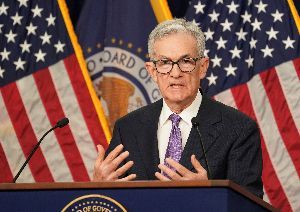
With the U.S. central bank, the Federal Reserve (Fed), likely to cut its benchmark interest rate for the first time in four years this month, and even the possibility of a big cut (a 0.5%P cut in the benchmark rate) emerging, both long- and short-term Treasury yields hit their lowest levels this year.
On the 10th (local time), the U.S. 2-year short-term yield fell 5.8 basis points (1bp=0.01%P) from the previous day (3.666%) to 3.608%. This is the lowest level since September 2022. The yields on the 10-year and 30-year U.S. long-term bonds were recorded at 3.643% and 3.954%, respectively. The 10-year yield is at its lowest level since June last year, and the 30-year yield is at its lowest since December last year.
MarketWatch explained, “With the August Consumer Price Index (CPI) scheduled to be released on the 11th, and concerns about a recession still lingering, U.S. Treasury yields collectively declined.” The Federal Open Market Committee (FOMC), which sets the U.S. benchmark interest rate, is scheduled to meet at 2 p.m. on the 18th (3 a.m. KST on the 19th), and the August CPI is expected to be a key indicator in determining the Fed’s rate cut magnitude.
According to the FedWatch tool, the federal funds futures market on that day estimates a 67% probability that the Fed will cut rates by 0.25%P this month and a 33% probability of a 0.5%P cut. Julian Emanuel, strategist at Evercore ISI, analyzed, “If the August CPI exceeds the expected figure (0.2% month-over-month), the Fed will likely cut rates by 0.25%P.”
Opinions are divided on the future movement of U.S. Treasury yields. MarketWatch analyzed, “The upcoming U.S. presidential election, which is not far off, could influence the Fed’s monetary policy decisions, potentially causing the Fed to hold off on large rate cuts until the election results are out.” According to a survey conducted by a foreign media outlet from the 6th to the 10th among economists, 65 out of 95 economists forecast three rate cuts of 0.25%P each this year, including this month, November, and December.
Since the beginning of this year, domestic investors betting on the decline in U.S. Treasury yields have shown a brighter mood. The overseas bond-related product most purchased by domestic investors is the ‘iShares 20+ Year U.S. Treasury Bond JPY Hedged ETF’ (ticker 2621). This financial product invests in U.S. long-term bonds over 20 years after converting to Japanese yen, benefiting from the Bank of Japan’s (BOJ) benchmark rate hike and the bond price increase effect due to falling bond yields, rising more than 4% in the past month. The ‘Direxion Daily 20+ Year Treasury Bull 3x ETF’ (TMF), an exchange-traded fund (ETF) that tracks three times the daily return of the U.S. Treasury underlying index, also surged more than 12% during the same period.
Meanwhile, it has also been confirmed that the long-standing inversion between long- and short-term yields, which was the longest in history, has been resolved as the 2-year yield, which is heavily influenced by Fed monetary policy, fell more sharply. The long- and short-term yield inversion began in 2022 when the Fed implemented aggressive tightening policies to curb inflation accelerated by COVID-19. Generally, the inversion of long- and short-term yields has been regarded as a precursor to a recession, but no recession occurred in this cycle. However, recently, there have been claims on Wall Street that a recession may occur after the inversion is resolved.
© The Asia Business Daily(www.asiae.co.kr). All rights reserved.
![Clutching a Stolen Dior Bag, Saying "I Hate Being Poor but Real"... The Grotesque Con of a "Human Knockoff" [Slate]](https://cwcontent.asiae.co.kr/asiaresize/183/2026021902243444107_1771435474.jpg)











