Published in the Official Gazette on the 12th... Designated as a Management Organization
Evaluating Places with High Historical and Cultural Value
Gwangyang City, Jeollanam-do (Mayor Jeong Inhwa) announced that on the 12th, through the official gazette publication, Gwangyang City will be designated as the management organization of the nationally registered cultural heritage site ‘Gwangyang Seoul National University Southern Training Forest Dormitory’ by the National Heritage Agency.
The Gwangyang Seoul National University Southern Training Forest Dormitory is an employee dormitory built within the Southern Training Forest of Tokyo Imperial University during the Japanese colonial period. The site is known for its high historical and cultural value as it reveals the spatial composition style of houses at the time, such as the structure with two buildings arranged side by side, rooms arranged around a corridor, and ventilation windows above the thresholds between rooms.
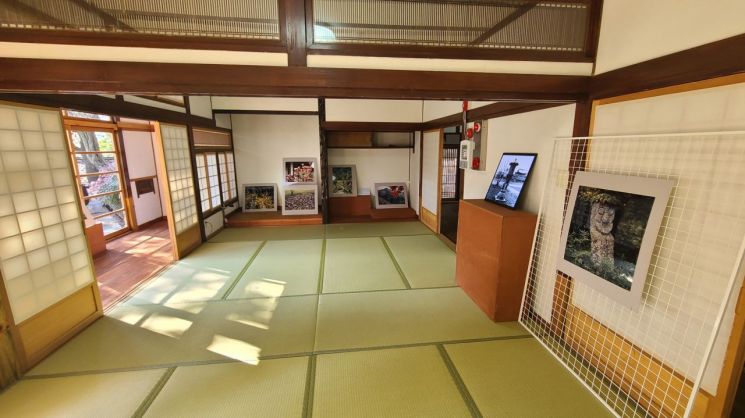 Gwangyang City is scheduled to be designated as the management organization for the nationally registered cultural heritage site "Gwangyang Seoul National University Southern Practice Forest Residence" by the National Heritage Administration.
 [Photo by Gwangyang City]
Since 2012, Gwangyang City has emphasized its management history, including the installation of security CCTV in the two dormitory buildings, fences, and landscape lighting on trees, and has continuously requested the Korea Asset Management Corporation and the National Heritage Agency to transfer the dormitories. As a result, in March last year, the city obtained approval for free use and residence of the dormitories.
The city officially began projects utilizing the dormitories this year. Since January, Gwangyang City has organized lectures by modern architecture experts to inform cultural tourism interpreters about the structural features of the dormitory buildings, their architectural value, and their significance as cultural heritage, focusing on strengthening the interpreters’ capabilities.
In February, the city held the ‘Baekam Lee Kyungmo Photographer Exhibition’ and opened the dormitories to the public for the first time in 105 years. In May, to provide convenience to visitors, air conditioning and heating facilities were installed, and in July, the city held the ‘Korea Master Hanbok Experience’ with Lee Sojeong, a master of Korean traditional clothing, which received great responses not only from citizens but also tourists from other regions.
Gwangyang City highlighted its efforts in hosting various cultural and artistic experience events utilizing cultural heritage and its meticulous efforts in preservation and management, repeatedly requesting related organizations for designation as the management organization. These efforts finally bore fruit. On the 12th, with the publication in the official gazette, ownership of the dormitories will change, and Gwangyang City will be designated as the management organization of the dormitories by the National Heritage Agency.
Kim Myeongdeok, Director of the Culture and Arts Division, said, “Upon designation as the management organization, we expect systematic cultural heritage management and support for urgent measures and repair costs necessary for preservation through technical guidance requests related to the management of nationally registered heritage.” He added, “We will utilize the dormitories as cultural spaces where citizens can enjoy rest and romance.”
© The Asia Business Daily(www.asiae.co.kr). All rights reserved.

















