Responding Mainly with Domestic Demand and Dividend Stocks or Infrastructure and Industrial Stocks
TV Debate Policies Expected to Greatly Influence Presidential Election Results
Korea Investment & Securities analyzed that historically, political uncertainty expands right before the U.S. presidential election, causing a temporary pullback in major U.S. indices. Accordingly, they advised that in September, investors should focus on domestic stocks and dividend stocks with limited uncertainty in diplomacy, policy, and exchange rates, as well as infrastructure and industrial stocks, rather than growth stocks.
Choi Bowon, a researcher at Korea Investment & Securities, explained in a report released on the 10th, "In 2024, with the U.S. Federal Reserve's policy shift (interest rate cuts) ahead, a narrow gap in support between the two major party candidates, and ongoing pressure from the unwinding of the Japanese yen carry trade, there is a high likelihood that risk asset investment sentiment will contract compared to the past."
Therefore, he suggested that in September, rather than aggressively increasing exposure to growth stocks, investors should respond by focusing on domestic stocks and dividend stocks with limited uncertainty in diplomacy, policy, and exchange rates, as well as infrastructure and industrial stocks expected to benefit from policies regardless of which candidate wins. Researcher Choi noted, "These companies are expected to benefit even with a gradual decline in government bond yields, making them noteworthy through the end of the year and early next year."
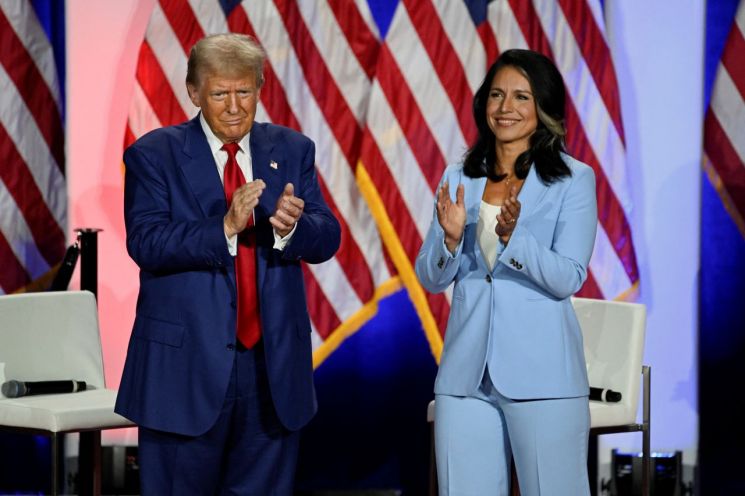
He anticipated that policies mentioned during the September TV debates would significantly influence the U.S. presidential election outcome. Researcher Choi said, "Given the narrow gap in support between the two candidates and the ambiguous announcements of swing state policies, caution regarding the September TV debates is inevitably heightened," citing the high proportion of early voting in the last three U.S. presidential elections as another reason.
He classified the key policies to watch during the TV debates into four categories: △ Environment & Energy △ Tax △ Diplomacy △ Welfare & Healthcare policies. He emphasized the importance of focusing especially on environment & energy and tax policies. He explained, "Since these directly affect the earnings of U.S. companies, their impact on the stock market is inevitably significant," adding, "They also contrast sharply with diplomacy and healthcare policies."
He continued, "Among environment & energy policies, attention should be paid to manufacturing energy-related policies targeting the Rust Belt, which includes swing states such as Philadelphia, Michigan, and Wisconsin," and added, "Tax policies are an area where the positions of both parties have been continuously revised recently, so it is highly likely that clarity will be provided through the TV debates."
© The Asia Business Daily(www.asiae.co.kr). All rights reserved.

















