The Guardian reported on the 8th (local time) that this year is expected to be the worst year for international aid workers. It is forecasted that the annual number of aid worker casualties in conflict zones such as the Gaza Strip and South Sudan will reach an all-time high.
According to the report, as of the end of last month, 187 aid workers worldwide have died this year. Last year, 280 aid workers were killed, setting a record high. In 2022, 118 aid workers lost their lives.
Most of this year's casualties occurred in the Gaza Strip and Sudan and South Sudan, which are in civil war. In particular, in the Gaza Strip, where Israeli bombings continue, 280 aid workers have died since the outbreak of war on October 7 last year. This year, 68 aid workers have been kidnapped and 101 injured.
A high proportion of the casualties were local staff. This is a result of increased hiring of locals who have a better understanding of the local environment and community needs than foreigners, especially by international aid organizations. For example, 98% of the staff at the International Rescue Committee (IRC), an international humanitarian aid organization, are locals. Additionally, 16 million volunteers of the Red Cross and Red Crescent come from local communities.
The problem is that these local workers generally receive inadequate safety training and response measures compared to international staff. Jeff Wright, World Vision’s Head of Humanitarian Response, acknowledged that when local situations deteriorate, foreign staff of international aid organizations evacuate, but local staff often remain on site. For instance, when the Taliban regained control of Afghanistan in 2021, foreign aid workers were able to withdraw, but local aid workers had no choice but to stay, becoming targets of the Taliban.
Evdavi Kiaya, Head of East and Central Africa at the aid organization Tearfund, pointed out, "Local aid workers, those working in their own countries, are the most at risk, but their stories are rarely reported in international media," adding, "Those who attack them are not held accountable, and those in power who could prevent the situation turn a blind eye to reality."
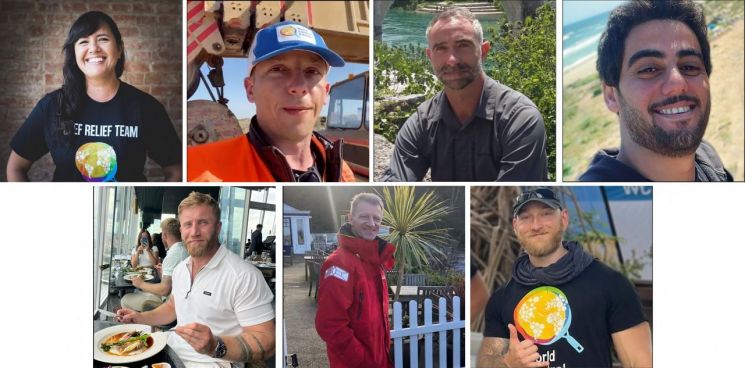
The Guardian noted, "An increasing number of cases ignoring international humanitarian laws that have protected aid workers so far is also a risk factor." Earlier, in April, the Israeli military knowingly targeted the route of the international aid organization World Central Kitchen (WCK), resulting in seven deaths despite prior knowledge of their movement.
The Guardian pointed out, "Violations of international humanitarian law are considered war crimes, but prosecutions at the national level are extremely rare," adding, "At best, it ends with UN Security Council resolutions, condemnations, and public outcry."
© The Asia Business Daily(www.asiae.co.kr). All rights reserved.
![Clutching a Stolen Dior Bag, Saying "I Hate Being Poor but Real"... The Grotesque Con of a "Human Knockoff" [Slate]](https://cwcontent.asiae.co.kr/asiaresize/183/2026021902243444107_1771435474.jpg)
















