To prevent a recurrence of the 'Timon·Wemakeprice (Timemep)' incident, financial authorities are initiating institutional improvements, including imposing an obligation on electronic payment gateway (PG) companies to separately manage the full amount of unsettled funds.
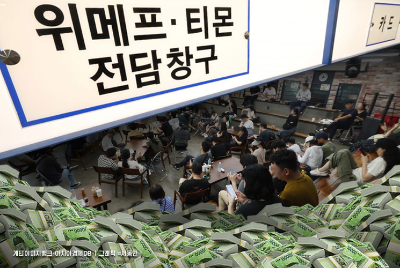
The Financial Services Commission announced on the 9th that it has prepared a 'PG Industry Institutional Improvement Plan' containing these measures after consultations with related ministries and expert opinions. The authorities plan to submit related amendment bills to the National Assembly after gathering opinions through public hearings within this month.
First, to ensure payment safety and protect users and sellers, the authorities decided to impose an obligation to separately manage the entire amount of unsettled funds. This decision takes into account overseas cases such as the European Union (EU) and the United Kingdom, as well as legislative precedents related to prepaid charging funds.
The means of separate management will be limited to deposit, trust, and payment guarantee. In particular, when using trust or payment guarantee, the scope of fund operation will be restricted to 'safe assets,' and the contents of settlement fund protection measures will be notified to sellers and disclosed on the company's website.
Considering the regulatory compliance burden related to these new regulations, the authorities will grant a grace period. For example, the proportion of unsettled funds subject to separate management will be increased annually from 60%, to 80%, and then to 100%.
Legal protection for settlement funds has also been strengthened. The authorities will prohibit the transfer or provision as collateral of separately managed assets, as well as seizure or offsetting by third parties, and introduce a priority repayment right to ensure that users' and sellers' settlement payments are safely protected even in the event of PG company bankruptcy.
Management and supervision of PG companies will also be further strengthened. First, the capital size will be increased proportionally to the transaction scale of PG companies to raise the entry barrier for the business. For example, under the current system, if the quarterly transaction scale is 3 billion KRW or less, the capital size is 300 million KRW, but in the future, if it exceeds 3 billion KRW, a capital limit of 1 billion KRW will be imposed.
Additionally, considering that there is currently no enforcement measure to compel PG companies to comply with management guidance standards, the authorities will establish grounds for stepwise measures ranging from correction orders to business suspension and registration cancellation. In particular, the financial authorities plan to prepare grounds for sanctions and penalties if the separately managed funds are used for purposes other than settlement or if payments are not made within the settlement period stipulated in the contract.
Meanwhile, the financial authorities have clarified the definition of PG business. Under the current Electronic Financial Transactions Act, PG is defined as 'acting as an agent or intermediary for the settlement of payment for goods purchase or service use by electronic means.' However, this definition is broadly stipulated to include all settlement tasks, including internal settlement. Accordingly, the authorities explained that it is necessary to clarify that cases where payments are collected and internally settled as part of one's own business do not fall under PG business.
The authorities stated, "If internal settlement for one's own business is included in PG, it would encompass all areas where fund settlement occurs in economic activities such as e-commerce, department stores, franchises, passenger terminals, freight truck subcontractors, manpower suppliers, construction contractors, and highway rest areas (kiosks)," adding, "If financial regulations are enforced up to internal settlement, issues of overregulation and unreasonable regulation may arise."
© The Asia Business Daily(www.asiae.co.kr). All rights reserved.

















