The court has ruled that including a 'union shop' clause in collective agreements, which automatically enrolls employees into the dominant labor union representing more than two-thirds of the workers upon joining the company, is not an unfair labor practice.
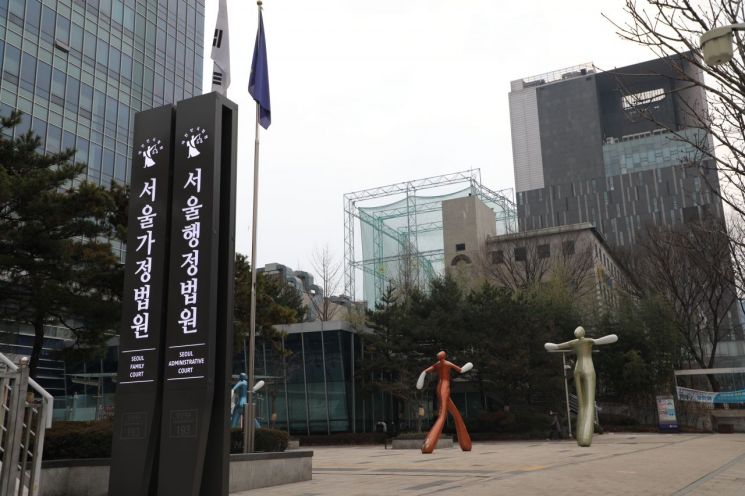
On the 9th, according to the legal community, the Seoul Administrative Court's Administrative Division 12 (Chief Judge Kang Jae-won) ruled against the plaintiff in the lawsuit filed by the Korea Public Service and Transport Workers' Union Korea Railroad Corporation Labor Union Headquarters, which sought to overturn the Central Labor Commission chairman's decision on unfair labor practice relief reconsideration.
The plaintiff argued that the inclusion of the union shop clause in the collective agreement between Korea Railroad Corporation and the National Railroad Workers' Union, which more than two-thirds of the employees had joined, in December 2022 constituted an unfair labor practice. They filed relief applications with the Seoul Regional Labor Commission and the Central Labor Commission, but these were dismissed.
Subsequently, the plaintiff claimed, "The union shop clause causes the dominant union to grow increasingly large, making it relatively difficult for minority unions to expand their organizations," and "In a multiple union system, this clause restricts workers' freedom to choose their union and the right of minority unions to organize," filing an administrative lawsuit.
However, the court did not accept the plaintiff's claims. The bench stated, "Article 81, Paragraph 1, Subparagraph 2 of the Labor Union Act, which permits union shop agreements, is part of the organizational compulsion of labor unions primarily aimed at securing working conditions," and added, "It is intended to increase bargaining power through maintaining and strengthening the organization and to prevent free-riding by non-union members who benefit from improved working conditions obtained by the union without bearing any sacrifice or cost."
Furthermore, the court judged, "Considering that the union membership rate in South Korea was only 13.1% as of 2022, the necessity of organizational compulsion through the union shop clause can still be recognized."
The court also noted, "Not only in cases of expulsion but also when workers withdraw to form a new union or join another union, they cannot be subjected to dismissal or other status disadvantages, thereby minimizing restrictions on the freedom to choose unions and the right of minority unions to organize within a multiple union system," and stated, "This balances the restricted fundamental rights with the practical necessity of strengthening union solidarity."
© The Asia Business Daily(www.asiae.co.kr). All rights reserved.
!["I'd Rather Live as a Glamorous Fake Than as a Poor Real Me"...A Grotesque Success Story Shaking the Korean Psyche [Slate]](https://cwcontent.asiae.co.kr/asiaresize/183/2026021902243444107_1771435474.jpg)
















