Demand for Underground Conversion of Ground Sections in Seoul Districts Passing Through Gyeongbu Line, Gyeongwon Line, and Seoul Station~Gajwa Station
Undergrounding of ground-level railways is the prevailing trend.
Undergrounding ground-level railways involves demolishing railways that cross urban areas on the surface, relocating them underground, and developing the surface space. Voices advocating for railway undergrounding have been steadily raised due to issues such as noise, vibration, dust, and the need to revitalize local economies.
The integrated railway undergrounding development project focuses on relocating railways that have divided urban areas underground and developing the railway sites and surrounding areas to innovatively recreate urban spaces.
Since the enactment of the “Railway Undergrounding Integrated Development Act (abbreviated)” in January this year, the Ministry of Land, Infrastructure and Transport (MOLIT) began a research project in March to establish a comprehensive plan, and Seoul City is also conducting a study to develop a basic concept for the areas surrounding the undergrounded railways.
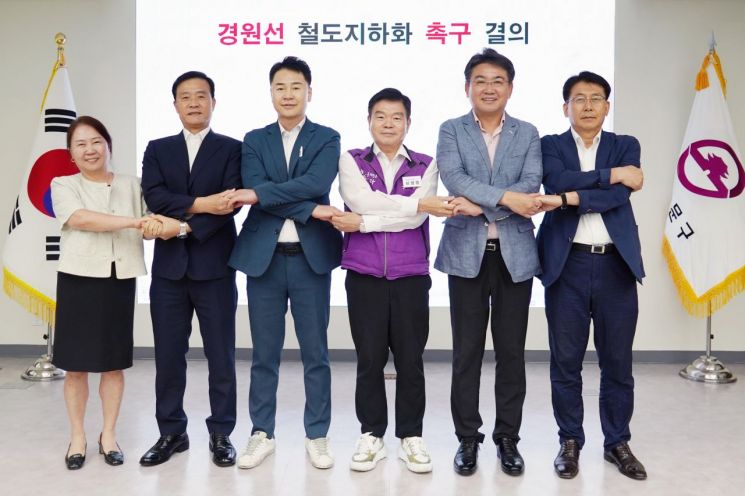
Promotion of Undergrounding of Gyeongwon Line from Yongsan-gu to Seongdong-gu, Dongdaemun-gu, Seongbuk-gu, Dobong-gu, Nowon-gu, Jungnang-gu
Seven autonomous districts along the Gyeongwon Line section?Yongsan-gu, Seongdong-gu, Dongdaemun-gu, Seongbuk-gu, Dobong-gu, Nowon-gu, and Jungnang-gu in Seoul?formed the “Gyeongwon Line Undergrounding Promotion Council” on the 23rd of last month to promote the undergrounding of the Gyeongwon Line.
These districts agreed to work towards reflecting the Gyeongwon Line undergrounding in the MOLIT’s leading project and comprehensive plan for railway undergrounding integrated development.
At the meeting, the “Proposal for the Formation of the Gyeongwon Line Undergrounding Promotion Council” was discussed to establish directions for project promotion through inter-district exchange and joint promotion plans for the undergrounding project.
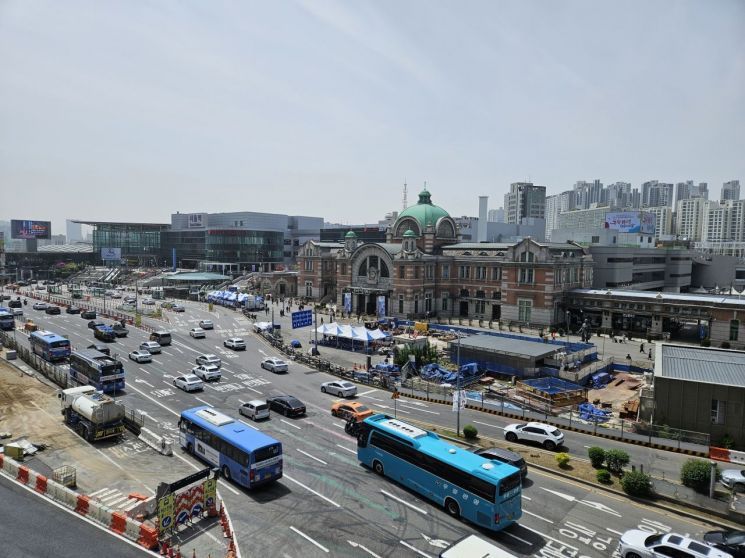
Undergrounding Project of Gyeongbu Line from Seoul Station to Yeongdeungpo Station and Gunpo Dangjeong Station Expected to Gain Most Momentum
The “Gyeongbu Line Undergrounding Project” involves undergrounding approximately 32 km from Seoul Station to Gunpo Dangjeong Station and became more tangible following the enactment of the Railway Undergrounding Integrated Development Act in January this year.
Subsequently, MOLIT announced the Gyeongbu Line undergrounding plan in April, and districts along the Gyeongbu Line section?Yongsan-gu, Dongjak-gu, Yeongdeungpo-gu, Guro-gu, Geumcheon-gu in Seoul, and Anyang City in Gyeonggi Province?have formed groups and are conducting studies to accelerate the project.
In particular, Yeongdeungpo-gu has set an ambitious plan to unify the divided areas through the undergrounding of the Gyeongbu Line railway, aiming to revitalize the local economy by developing ultra-high-rise commercial areas, creating green spaces, and providing jobs for youth. The district is currently conducting a study on this. Additionally, Seoul City is promoting the undergrounding of Olympic-ro 88 and Gangbyeon Gangbuk-ro, and Yeongdeungpo-gu plans to propose linking these efforts with the undergrounding of Gyeongin-ro to Seoul City. Choi Ho-kwon, Mayor of Yeongdeungpo-gu, stated, “We will cooperate with all heads of organizations to ensure that the section from Seoul Station to Dangjeong Station is selected as a leading project and prepare a master plan worthy of Yeongdeungpo’s status as one of Seoul’s three major downtown areas. We will do our best to create a new economic premium city in the southwest region and a youthful Yeongdeungpo.”
Geumcheon-gu (Mayor Yoo Seong-hoon) has been promoting the “Basic Concept Study for Development of Space Above Railway” for the Geumcheon-gu section of the Gyeongbu Line from April to September in preparation for the undergrounding of the Gyeongbu Line railway.
The study area covers 5.6 km from Gasan Digital Complex Station to Seoksu Station in Geumcheon-gu on the Gyeongbu Line. Through this study, the district plans to analyze the current status of areas around the railway, including the G-Valley section where about 140,000 workers are employed and the densely populated residential area of Siheung-dong, and establish development plans for the space above the railway according to the undergrounding plan.
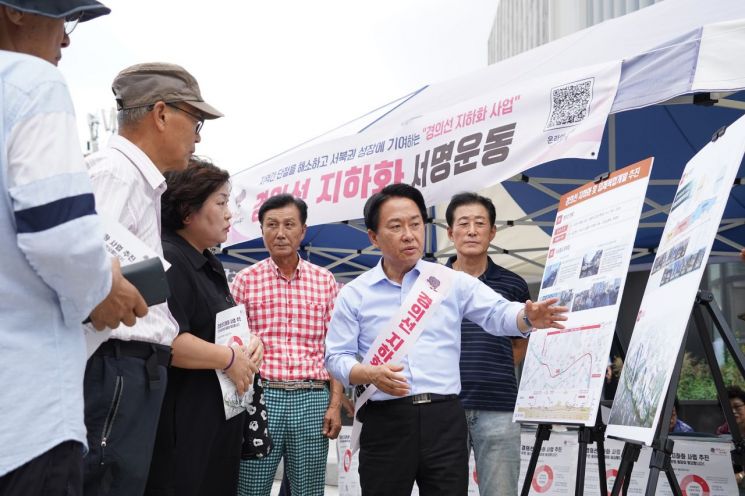
Seodaemun-gu Surpasses 100,000 Signatures for Undergrounding of Seoul Station to Gajwa Station Section
Seodaemun-gu (Mayor Lee Seong-heon) confirmed strong local community interest and support for the project as the signature campaign to designate the 5.8 km section from Seoul Station to Gajwa Station as a “leading undergrounding project” by the government surpassed 100,000 participants.
The district emphasized, “A total of 106,460 people have participated in the signature campaign for the Gyeongui Line undergrounding leading project, which started on July 25. This achievement was made possible by the voluntary participation of citizens wishing for the development of the Sinchon and Ewha areas.” The signature campaign was conducted both offline at the district office, community centers, and Yonsei-ro Star Plaza booths, as well as online using QR codes.
Alongside the signature campaign, on the 27th of last month, the district formed the “Gyeongui Line Undergrounding Leading Project Promotion Joint Committee” with Yonsei University, Yonsei University Medical Center, and Ewha Womans University to make every effort to be selected as a leading project.
Seodaemun-gu plans to submit a proposal to Seoul City this month requesting the selection of the Gyeongui Line undergrounding project as a leading project by MOLIT. The announcement of the leading project selection by MOLIT is expected in December this year.
The “Gyeongui Line Undergrounding Project” is a large-scale urban restructuring project that involves undergrounding the 5.8 km section from Seoul Station to Gajwa Station and constructing residential complex hubs, medical-specialized complex hubs, and joint cultural hubs on the upper vacant land.
The district aims to develop the Sinchon and Ewha areas into new growth hubs in the northwest region of Seoul. Lee Seong-heon, Mayor of Seodaemun-gu, stated, “We will not let our guard down and will do our best until the successful promotion of the Gyeongui Line undergrounding project.”
Undergrounding Movement for Seoul Subway Line 2 Section from Seongdong-gu to Gwangjin-gu to Songpa-gu Loses Momentum
The movement to underground the above-ground section of Seoul Subway Line 2 from Seongdong-gu to Gwangjin-gu to Songpa-gu, which was mainly promoted by Gwangjin-gu during the 7th local government administration, has stalled following the death of Mayor Park Won-soon, and no section is currently being advanced.
In particular, this section is built on riverbed land, making it difficult to relocate underground.
The undergrounding of the above-ground sections of the Gyeongwon Line and Gyeongbu Line will ultimately face issues of project feasibility. Securing project viability will be crucial to attracting private investment and advancing the projects.
© The Asia Business Daily(www.asiae.co.kr). All rights reserved.
![User Who Sold Erroneously Deposited Bitcoins to Repay Debt and Fund Entertainment... What Did the Supreme Court Decide in 2021? [Legal Issue Check]](https://cwcontent.asiae.co.kr/asiaresize/183/2026020910431234020_1770601391.png)