Lee Bok-hyun, Financial Supervisory Service Chief, to Discuss Real Demand Measures with Bank Presidents on the 10th
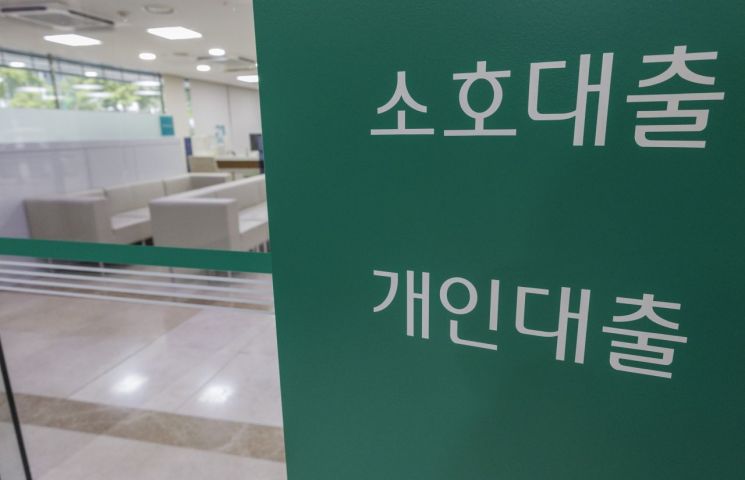
Lee Bok-hyun, Governor of the Financial Supervisory Service (FSS), recently addressed the rising barriers to household loans in the financial sector, stating, "We will manage to ensure there are no restrictions on loans for genuine borrowers," drawing attention to the measures expected to be discussed at the upcoming bank CEOs meeting next week. The current policy direction on loan restrictions for homeowners is also expected to be refined.
After the 'Household Loan Genuine Borrowers and Experts On-site Meeting' held on the 4th, Governor Lee told reporters, "Loan products vary significantly from bank to bank, causing confusion among genuine borrowers," adding, "I plan to meet with bank CEOs as early as next week to unify opinions." According to the FSS, the meeting between Governor Lee and the bank CEOs is scheduled for the 10th.
Financial Sector Introduces 'Homeowner Loan Restrictions' Amid Government Pressure on Household Loan Management
The decision by the financial sector to allow mortgage loans or jeonse (long-term lease) loans only to non-homeowners came after the government criticized banks' interest rate hikes on the 25th of last month. As mortgage loan interest rates at banks continued to rise, even causing a reversal where second-tier financial institutions offered lower mortgage rates than banks, Governor Lee sent a message saying, "The recent rise in bank household loan interest rates is not what the authorities intended."
In response, financial companies began adjusting loan terms such as maturity, limits, and eligibility rather than interest rates. Starting with Woori Bank, followed by KakaoBank, Samsung Life Insurance, KB Kookmin Bank, and K Bank, mortgage and jeonse loans for one-homeowners were suspended. Woori Bank announced on the 1st that it would restrict loans for additional home purchases in Seoul and the metropolitan area for one-homeowners. Jeonse loans are also only supported if all household members are non-homeowners. Woori Bank will implement this 'Genuine Borrower-Centered Household Debt Efficiency Plan' starting from the 9th. Subsequently, on the 5th, KB Kookmin Bank also announced it would restrict mortgage loans for one-homeowners in Seoul and the metropolitan area from the 9th. However, loans are still available if the borrower disposes of their existing home through moving or switching. In such cases, proof such as a sales contract and receipt of deposit must be submitted. Additionally, the maximum loan period for home purchase loans in Seoul and the metropolitan area will be reduced from 40 years to 30 years.
Furthermore, KB Kookmin Bank decided to limit credit loan amounts to within the borrower's annual income. Previously, credit loans were possible at about 120-130% of annual income, but this has been reduced. Also, credit loans borrowed from other banks will be included in the limit. This is to block funds from flowing into real estate at the source. Among internet-only banks, KakaoBank banned mortgage loans for one-homeowners switching homes and reduced loan maturities and limits. K Bank reduced the living stabilization fund limit from the previous 1 billion KRW to 100 million KRW starting from the 6th.
How to Define Genuine Borrowers... "Meaningful to Prioritize Protection" vs. "The Distinction Itself Increases Confusion"
However, Governor Lee drew a clear line, stating that there was no consensus with the authorities regarding some financial companies recently restricting loans for homeowners, emphasizing that there should be no restrictions for genuine borrowers.
Accordingly, the financial industry is hoping that guidelines for genuine borrowers will be presented at next week's meeting. A representative from a commercial bank said, "It has always been a given that genuine borrowers should be prioritized for loans," adding, "Now, even if the authorities cannot clearly define the criteria for genuine borrowers, providing at least some guidelines would help reduce confusion among financial consumers."
Ultimately, how to distinguish genuine borrowers is emerging as a key issue. Jung Woo-hyun, Director of Bank Supervision at the FSS, said, "It will not be possible to create measures that technically distinguish genuine borrowers from speculative borrowers," adding, "Please understand this as an effort to protect clear genuine borrowers, including those who had loan consultations or applications before the strengthening of household loan management measures in the banking sector."
A KB Kookmin Bank official explained, "Even for one-homeowners, we are preparing carefully to ensure there are no restrictions for genuine borrowers, such as keeping mortgage loans open for switching homes," adding, "This is not about dividing genuine borrowers and speculative borrowers but about prioritizing loans to those who can clearly prove they are genuine borrowers."
However, there is also a view that confusion will continue if the focus remains solely on genuine borrowers. Professor Heo Jun-young of the Department of Economics at Sogang University said, "Measures the authorities can take include precise screening of genuine borrowers at the loan application stage or imposing penalties afterward on gap investors disguised as genuine borrowers," but he expressed concern that "such patchwork measures could lose both policy consistency and objectives."
There are also suggestions that the 'orthodox' approach is to ensure loans are granted within individuals' repayment capacity through regulations such as the Debt Service Ratio (DSR). Professor Seok Byung-hoon of the Department of Economics at Ewha Womans University said, "Since everyone's circumstances differ, focusing on distinguishing 'genuine borrowers' can cause ongoing confusion," adding, "It is appropriate to strengthen regulations by firmly establishing principles that allow loans within one's repayment capacity using indicators like the DSR and reducing exceptions to this."
© The Asia Business Daily(www.asiae.co.kr). All rights reserved.
![Clutching a Stolen Dior Bag, Saying "I Hate Being Poor but Real"... The Grotesque Con of a "Human Knockoff" [Slate]](https://cwcontent.asiae.co.kr/asiaresize/183/2026021902243444107_1771435474.jpg)











