Death 13 Days After COVID-19 Confirmation Following ER Visit Post-Quarantine Release
Bereaved Family: "No Active Measures, Violation of Duty to Protect Citizens"
Court: "Officials Fulfilled Responsibilities," Plaintiff Loses Case
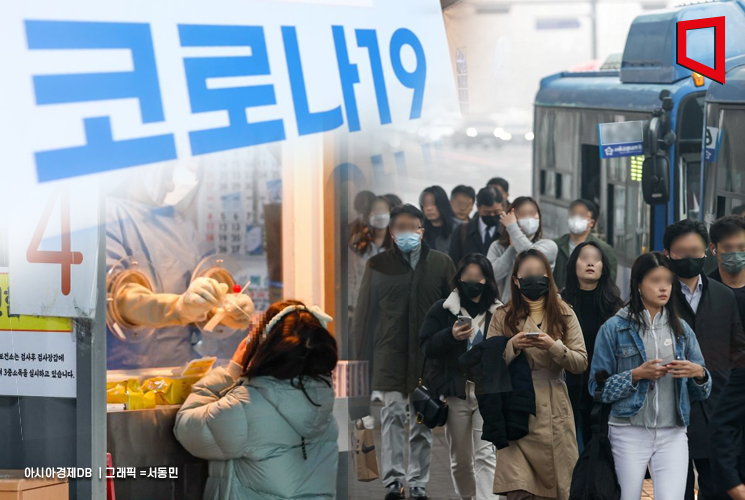
The family of an elementary school student who fell into a coma during home treatment for COVID-19 and died 13 days after testing positive lost a lawsuit filed against the government and local authorities.
According to the legal community on the 5th, Judge Choi Yuna of the Incheon District Court Civil Division 27 ruled against the plaintiffs in a damages lawsuit filed by three family members of boy A against the Government of the Republic of Korea and Namdong-gu, Incheon. On March 25, 2022, elementary school student A (then 11 years old) felt abnormal symptoms while preparing for school, took a test using a self-diagnosis kit, and tested positive. At that time, the Omicron variant of COVID-19 was spreading, with over 200,000 confirmed cases daily and 300 to 400 deaths each day. Nationwide, hospital bed shortages peaked, making home treatment the standard for all confirmed cases, with emergency room use or bed allocation only available for those whose symptoms worsened.
As a result, A also began home treatment. However, on March 30, the sixth day of infection, A’s mother, Ms. B, called the Incheon Fire Department Situation Room, saying, "My child is currently under home treatment but is eating very little and keeps trying to sleep," requesting help. The 119 dispatcher responded, "The medical consultant is currently attending to another emergency," and said, "If it is not an urgent situation, please call back later." After ending the call, Ms. B contacted 119 again five hours later to explain A’s breathing difficulties. However, the dispatcher said, "Even if we come, we cannot transport him unless a bed is assigned," and directed her to nearby hospitals where in-person treatment was possible.
Ms. B called 119 again the next day, saying, "My child is in severe pain," and the dispatcher advised her once more to "contact the public health center to request bed allocation." Ms. B then contacted three outpatient treatment centers for home-treated patients, which were provided via text message by the 119 Situation Room, but was told in-person treatment was not possible. She later spoke with the Namdong-gu Public Health Center duty officer through the COVID-19 Administrative Guidance Center, who advised, "Once home quarantine ends at midnight, call 119 and use the emergency room." Ultimately, A was transported to the emergency room by the 119 ambulance after quarantine ended but fell into a coma and died 13 days after testing positive.
About a month after A’s death, three family members, including A’s parents, filed a civil lawsuit demanding 500 million won in compensation from the Government of the Republic of Korea and others. They claimed, "At the time of the emergency room transfer report, the 119 Situation Room staff did not ask about the patient’s condition according to quarantine guidelines," and "did not provide appropriate emergency measures." They also stated, "The public health center duty officer said they were 'looking into bed availability' but did not take active measures and only advised to 'call 119,'" and argued that this violated the duty to protect citizens.
However, the court ruled, "It is difficult to conclude that the death of A was caused by negligence in the duties of the 119 Situation Room staff and public health center duty officer at the time," and "firefighters, who are not medical professionals, would have found it difficult to determine that A was an emergency patient based on the limited information provided during the phone consultation." The court also stated, "Sending the list of outpatient treatment centers via text message was a reasonable measure considering the medical conditions at the time, and the public health center duty officer requested bed allocation from higher authorities," adding, "They fulfilled their responsibilities by guiding the plaintiffs on possible solutions under the circumstances, so it is difficult to find negligence."
© The Asia Business Daily(www.asiae.co.kr). All rights reserved.

















