Long-term Capital Gains Tax Rate for High Earners at 28%
Less Stringent than Biden's Proposal of 39.6%
U.S. Democratic presidential candidate and Vice President Kamala Harris has unveiled a capital-friendly tax increase policy compared to President Joe Biden. With the presidential election just two months away, some analysts suggest that she is showing a moderate stance on certain economic policies.
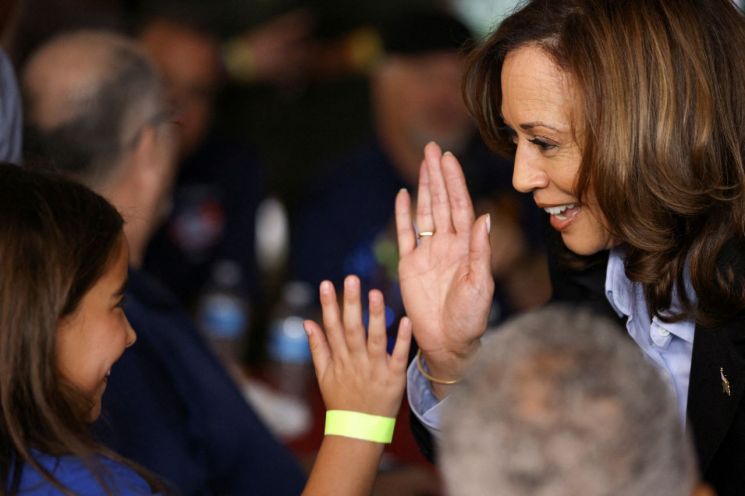
On the 4th (local time), Vice President Harris visited a brewery in Portsmouth, New Hampshire, during her campaign and announced, "We will impose a long-term capital gains tax rate of 28% on citizens earning more than $1 million annually."
Vice President Harris emphasized, "Billionaires and large corporations must pay their fair share of taxes," but she clearly drew a line from the 39.6% long-term capital gains tax rate that President Biden planned during his Democratic presidential candidacy in March.
Capital gains tax is a tax levied on profits made from selling assets such as real estate, stocks, and bonds held for more than one year. In the U.S., the current rate is relatively low at 20%, but the Democratic Party has been considering raising this rate to address wealth inequality by requiring the wealthy to pay more taxes. According to the Tax Policy Center, a U.S. think tank, more than half of long-term capital gains occur within the top 0.1% of households.
Harris’s more moderate wealthy tax increase pledge compared to President Biden is analyzed as an olive branch extended to Silicon Valley and Wall Street just two months before the election. The New York Times (NYT) explained, "Vice President Harris has adopted some of the language and policy ideas preferred by corporations."
There is also an assessment that Harris’s softened long-term capital gains tax plan could ultimately be more effective in raising federal revenue. When the capital gains tax rate increases significantly within one administration, investors may defer selling assets until the rate decreases, thereby postponing taxes. In such cases, funding for middle-class support emphasized by Vice President Harris could also become difficult. However, changes to the capital gains tax rate require congressional approval. Even if Vice President Harris is elected, if the Democratic Party does not hold the majority in both the House and Senate elections, the plan could be nullified.
On the same day, Vice President Harris also presented small business support policies emphasized under the "opportunity economy." She plans to achieve 25 million new small business registration applications during her first term and significantly increase the tax credit for new small businesses tenfold (from the existing $5,000 to $50,000). According to The Washington Post (WP), Harris is also considering measures to expedite tax filings for small businesses and approve state government incentives to make it easier to establish startups.
Vice President Harris stated, "I believe that America’s small businesses are an essential foundation for our entire economy," adding, "Strengthening small businesses will be one of the top priorities if elected." She continued, "When the government encourages investment, it promotes broad economic growth and job creation, which makes our economy stronger."
© The Asia Business Daily(www.asiae.co.kr). All rights reserved.

















