Interview with Kim Jong-sung, CEO of Mplus
"Surge in inquiries about all-solid-state equipment due to safety issues"
Pouch, prismatic, and pouch-type experts gather
Significantly reducing dependence on specific companies while maintaining sales
"Chasm is temporary... Long-term outlook is upward"
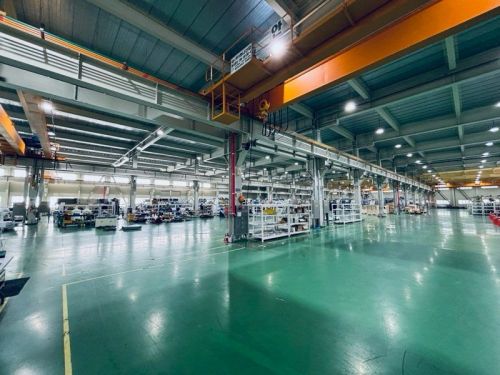
On the afternoon of the 2nd, upon entering Mplus Factory 2 located in Oksan-myeon, Heungdeok-gu, Cheongju, Chungbuk, workers were busily moving to produce equipment to be delivered to client companies. It was all-solid-state battery assembly equipment ordered in February. This equipment is soon to be completed and delivered to global clients.
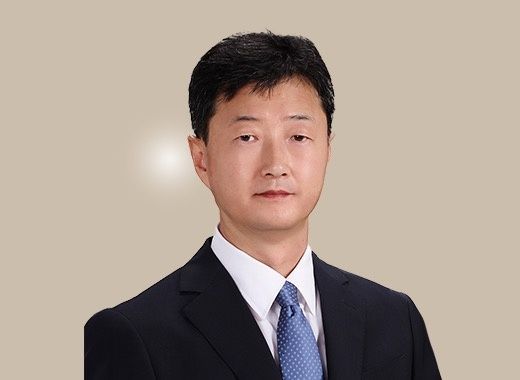
Kim Jong-seong, CEO of Mplus, whom we met that day, said, "We have signed a supply contract for all-solid-state battery equipment with one global company for a pilot line," adding, "In addition, we are in discussions regarding pilot project supply with one American company, one domestic company, and two other overseas companies."
All-solid-state batteries are next-generation batteries that replace the conventional liquid electrolyte with a solid one, enhancing safety and increasing energy density. Electric vehicles equipped with all-solid-state batteries are expected to travel over 1000 km on a single charge. However, since the materials differ, manufacturing technologies and equipment different from existing ones are required. Technically challenging, no company has yet commercialized all-solid-state batteries. It is expected that premium electric vehicles will adopt them gradually from 2027 onward, expanding the market.
Recently, due to electric vehicle fire issues, all-solid-state batteries have gained attention, and Mplus has suddenly become busy. CEO Kim said, "Product inquiries have increased so much that employees are struggling." He continued, "We have a good environment in-house, including dry room facilities, to test all-solid-state batteries. Starting with pilot equipment supply and accumulating experience and technology, we believe we can secure a leading position in the emerging all-solid-state battery manufacturing equipment market."
Mplus was founded in 2003 by CEO Kim, who was formerly the head of battery production technology at Samsung SDI. Initially, the company produced PDP manufacturing equipment, but as the PDP market declined, it quickly shifted focus to its specialty, battery equipment. In the mid-2000s, the battery market was not large, making it difficult to secure sales channels even if equipment was produced. During this challenging period, in 2008, through an introduction by an acquaintance, the company signed an assembly equipment contract with the American battery company A123, which provided a breakthrough. Since the 2010s, Mplus has continued stable growth by securing orders for automotive secondary battery assembly equipment from SK Innovation (now SK On), Samsung SDI, Hyundai Motor, LG Chem (now LG Energy Solution), and others.
Mplus's greatest strength is its expertise. CEO Kim himself led the localization of battery equipment at Samsung SDI from the mid-1990s. The main focus is pouch-type battery equipment. Park Jun-yong, Executive Director and CTO of the company, was the prismatic battery team leader at Samsung SDI’s production technology center, and Lee Hyung-jin, Executive Director in charge of purchasing, was the cylindrical battery team leader. Experts in all battery form factors?pouch, prismatic, and cylindrical?are gathered in one company. This is why CEO Kim confidently calls Mplus the "originator of battery equipment" wherever he goes.
Mplus’s expertise is proven not just by words but by numbers. Its equipment operates on 80 manufacturing lines worldwide. The Overall Equipment Effectiveness (OEE) of currently operating equipment is between 85% and 90%. CEO Kim explained, "Typically, customers require efficiency above 80%, and anything over 85% is recognized as world-class."
Mplus had long been perceived as heavily dependent on a specific client (SK On) and a specific form factor (pouch type) for sales. However, in recent years, by avoiding low-price bids and diversifying its product lineup, it has succeeded in diversifying its client base. CEO Kim explained, "As a result of continuously discovering new clients, the order dependency on a specific domestic company, which was over 70% in 2022, shrank significantly to 4% in 2023, while the total order volume remained at a similar level."
Last year, the company achieved additional orders from Envision AESC, a Japanese-Chinese battery company, and Our Next Energy (ONE), a battery startup. CEO Kim said, "Due to non-disclosure agreements (NDA), we cannot reveal details yet, but we have secured 5 to 6 new clients in Europe, the U.S., and Asia." Starting this year, the ratio of prismatic to pouch battery equipment is expected to be 8:2, with prismatic battery equipment taking a significantly larger share.
Research and development (R&D) for the future is also steadily progressing. Besides all-solid-state battery equipment, lithium metal battery assembly equipment is a market CEO Kim is closely watching. He explained, "To produce all-solid-state batteries, there is a high possibility of using lithium metal as the anode material. We are proactively developing lithium metal battery equipment."
Mplus’s hidden weapon is hydrogen fuel cell equipment. Since 2012, the company has been supplying fuel cell assembly equipment to one global automaker and is conducting various R&D related to hydrogen fuel cells. The fuel cell technology is also expected to be applicable to green hydrogen power generation systems. Additionally, the company is developing smart factory technologies such as autonomous mobile robots (AMR) and process automation robot technologies.
Due to the recent electric vehicle chasm (temporary demand stagnation), Mplus’s performance this year has not met initial expectations. Sales in the first half of this year were 40.4 billion KRW, with an operating profit of 1.4 billion KRW. The initial sales target for this year was 222 billion KRW, with an operating profit of 18.5 billion KRW. Last year, sales reached 340 billion KRW with an operating profit of 23.8 billion KRW. As of the second quarter of this year, Mplus’s order backlog stands at 284.7 billion KRW.
CEO Kim views the current chasm as a temporary phenomenon. He said, "Despite the current performance stagnation, global battery cell companies and material suppliers continue to purchase manufacturing equipment in preparation for the future," adding, "In the mid to long term, the company’s order volume will continue to follow an upward trajectory." CEO Kim stated, "We plan to establish ourselves in the market as a total solution provider related to battery manufacturing," and declared, "We will achieve 1 trillion KRW in sales and a corporate value of 1 trillion KRW by 2030."
© The Asia Business Daily(www.asiae.co.kr). All rights reserved.


















