Volkswagen Group Considers Closing German Factory for the First Time in History
Impact of Slowing Electric Vehicle Demand and Rise of Chinese EV Companies
Factory Closure Under Review... Indicates Workforce Restructuring
China Sales Down 7% in H1, 19% Drop in Q2
Volkswagen Group, the world's second-largest automaker, has decided to close some factories in Germany for the first time in its 87-year history. The company’s profits have taken a direct hit as Chinese electric vehicle (EV) manufacturers rapidly rise amid a slow transition to electric vehicles.
On the 2nd (local time), Oliver Blume, CEO of Volkswagen Group, issued a statement saying, "The automotive industry is in a very difficult and serious situation," announcing this plan. Volkswagen Group is considering closing one vehicle assembly plant and one parts factory in Germany. The group’s management also hinted at workforce restructuring. Currently, Volkswagen Group employs about 300,000 people in Germany. Local media outlet Der Spiegel estimated that this decision could result in the loss of approximately 20,000 jobs in Germany.
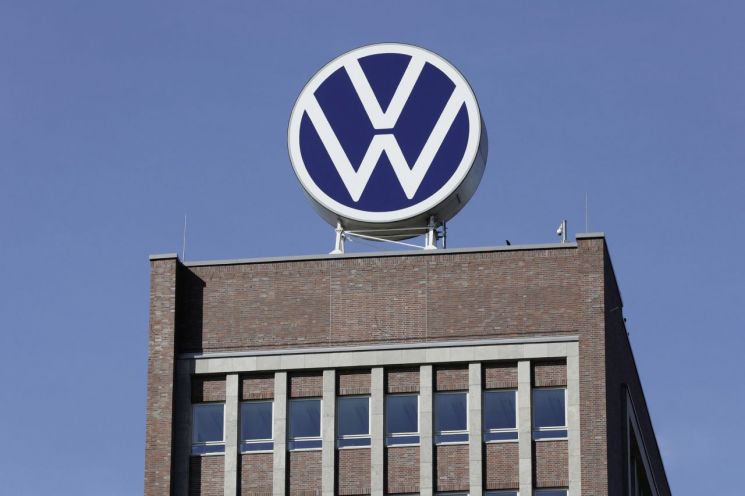 Volkswagen logo installed on the Volkswagen brand tower in Wolfsburg, Germany
[Photo by Volkswagen Group]
The reason behind Volkswagen’s tough measures is the global slowdown in EV demand and the rapid rise of Chinese EV manufacturers. Volkswagen Group is one of the most aggressive global top-tier manufacturers in declaring an EV transition policy. It has set a goal to have 80% of its European sales be electric vehicles by 2030 and to increase the same ratio to 55% in North America. The group has also made large-scale investments in EV platforms and battery businesses, including establishing its battery subsidiary PowerCo.
However, the market transition has not been as fast as expected. In China, where EV adoption is rapid, consumers have chosen local brands over Volkswagen. This trend is also influenced by China’s ‘patriotic consumption’ movement, which has become more pronounced since the COVID-19 pandemic, rejecting imported cars. Volkswagen Group’s sales in China peaked at 4.2 million units in 2019 but dropped to 3.2 million units in 2023. In the first half of this year, sales decreased by 7.4% to 1.34 million units. Even if sales in the second half of the year remain at a similar level to the first half, a year-on-year decline of over 15% is expected.
A crisis is also being sensed in Volkswagen’s home market, Europe. According to Samsung Securities, Volkswagen Group’s share of the European EV market was about 23.5% in 2021 but fell to 19% in the period from January to July this year. Meanwhile, Chinese EV manufacturers’ market share rose to 17.8%, reaching second place during the same period. Im Eun-young, a researcher at Samsung Securities, said, "This move indicates that Volkswagen’s business situation in China and Europe is not easy," adding, "Next year, the key issue in the European EV market is likely to be Volkswagen’s restructuring rather than stricter carbon neutrality regulations."
© The Asia Business Daily(www.asiae.co.kr). All rights reserved.

















