Announcement at Climate Industry International Expo
"Global Energy Transition Investment Continues to Increase"
Discussion on Technologies and Policies for Achieving Carbon Neutrality
Major Figures Including Chairman Choi Tae-won Attend in Large Numbers
To achieve carbon neutrality, governments and companies worldwide must increase their energy transition investments by more than 200% compared to current levels by 2030, according to a recent claim.
David Kang, Head of Korea-Japan Research at BNEF (Bloomberg New Energy Finance), attended the '2024 Climate Industry International Expo' Leader Roundtable held at BEXCO in Busan on the 4th and stated, "Global energy transition investments have continued to rise, exceeding $1.7 trillion (approximately 2,281 trillion KRW) last year," adding, "To achieve carbon neutrality, energy transition investments need to expand by more than 200% compared to last year by 2030." This implies that over 400 trillion KRW must be invested globally over the next six years.
Kang identified nine core technologies essential for carbon neutrality: renewable energy, nuclear power, hydrogen, carbon capture and storage (CCS), electric vehicles, energy storage systems (ESS), sustainable aviation fuel (SAF), heat pumps, and power networks.
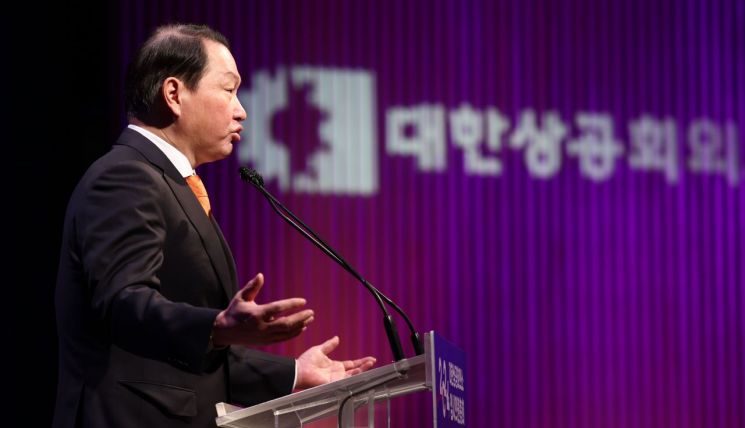
The expo, which runs until the 7th, saw the participation of key figures including Chey Tae-won, Chairman of the Korea Chamber of Commerce and Industry, Fatih Birol, Executive Director of the IEA, and Park Hyung-joon, Mayor of Busan, along with representatives from 32 embassies in Korea, 24 national delegations, and 10 international organizations. The theme of the expo is "Opening the Carbon-Free Energy (CFE) Era with Climate Technology," featuring conferences, exhibitions, and CFE leader roundtables.
More than 540 domestic and international companies showcased the latest technologies and products aimed at reducing carbon emissions and explained their efforts through panel discussions. Kim Yong-tae, Executive Director at Hyundai Motor Company, said, "Hydrogen is a means to drastically reduce greenhouse gas emissions in the transportation sector as an energy carrier," adding, "We are currently preparing a hydrogen strategy that can be implemented with affiliates and partner companies, and we are preparing to launch a new Nexo model next year."
Hong Sung-min, Head of ESG Strategy at LG Electronics, stated, "LG Electronics has established an ambitious plan to achieve carbon neutrality across all Scope 1, 2, and 3 areas by 2030," noting, "All our business sites in the United States are already operating on 100% renewable energy." Scope 1 refers to direct carbon emissions from a company’s direct use of fossil fuels, Scope 2 refers to indirect emissions from electricity consumption, and the most comprehensive Scope 3 covers carbon emissions across all business activities including the supply chain.
Hwang Ho-song, Executive Director at Samsung Electronics, commented, "The semiconductor industry inherently consumes enormous amounts of electricity, and usage is expected to continue increasing, so there are limits to achieving carbon neutrality solely through renewable energy," adding, "We support the Carbon-Free Energy initiative and believe it should be expanded globally." Kim Jong-woo, Executive Director at Doosan Enerbility, also stated, "Globally, the use of carbon-free power sources such as nuclear energy is increasing," and emphasized, "South Korea must actively pursue the timely construction of large nuclear power plants and the challenging introduction of small modular reactors (SMRs) to achieve carbon neutrality."
Park Il-jun, Senior Vice Chairman of the Korea Chamber of Commerce and Industry, said, "In the era of carbon neutrality, the role of companies is to demonstrate innovative capabilities by providing various carbon reduction products, technologies, and services," expressing hope that "Korea will lead the global climate industry and that carbon neutrality will become a new opportunity for economic growth."
© The Asia Business Daily(www.asiae.co.kr). All rights reserved.

















