CJ CheilJedang Launches Tempeh Chips Following Ultive and Basak Chips
Nongshim Introduces Honey Twist Flavor Using Smart Farm and IP
Domestic Market Growth Limited by Low Birthrate... Need to Find New Path
Food companies facing growth limits in the era of low birth rates are actively fostering in-house ventures to explore new business opportunities. As a result, CJ CheilJedang created snacks from broken rice that was about to be discarded and opened export channels, while Nongshim targeted younger generations by combining traditional liquor with snacks that have been on the market for over 50 years. Food companies with histories spanning more than half a century are awakening their innovation DNA through in-house ventures, cultivating future growth engines that had been depleted.
According to the industry on the 2nd, CJ CheilJedang has been operating the food in-house venture program 'INNO 100' since 2021. Meaning '100 days immersed in innovation,' employees who apply to INNO 100 completely step away from their regular duties and focus on concretizing their ideas for 100 days. Currently, four teams are active.
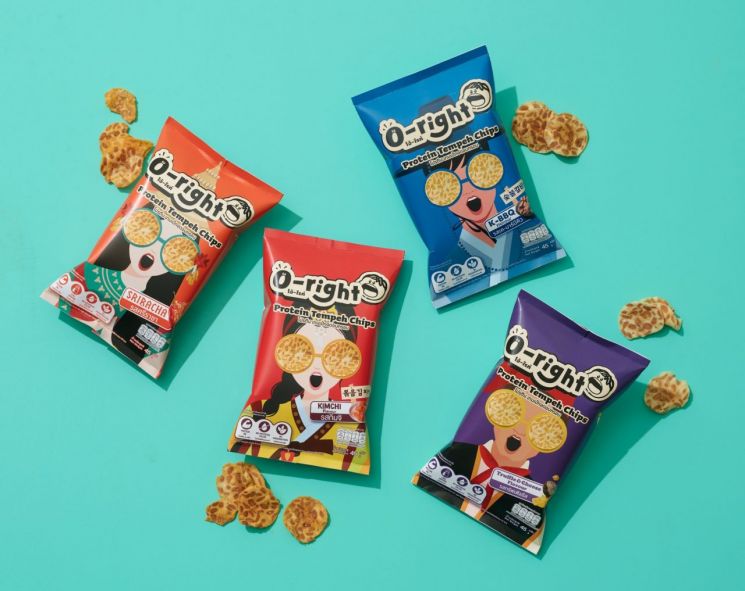
A representative team is the 'New Snack Innovation Lab.' This team recently launched the high-protein snack ‘O-right Tempeh Chip’ in Thailand. The snack is made using the fermented soybean food ‘Tempeh,’ containing 6g of plant-based protein per bag. It features the nutty flavor of tempeh, which is fermented whole soybeans without grinding.
CJ CheilJedang decided to launch Tempeh Chips, judging that demand for health-conscious snacks is increasing in the Thai snack market, which is mainly potato chips. Reflecting local consumer trends with high interest in Korean food, the chips come in four flavors: charcoal-grilled ribs, stir-fried kimchi, Sriracha, and truffle & cheese, which are popular among Thai consumers. A CJ CheilJedang official said, “We developed localized snacks with the fresh spirit of challenge from the in-house venture,” adding, “We aim to establish Tempeh Chips as an everyday snack for Thai consumers.”
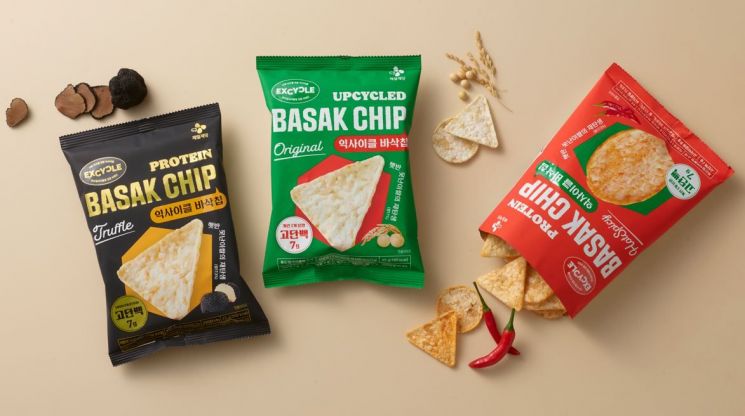
The New Snack Innovation Lab is a team that has already experienced great success with the previously launched 'Excycle Crispy Chip.' Crispy Chip is a food upcycling snack made from broken rice fragments generated during the production of Hetbahn (ready-to-eat rice) and okara leftover from tofu production. After expanding sales channels beyond CJ’s own mall and Olive Young to convenience stores, it entered the US, Malaysia, and Hong Kong markets last year. Recently, it was even launched at Costco in Australia. Not only did it generate profits by turning low-value byproducts into high-value snacks, but it also saved disposal costs for byproducts, making the support for the in-house venture worthwhile for CJ CheilJedang. Moreover, it boosted ESG scores, achieving three benefits at once. A CJ CheilJedang official said, “The challenging and fresh ideas of MZ generation employees are bearing fruit through in-house ventures, leading to actual commercialization.”
Besides the New Snack Innovation Lab, another in-house venture at CJ CheilJedang, the 'Plant-based Dairy Lab,' is also making significant strides. This team launched the plant-based beverage and dessert brand ‘Altive’ in June 2022 and recently introduced two types of Altive ice cream. The ice cream is characterized by technology that minimizes the typical gritty texture of existing plant-based ice creams.
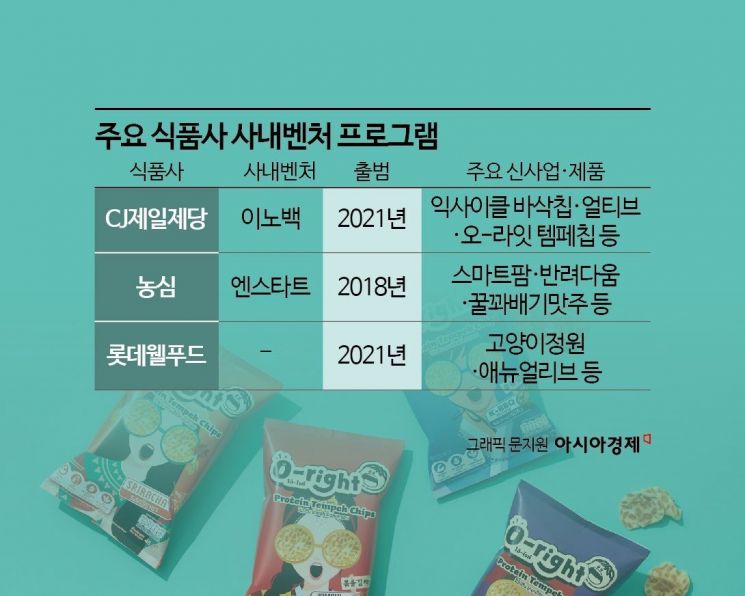
Nongshim is also actively fostering in-house ventures. Launched in 2018, Nongshim’s N-Start program allows employees to propose new businesses using internal capabilities and become leaders to directly drive the projects. Teams with selected ideas receive business development budgets, mentoring from startup experts, and other support to concretize their businesses.
Up to the third term last year, a total of seven teams challenged new businesses, with three teams in smart farms, health functional foods, and the company’s own mall being organized into official in-house departments to continue their businesses. In particular, the smart farm began exports to Oman at the end of 2022 and has since expanded to the UAE and Saudi Arabia, challenging the global market centered on the Middle East. The collagen-focused health functional food also achieved cumulative sales of 100 billion KRW by May, successfully establishing itself in the market.
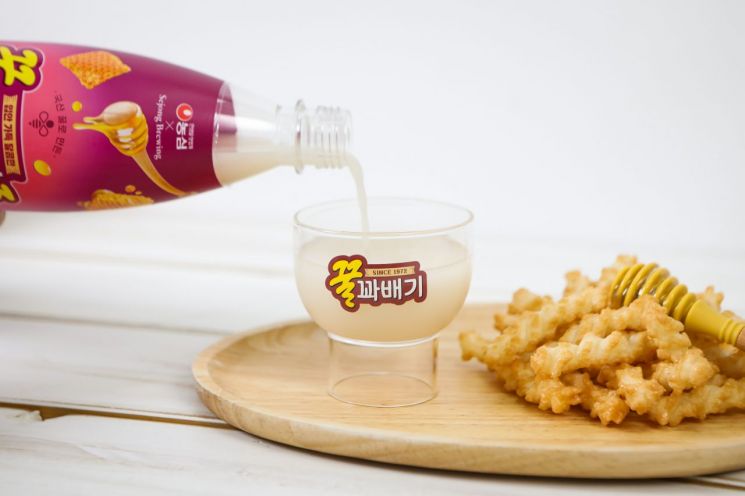
The most impressive team among the fourth term is the 'Traditional Liquor Promotion Team.' Recently, they collaborated with the makgeolli brewery ‘Joeun Sul Sejong’ to develop ‘Honey Kkwabaegi-flavored Liquor,’ currently sold through the convenience store CU. Kkwabaegi (twisted doughnut) was first launched in September 1972. Through the in-house venture, a snack over fifty years old was reborn as liquor. Honey Kkwabaegi-flavored Liquor not only revitalizes domestic rice consumption but also has significant social contribution by strengthening win-win cooperation with small breweries and PET bottle manufacturers. The Traditional Liquor Promotion Team plans to introduce various traditional liquors utilizing Nongshim’s brand intellectual property beyond Kkwabaegi.
Nongshim intends to continue fostering a culture of challenge and innovation through the N-Start system. A Nongshim official said, “The company’s long-term competitiveness comes from employees’ proactiveness,” adding, “Through N-Start, we will provide opportunities for employees to freely express ideas, creating a system where both the company and employees grow together.”
Additionally, Lotte Wellfood has been operating an in-house venture program since 2021. Selected in-house venture teams receive business support funds, separate external office spaces, one-on-one consulting from Lotte Ventures, and various supports such as spin-offs and equity investments. Four terms have been selected so far. The first and second terms have spun off, while the third and fourth terms are in the business incubating process. Unlike other food companies, spin-offs are possible. A Lotte Wellfood official said, “By uniquely offering spin-offs as an option for in-house ventures in the food industry, we foster a sense of ownership,” adding, “Even if they fail, the opportunity to return is also open.”
The reason food companies are actively fostering in-house ventures is that the domestic market has reached growth limits due to low birth rates. As the number of mouths to buy processed foods like snacks and ramen decreases, the consumer base is shaken. Fortunately, global interest in K-food driven by the popularity of K-culture has provided new momentum, but sustainable growth requires new paths. An official from a food company said, “For food companies trapped in the low-growth swamp due to low birth rates, in-house ventures are indispensable to secure the future,” adding, “Awakening innovation DNA through this is essential to securing new growth engines.”
© The Asia Business Daily(www.asiae.co.kr). All rights reserved.



















