The Supreme Court has ruled that even if a lease contract is canceled due to the landlord announcing plans for building demolition and reconstruction, and the key money contract between the existing tenant and the new tenant is terminated, the notification of demolition and reconstruction plans does not constitute an act that obstructs the opportunity to recover key money.
The Civil Division 1 of the Supreme Court (Presiding Justice Seo Kyunghwan) overturned the lower court's partial ruling in favor of plaintiff A in a damages claim lawsuit (2024Da232530) filed against defendant B on the 31st of last month, and remanded the case to the Seoul Southern District Court.
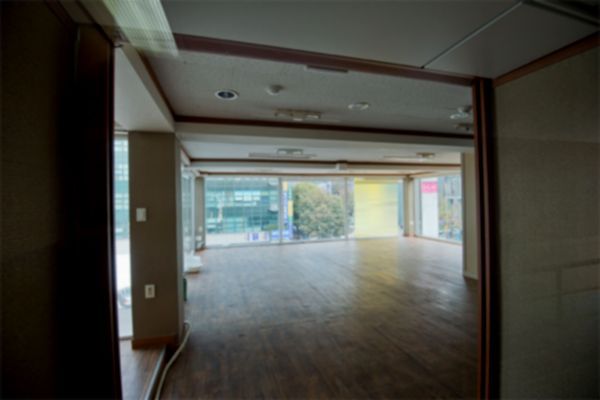
In April 2018, A entered into a lease contract with building owner B to rent part of the first floor of a building in Gangseo-gu, Seoul, for one year from July 2018 to June 2019, with a deposit of 22 million KRW and a monthly rent of 2.6 million KRW. Subsequently, in June 2021, they extended the lease period by signing a new lease contract from July 2021 to June 2022, and on July 1, 2022, the lease contract was implicitly renewed.
A, who operated a restaurant in the leased space of the building, secured a new tenant to take over the restaurant at the end of August 2022 and signed a transfer contract for key money of 70 million KRW. A requested B to enter into a lease contract with the new tenant, but B notified that the building was planned for reconstruction and that contracts could only be made for a lease period of three years, resulting in the termination of the key money contract.
A filed a lawsuit claiming that “B obstructed the opportunity to recover key money that could have been received from the new tenant by refusing to enter into a lease contract with the new tenant,” demanding payment of 70 million KRW and delayed damages under Article 10-4 of the Commercial Building Lease Protection Act (Commercial Lease Act). This provision stipulates that “the landlord shall not refuse to enter into a lease contract with a prospective new tenant arranged by the tenant without justifiable reasons from six months before the lease period ends until the lease termination, thereby obstructing the tenant’s receipt of key money.”
The first and appellate courts partially ruled in favor of the plaintiff. However, the Supreme Court judged that B’s notification of demolition and reconstruction did not constitute an obstruction of the opportunity to recover key money.
The Supreme Court stated, “The necessity for demolition and reconstruction due to the building’s durability and other factors is objectively recognized, and there are no special circumstances where the defendant definitively offered and insisted on only a short lease period to the new tenant despite the plans and stages not being concretized,” and “the lower court erred in interpreting the ‘obstruction of key money recovery’ under Article 10-4, Paragraph 1, Subparagraph 4 of the Commercial Lease Act, which affected the judgment.”
Hong Yoonji, Reporter for Law Times
※This article is based on content supplied by Law Times.
© The Asia Business Daily(www.asiae.co.kr). All rights reserved.

















