Failed Again in Nuclear Fuel Debris Removal Work
"Tokyo Electric Power Hasn't Even Visited Once"
Frequent Accidents... Criticism of "Complacency in Risk Management"
As the removal work of nuclear fuel debris from the Fukushima nuclear power plant continues to fail, Japanese media are raising questions about Tokyo Electric Power Company's (TEPCO) management capabilities. Criticism ranges from pointing out that the recent failure stemmed from basic mistakes to accusations that the constant occurrence of industrial accidents indicates a lack of proper nuclear power plant management skills.
On the 2nd, public broadcaster NHK reported that the attempt to remove melted nuclear fuel debris (referred to as "debris," a Japanized expression of the English word) from Reactor 2 of the Fukushima Daiichi Nuclear Power Plant on the 23rd of last month failed. The report stated, "Our investigation revealed that neither TEPCO nor the primary contractor checked the site even once during the month from installation to the day of operation."
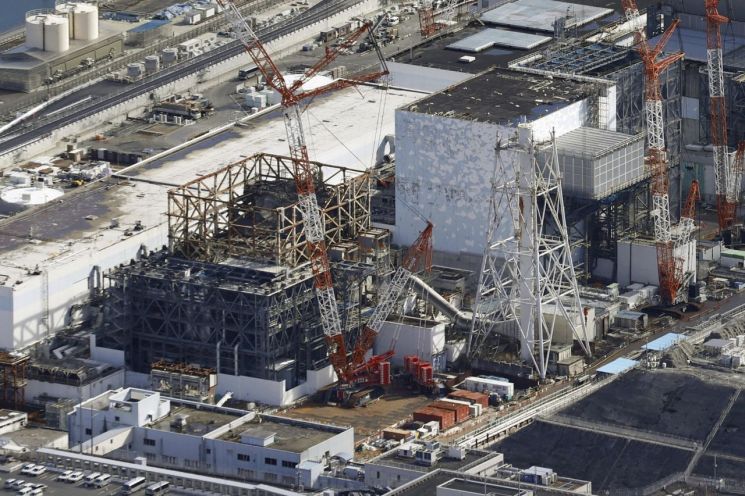 Panoramic view of the Fukushima nuclear power plant where the accident occurred. (Photo by Yonhap News)
The radioactive material debris stuck inside the accident-stricken nuclear power plant is identified as the cause of contaminated water generation. Rainwater or seawater entering the plant passes through the debris, continuously becoming contaminated.
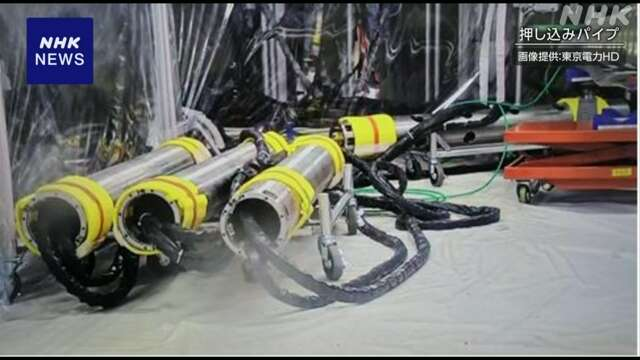
TEPCO plans to remove the debris by connecting five thin pipes like fishing rods and pushing them into the reactor to scrape off the debris. They have attempted this operation three times since 2021, but all attempts failed. In fact, on the 23rd of last month, they only realized on the day of the operation that the order of the pipes had been reversed and stopped the work belatedly. It was also revealed that the work had been carried out only by subcontractor employees, not TEPCO staff, leading Japanese media to criticize TEPCO's poor management.
NHK stated, "Although the pipes were aligned on-site on July 28, a month prior, the subcontractor did not conduct a rehearsal of the operation," and "Our investigation revealed that neither TEPCO nor the primary contractor checked the order on-site even once during nearly a month before the start of the operation." This effectively confirms the controversy over poor management once again.
The Tokyo Shimbun also pointed out, "TEPCO became complacent after being evaluated as having no issues with risk management." The Tokyo Shimbun noted, "Since the worker exposure accident in October last year, accidents related to Fukushima have continued," and "Despite Minister of Economy, Trade and Industry Gen Saito summoning the TEPCO president in February to demand prevention of recurrence, problems persist."
According to the Tokyo Shimbun, the number of industrial accident cases recognized in Fukushima from 2011 to 2023 reached 365. These recognized cases include various incidents such as injuries during work, hospitalizations due to heatstroke, and occurrences of leukemia or cancer caused by radiation exposure. Currently, cases recognized as industrial accidents due to radiation exposure started with one case in 2015 and total three cases.
Moreover, controversy intensified after an accident last October in which five workers were doused with wastewater while cleaning pipes at the contaminated water purification facility. Two of them were exposed to radiation and transported to the hospital. The Tokyo Shimbun pointed out, "Problems have continued even after that." In February, a worker left a valve open on the contaminated water purification equipment while cleaning, causing 1.5 tons of contaminated water to leak outside through an exhaust vent. In April, a worker accidentally touched a power cable while removing concrete pavement, causing a blackout; the worker suffered severe burns, and the contaminated water discharge was halted for six and a half hours. In June, a power brake device fell in the turbine building of Unit 6, stopping the cooling of spent nuclear fuel for about 10 hours.
Meanwhile, TEPCO plans to report the results of this investigation to related parties including the Ministry of Economy, Trade and Industry on the same day. The resumption of the halted nuclear fuel debris removal work is likely to take place next month.
© The Asia Business Daily(www.asiae.co.kr). All rights reserved.


















