100 People Did Not Receive Training Allowance...The Company Has Funding Issues
It has been revealed that 100 Filipino domestic workers introduced as part of Seoul City's pilot project did not receive their training allowances. They are now in a situation where they must worry about their immediate livelihood, as they have to live on minimum wage in Gangnam, Seoul, and even that has not been paid.
According to the Ministry of Employment and Labor, the 100 Filipino domestic workers who arrived on the 6th receive 8 hours of daily training, including childcare and household management duties, as well as education to help them adapt to life in Korea. Under their labor contracts, they are supposed to receive wages for 20 days each month from Home Story Saenghwal (Daeri Jubu) and Hubris (Dolbom Plus), which are domestic service providers.
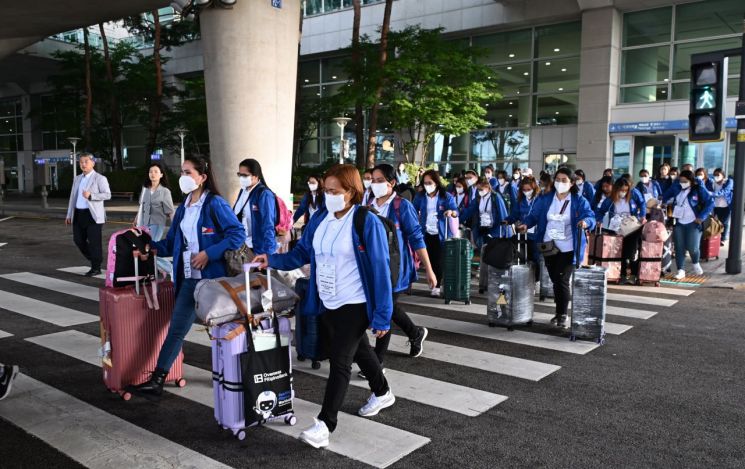
Until the pilot project service officially starts on the 3rd of next month, Home Story Saenghwal (Daeri Jubu) and Hubris (Dolbom Plus), government-certified domestic service providers, were scheduled to pay the training allowances. However, according to Edaily on the 29th, Home Story Saenghwal and Hubris were unable to pay the allowances due to financial difficulties.
According to the Ministry of Employment and Labor, the training allowance each domestic worker should receive is around 960,000 KRW. In the case of small and medium-sized enterprises, when workers under labor contracts receive training allowances, the government reimburses the companies afterward through the Employment Insurance Fund. The two companies operate under the same structure. It is reported that since the pilot project service has not yet started, the companies have not received service fees and thus could not pay wages.
With the training allowances delayed, the Filipino domestic workers are now forced to worry about living expenses until the next payday on the 20th of next month. They have contracts to work at least 30 hours per week at the minimum wage (9,860 KRW per hour).
In response, the Ministry of Employment and Labor and Seoul City plan to encourage the companies to pay the training allowances. The Ministry is reportedly committed to ensuring that all 100 workers receive their training allowances as soon as possible. However, it is also said that payments may be made sequentially depending on the companies' circumstances.
Home Story Saenghwal and Hubris are government-certified domestic service providers and were finally selected through a public contest for this Seoul City pilot project. Home Story Saenghwal signed labor contracts with 70 Filipino domestic workers, and Hubris with 30.
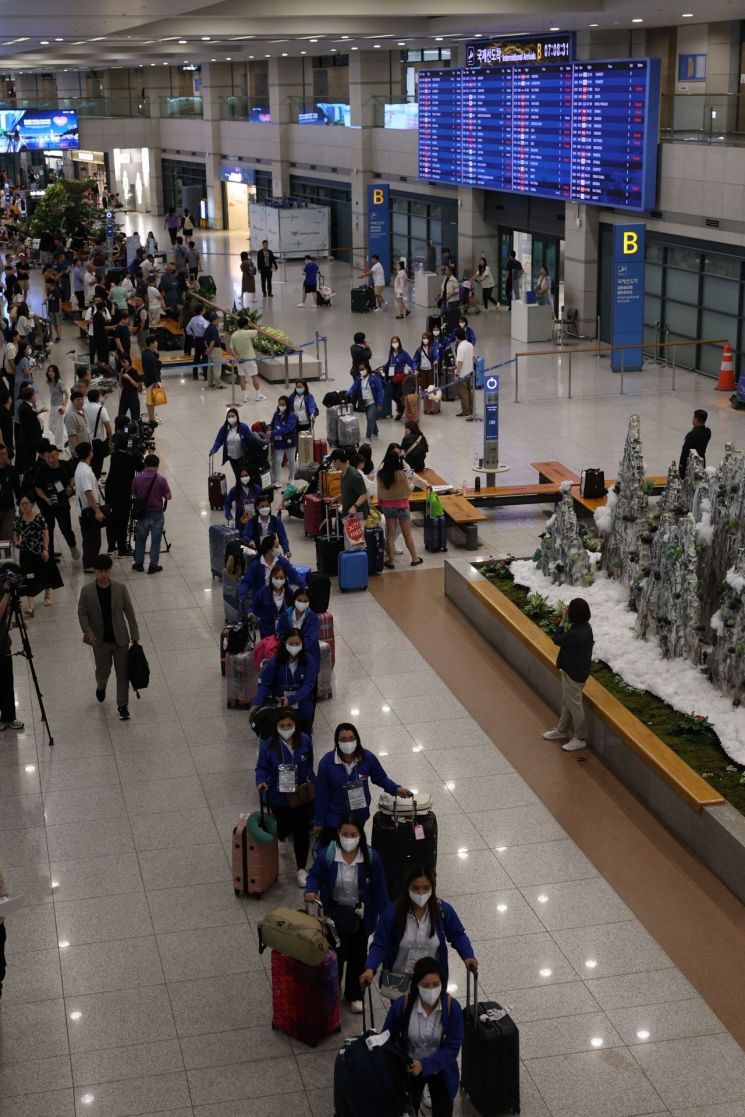
Meanwhile, regarding Filipino domestic workers, on the 29th (local time), Hong Kong's South China Morning Post (SCMP) published an article titled "Why do Filipino domestic workers in Korea earn much more than those in Hong Kong and Singapore?"
Currently, Filipino domestic workers receive the same minimum wage as locals under bilateral government agreements. Therefore, if they provide 8 hours of service per day, the monthly payment amounts to 2.38 million KRW. This is significantly higher than the average monthly salary of 500,000 to 800,000 KRW earned by foreign caregivers in Singapore or Hong Kong. However, unlike those countries, Korea does not provide live-in arrangements, so caregivers must cover housing, food, and transportation expenses themselves.
© The Asia Business Daily(www.asiae.co.kr). All rights reserved.
![Clutching a Stolen Dior Bag, Saying "I Hate Being Poor but Real"... The Grotesque Con of a "Human Knockoff" [Slate]](https://cwcontent.asiae.co.kr/asiaresize/183/2026021902243444107_1771435474.jpg)

















