Institute of Biotechnology and Harvard Medical School Research Team Collaborate
Expanding Early Treatment Opportunities in Underdeveloped Regions and Countries
Cervical cancer, which has the third highest incidence rate among all female cancers after thyroid and breast cancer, is mostly caused by the Human Papilloma Virus (HPV). It primarily occurs due to infection, and while the incidence is decreasing in South Korea due to increased vaccination, the rate is higher in developing and underdeveloped countries with poor medical environments.
A joint research team from Korea and the United States has developed a technology that allows easy diagnosis of the virus causing cervical cancer even in remote or underdeveloped areas with limited access to medical services, enabling early treatment.
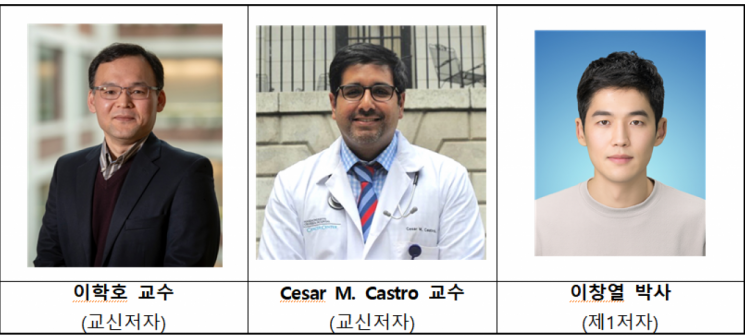
On the 2nd, the Korea Research Institute of Bioscience and Biotechnology announced that Dr. Chang-Yeol Lee’s team at the BioNano Research Center, in collaboration with Professor Lee Hak-Ho’s team at Harvard Medical School, developed an on-site diagnostic system capable of rapidly detecting HPV.
HPV causes warts when it infects the skin, but when it infects the genital mucosa, it invades cervical epithelial cells and causes cervical cancer through multiple tumor stages. Until now, vaccination or early detection of the virus followed by appropriate treatment has been known as the best way to prevent cervical cancer. Recently, vaccination among men has also been increasing.
For cervical cancer diagnosis, methods such as cytology, acetic acid visual inspection, and PCR tests are used, but these require specialized medical facilities or take a long time, limiting their use in low- and middle-income countries or regions with poor medical infrastructure. In underdeveloped countries where vaccines are hard to distribute, diagnosis is also difficult.
The research team developed a system that combines gene-editing-based nucleic acid detection technology with digital signal processing technology to diagnose target viruses with high sensitivity, and made it portable to enable rapid on-site HPV diagnosis.
The system can analyze up to 12 samples within 35 minutes at once, and the diagnostic reagents were solidified to facilitate transportation and storage on-site.
The Korea Research Institute of Bioscience and Biotechnology stated that the diagnostic platform developed this time accurately analyzed all 169 clinical samples, and it is expected to help solve medical exclusion issues in countries and regions with poor medical environments in the future.
Dr. Chang-Yeol Lee, who led the research, said, "We hope to promote the universalization of HPV diagnosis and alleviate the suffering of medically underserved groups who have been exposed to the threat of cervical cancer without knowing the cause," adding, "We plan to conduct local tests of the developed system in Uganda and Ghana, where medical environments are poor."
Professor Lee Hak-Ho of Harvard Medical School said, "By diversifying diagnostic probes in the future, we expect this to become a core diagnostic system that can effectively respond to other cancer biomarkers and emerging infectious diseases beyond cervical cancer."
© The Asia Business Daily(www.asiae.co.kr). All rights reserved.
![Clutching a Stolen Dior Bag, Saying "I Hate Being Poor but Real"... The Grotesque Con of a "Human Knockoff" [Slate]](https://cwcontent.asiae.co.kr/asiaresize/183/2026021902243444107_1771435474.jpg)
















