Establishment of a Periodic Fee Adjustment System Based on Scientific Analysis
The government will raise the prices of about 3,000 health insurance service fees, which were previously set below cost, to appropriate levels by 2027 to strengthen essential medical care. Along with improving fee imbalances, the government will also reform the indemnity insurance system that has encouraged excessive medical treatment.
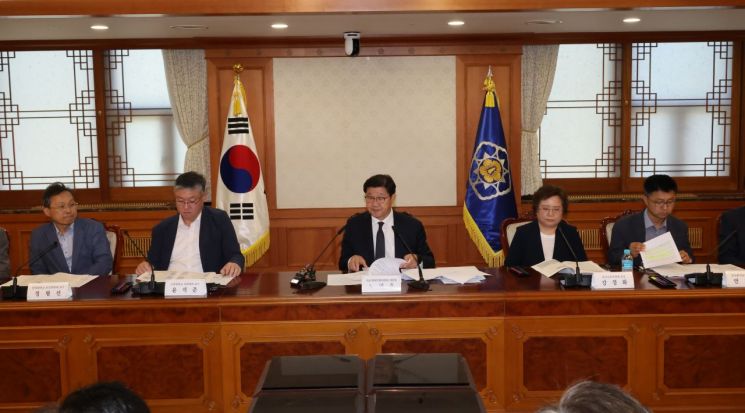
The Special Committee on Medical Reform (Special Committee) announced the first phase of the medical reform implementation plan, which was reviewed and approved at the 6th meeting held on the morning of the 30th.
First, the plan involves analyzing approximately 9,800 health insurance service fees in total and raising the low fees to appropriate levels. It is estimated that about 3,000 service fees claimed by general hospitals or higher were compensated below cost.
Starting from the second half of this year, around 800 service fees related to critical surgeries directly linked to life and essential anesthesia will be significantly increased. More than 500 billion KRW will be invested annually to raise fees for about 1,000 cumulative critical surgeries and anesthesia procedures up to the general hospital level by the first half of next year. According to the Special Committee, raising about 1,000 service fees to cost level will increase the overall average fee for surgeries and treatments to 95% of cost. For tertiary general hospitals participating in the tertiary hospital restructuring project, fees for critical surgeries and anesthesia will be further increased.
A systematic fee adjustment system based on scientific cost analysis will also be established. To this end, the operation of the Medical Cost Analysis Committee within the Health Insurance Review and Assessment Service will be revitalized, and the scientific cost analysis foundation for discussions will be strengthened. Based on this, a system for frequent fee adjustments will be prepared to prevent under- and over-compensation. The cycle for relative value revision will be shortened from the current 4-7 years to within 2 years. The Special Committee plans to prepare the revision plan by next year and, once imbalances are resolved, will pursue a plan to fully link the conversion factor and relative value in the future.
In particular, six priority investment areas have been identified: critical care, high-difficulty essential medical care, emergency care, nighttime/holiday care, pediatrics and childbirth, and vulnerable areas. Additionally, a public policy fee will be created reflecting four major factors?difficulty/risk, proficiency, emergency treatment waiting times, and region?that are insufficiently reflected in the current fee-for-service system. Health insurance compensation for 24-hour care will also be newly established within the year and will be prioritized for application in the tertiary hospital restructuring project.
The uniform classification-based additional fee system, which applies the highest additional rate simply because a hospital is a tertiary general hospital, will be changed to a performance-based compensation system. Accordingly, about 2 trillion KRW in performance compensation funds will be secured and distributed to each medical institution as compensation.
The role of indemnity insurance, which has been a major cause of excessive medical treatment, will also be revised. The current indemnity insurance system has been known to cause side effects such as frequent use of tertiary general hospitals and emergency rooms by mild and non-emergency patients because it fully or largely covers patients' health insurance copayments.
The Special Committee is considering measures to strengthen patient copayments for new indemnity insurance products or rationalize the coverage scope and level of non-reimbursable services to prevent excessive treatment. It will also promote institutionalizing prior consultations between the Ministry of Health and Welfare and the Financial Services Commission when deciding important matters related to the insurance system to strengthen collaboration. Furthermore, the committee is exploring ways to involve medical institutions in setting standards and prices for non-reimbursable services under indemnity insurance and to establish a review system to manage the volume and level of medical treatment.
© The Asia Business Daily(www.asiae.co.kr). All rights reserved.
![Clutching a Stolen Dior Bag, Saying "I Hate Being Poor but Real"... The Grotesque Con of a "Human Knockoff" [Slate]](https://cwcontent.asiae.co.kr/asiaresize/183/2026021902243444107_1771435474.jpg)
















