Namibia Facing Food Shortage, Wild Animal Hunting
Dozens of Tons of Meat to Be Supplied to Local Residents
The Namibian government, suffering from severe food shortages due to drought, has decided to cull wild animals such as elephants and distribute the meat to local residents.
According to reports from foreign media including CNN, Namibia's Ministry of Environment issued a statement on the 26th (local time) announcing the plan to cull wild animals. The animals to be culled include 83 elephants, 30 hippos, 60 buffaloes, 50 impalas, 100 nyus, 300 zebras, and 100 elands, totaling 723 animals.
The Ministry of Environment decided to cull the wild animals due to water shortages. They judged that there is insufficient grazing land and water compared to the animal population, making it necessary to reduce the number of animals in the park. Companies employing professional hunters have already hunted 157 wild animals, producing 56,800 kg of meat. This meat will be distributed to residents in nearby areas suffering from drought and food shortages.
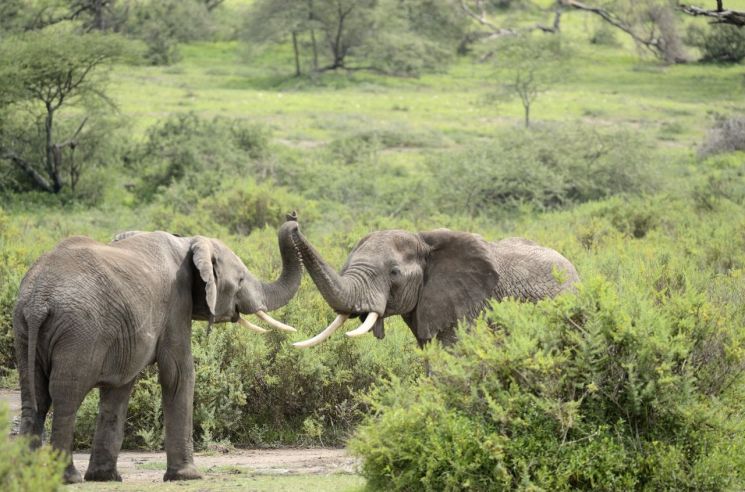 Elephant. The photo is not related to any specific expression in the article. [Image source=Pixabay]
The Namibian Ministry of Environment emphasized that this measure is in line with the constitutional obligation to use natural resources for the benefit of the people. In Africa, hunting is often conducted to control the population of wildlife habitats or for the purpose of national relief.
Additionally, the authorities state that hunting wild animals is important to maintain a harmonious relationship between animals and humans. When water becomes scarce, conflicts between elephants and residents inevitably intensify, but by reducing the wildlife population in advance, such clashes can be prevented early.
Namibia declared a state of emergency due to drought in May. It is reported that 1.4 million people, about half of the total population, are already exposed to severe food shortages.
The United Nations (UN) warned that Southern Africa has been experiencing the worst drought in decades since early this year due to the effects of the El Ni?o phenomenon. In Namibia, as of last month, 84% of food reserves have been depleted.
Meanwhile, five Southern African countries including Namibia, Zimbabwe, Zambia, Botswana, and Angola have vast wildlife conservation areas. This region is home to the largest elephant population in the world, estimated to be about 200,000 animals.
© The Asia Business Daily(www.asiae.co.kr). All rights reserved.
![Clutching a Stolen Dior Bag, Saying "I Hate Being Poor but Real"... The Grotesque Con of a "Human Knockoff" [Slate]](https://cwcontent.asiae.co.kr/asiaresize/183/2026021902243444107_1771435474.jpg)
















