Exhibit Damaged but Child Not Held Responsible
Family of Child Who Caused Damage Invited Again After Incident
An accident occurred in which a 3,500-year-old jar exhibited at a museum in Israel was broken due to the mistake of a 4-year-old child. On the 27th (local time), the British BBC reported that a jar made during the Bronze Age between 2200 BC and 1500 BC at the Hecht Museum in Haifa, Israel, was broken by the mistake of a 4-year-old boy and is currently undergoing restoration work.
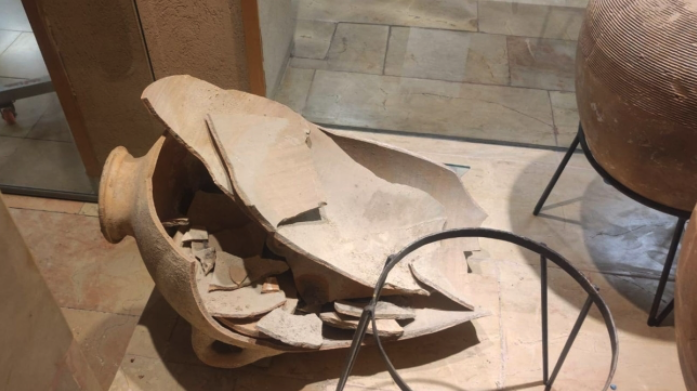 A 3,500-year-old jar exhibited in a museum in Israel was damaged due to the mistake of a 4-year-old child. On the 27th (local time), the British BBC reported that a jar made during the Bronze Age between 2200 BC and 1500 BC at the Hecht Museum in Haifa, Israel, was broken by the mistake of a 4-year-old boy and is currently undergoing restoration work.
 [Photo by Hecht Museum website]
The Hecht Museum, located within the University of Haifa in northern Israel, has been collecting and displaying ancient artifacts and artworks to the public since its opening in 1984. The museum enforces strict consequences such as police investigations if exhibits are deliberately damaged, but in this case, it was considered a mistake by a curious young child, and no responsibility was assigned. The main reason such jar damage incidents occur at this museum is because it displays artifacts so that visitors can see them directly without barriers like glass cases. The jar that was broken this time was also exhibited near the museum entrance without any protective covering. The museum added that it plans to continue its tradition of displaying artifacts without protective barriers even after this incident.
Alex, the father of the child who broke the jar, recalled that his son was curious about what was inside and gently pulled it, but the jar fell and broke. Alex said that the museum invited the family back a few days after the accident and that he was relieved to hear that the broken jar could be restored, but he still feels sorry toward the museum.
Meanwhile, cases where damage to museum exhibits ends amicably, as in this case, are very rare. In 2018, a 5-year-old child in Kansas City, Missouri, accidentally broke a torso sculpture displayed at a local community center by grabbing it and falling. At that time, the museum had insurance due to concerns about damage to exhibits, and the related insurance company sent a letter to the child's parents demanding reimbursement of $132,000 (about 150 million KRW). The insurance company stated the reason for the reimbursement claim was that "you are responsible for supervising your young child" and "failure to properly supervise can be considered neglect of duty." However, the child's parents refused to pay, arguing that "the sculpture was in a main passageway with no safety measures, no staff supervising it, and no warning signs indicating not to touch it."
© The Asia Business Daily(www.asiae.co.kr). All rights reserved.

















