"Just a year ago, there was a boycott movement against Japanese restaurants"
"Nowadays, people line up and wait at Japanese conveyor belt sushi restaurants"
Since last year's ocean discharge of contaminated water from Japan's Fukushima Daiichi Nuclear Power Plant (referred to by the Japanese government as "treated water"), anti-Japanese sentiment had surged strongly in China. However, recently, a low-cost Japanese conveyor belt sushi chain has been gaining popularity there. As Chinese consumers' wallets have become thinner, they have been seeking relatively inexpensive dining options, leading to the rising popularity of affordable conveyor belt sushi chains.
On the 26th (local time), the U.S. Radio Free Asia (RFA) reported, citing Chinese and Japanese media, that "just one year ago, Chinese social networking services (SNS) were overflowing with anti-Japanese sentiment, and there was a nationwide boycott movement against Japanese restaurants. However, these days, Chinese consumers ignore safety concerns and wait in line for hours in front of the Japanese conveyor belt sushi chain Sushiro."
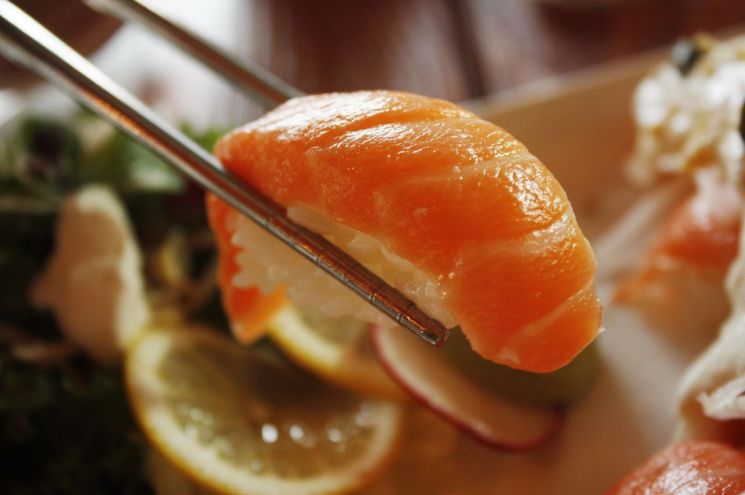
Japan's TBS broadcast reported that dozens of customers were waiting to enter the newly opened Sushiro branch inside the Xidan Joy City shopping mall in Beijing on the 21st. At that time, a notice in front of the store stated, "Maximum waiting time is 180 minutes." It explained that customers were drawn to Sushiro by the relatively low prices of 10 to 28 yuan per plate (approximately 1,900 to 5,200 won) and the store's promise to use only Chinese products following the ban on Japanese seafood imports. TBS stated, "Since the discharge of Fukushima treated water, Japanese restaurants handling seafood have faced headwinds. However, conveyor belt sushi restaurants where Japanese food can be enjoyed at low prices are becoming increasingly popular."
On the 22nd, the Chinese English-language newspaper China Daily reported that Sushiro already has 40 branches across China and is seeking further expansion. The general manager of Beijing Sushiro told China Daily, "The majority of customers are aged 18 to 35, including university students and office workers."
RFA said, "The new Sushiro store in Beijing has defied anti-Japanese sentiment." It added, "Reports on Sushiro's popularity sparked heated debates online. While TV Tokyo's related report included Japanese comments saying that the long queues at Sushiro stores say a lot about the safety of Japanese food, in China, comments mocking those flocking to Sushiro as lacking judgment were posted."
The reason for Sushiro's rising popularity despite anti-Japanese sentiment appears to be linked to the slowdown in the Chinese economy, which has thinned consumers' wallets. According to data from Chinese corporate information provider Qichacha in April, about 460,000 food service businesses closed in China in the first quarter of this year.
Meanwhile, the Japanese government expressed regret last August over the spread of anti-Japanese sentiment in China related to the ocean discharge of contaminated water from the Fukushima Daiichi Nuclear Power Plant. At a press conference at the time, Hirokazu Matsuno, Japan's Chief Cabinet Secretary, said regarding the reports of repeated anti-Japanese actions in China, "We deeply regret and are concerned that such incidents are occurring." He added, "The government will continue to provide information based on scientific evidence and at the same time make every effort to protect Japanese nationals."
© The Asia Business Daily(www.asiae.co.kr). All rights reserved.
![Clutching a Stolen Dior Bag, Saying "I Hate Being Poor but Real"... The Grotesque Con of a "Human Knockoff" [Slate]](https://cwcontent.asiae.co.kr/asiaresize/183/2026021902243444107_1771435474.jpg)
















