KCCI SGI Report... Full Implementation in 2026
"Industry Strengthens Low-Carbon Process Development
Government Participates in International Standardization of Emission Measurement"
A study has found that when the European Union (EU) Carbon Border Adjustment Mechanism (CBAM) is fully implemented in 2026, the steel industry will have to bear certification costs amounting to 3 trillion won over 10 years. It is essential for the steel industry to strengthen the development of low-carbon processes, and the government is urged to actively participate in the international standardization process for emission calculations.
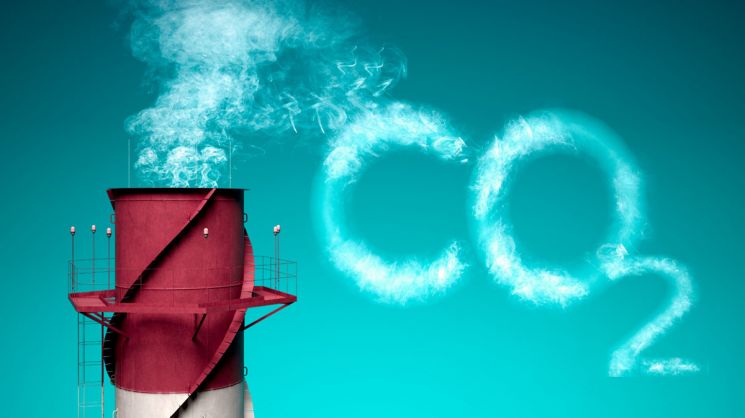
On the 27th, the Korea Chamber of Commerce and Industry's SGI (Sustainable Growth Initiative) stated this in a report titled "The Impact and Implications of CBAM Introduction on the Steel Industry." It estimated that the costs the domestic steel sector will have to bear after the introduction of CBAM will rise from 85.1 billion won in 2026 to over 550 billion won starting in 2034. CBAM is a system regulated by the EU that requires import products, which do not reflect carbon-related costs, to purchase CBAM certificates at the same level as EU-produced products. The transition period began in October last year, and it will be implemented from 2026.
The Korea Chamber of Commerce and Industry's SGI estimated that the cumulative cost of purchasing CBAM certificates for steel items will exceed 3 trillion won over 10 years. It predicted a significant increase in costs after 2030. This is because the EU plans to drastically reduce free allowances from 2030 and increase the proportion of paid allowances to 100% by 2034, leading to a sharp rise in costs after 2030.
The steel sector has the largest export scale among the six product categories subject to CBAM. As of last year, the export value of the six categories was 4.6 billion USD (approximately 6.1 trillion won). Steel accounted for 4.2 billion USD (about 5.6 trillion won), representing 91.3%. Using the Bank of Korea's input-output tables for analysis, the forward linkage effect of the steel industry on upstream industries was 1.52, significantly higher than the manufacturing industry average of 1.05. Last year, the production inducement amount through steel product exports was about 101 trillion won, and the value-added inducement amount was about 22 trillion won.
If CBAM is fully implemented and the cost burden on the steel industry increases, it is expected to negatively affect production and value creation across other manufacturing and service industries. There is significant intermediate goods demand for steel products in sectors such as non-metallic mineral products, metal processing products, electrical equipment, transportation equipment, machinery and equipment, and construction.
Kyungwon Park, a research fellow at the Korea Chamber of Commerce and Industry's SGI, said, "The costs mentioned only include the certificate prices that the steel industry must bear." He expressed concern that "considering the certificate costs that other industries such as aluminum will have to pay in the future, as well as the effects on related industries that use these industries' products as intermediate goods, the burden on the industrial sector will be much greater."
The Korea Chamber of Commerce and Industry stated that fundamentally, the carbon embedded emissions of major products such as steel must be reduced. It emphasized the importance of establishing a lineup of low-carbon products in key manufacturing sectors exporting to the EU. It also called for policies to help low-carbon products settle in the domestic market. To this end, policies like the EU Green Deal industrial plan, the US Inflation Reduction Act (IRA), and Japan's GX (Green Transformation) are necessary. The government must also actively participate in the international standard design process for embedded emissions, as companies will be required to report carbon emissions according to EU regulations starting next year.
However, it was advised to be cautious about lowering Korea's free allowance ratio or raising carbon prices to reduce the burden of purchasing CBAM certificates. Professor Sangjun Lee of Seoul National University of Science and Technology said, "If the free allowance ratio is adjusted to the EU level for CBAM response purposes, it could sharply increase the burden on companies that do not export to the EU or on products not subject to CBAM." He added, "Before adjusting the free allowance ratio, Korea should create measures to strengthen the competitiveness of domestic products compared to imported steel."
© The Asia Business Daily(www.asiae.co.kr). All rights reserved.

















