Smart Hospitals Integrating AI and IoT
Features Operational Efficiency, Clinical Excellence, and Patient-Centeredness
Global Market Expected to Grow at 19% CAGR Over 5 Years
Large domestic hospitals such as Samsung Medical Center, Yongin Severance Hospital, and Seoul Asan Medical Center are increasingly adopting innovative technologies to enhance operational efficiency and enable precise diagnosis and treatment. This move towards so-called smart hospitals has gained prominence, with more than 10 Korean hospitals being selected for two consecutive years among the 300 ‘World’s Best Smart Hospitals’ chosen by international media.
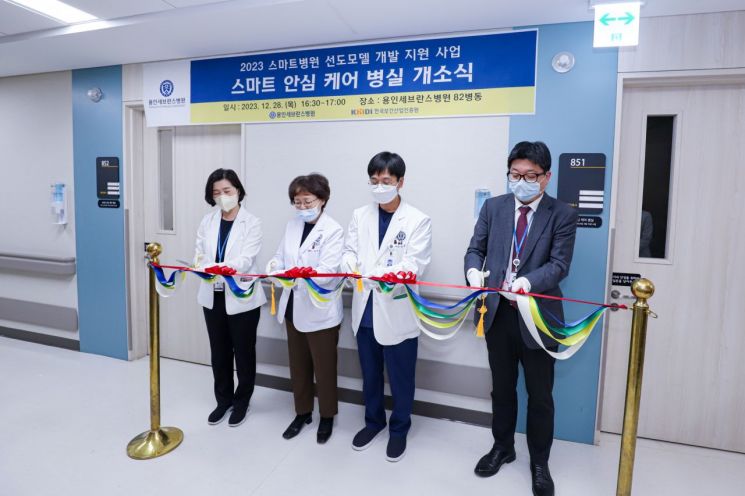 Opening ceremony of Yongin Severance Smart Safe Care Ward held in December last year / Photo by Yongin Severance Homepage
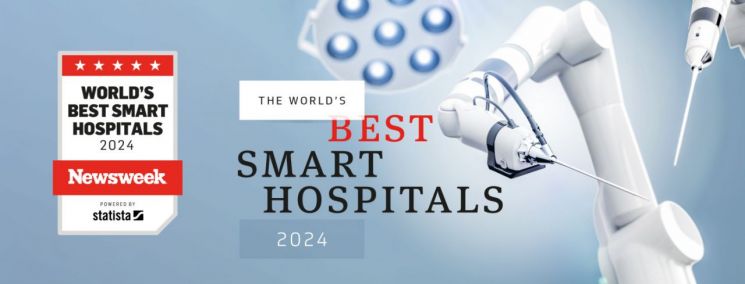
Yongin Severance Hospital opened a smart safety care ward in December last year. Using the Internet of Things (IoT), it manages risk factors for delirium such as lighting, noise, temperature, and humidity to prevent safety accidents like falls caused by severe post-traumatic delirium and cognitive impairment in elderly patients. Samsung Medical Center launched its Smart Healthcare Research Institute in 2019, integrating advanced ICT with healthcare, and introduced AI-based imaging interpretation systems and robotic surgery systems. The international news weekly Newsweek selected 14 Korean hospitals, including Samsung Medical Center (overall 25th), Seoul National University Hospital (55th), and Seoul Asan Medical Center (57th), in its ‘World’s Best Smart Hospitals 2024’ list.
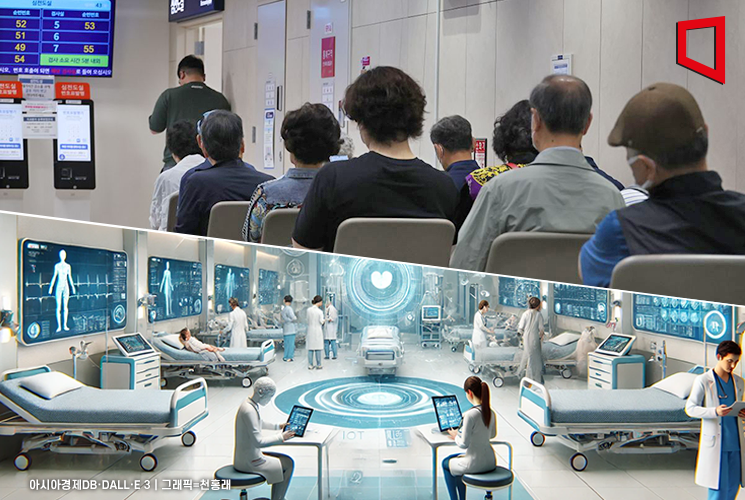
According to a market report by global market research firm Global Information Inc. (GII), the global smart hospital market size is estimated at $60.35 billion (approximately KRW 79.79 trillion) this year and is expected to reach $148.36 billion (approximately KRW 196.15 trillion) by 2029. It is projected to grow at a compound annual growth rate (CAGR) of 19.71% over five years. Particularly, the software sector is expected to experience significant growth. The report stated, "One of the most challenging tasks for hospital staff is reducing patient waiting times," adding, "The adoption of various software can help optimize workflow, improve patient care, and reduce staff burnout."
Smart hospitals are medical institutions that utilize ICT, AI, IoT, and other technologies in their operations. Innovative technologies support rapid diagnosis, treatment, automatic control of hospital environments, and remote care.
According to the paper ‘Overview and Prospects of Patient-Centered Smart Hospitals’ by Hyun-Young Park and Yong-Jin Cho from the Korean Digital Policy Association, smart hospitals aim for ▲operational efficiency ▲clinical excellence ▲patient-centeredness. This includes building automation systems (remote control and automatic adjustment of building temperature, oxygen, lighting, access control, and management), inventory and tracking management of equipment, supplies, and medicines, early diagnosis, prediction, treatment, robotic surgery, and telemedicine. From the patient-centered perspective, control of the ward environment is also included within the smart hospital scope. Abroad, Essen University Hospital in Germany is utilizing NVIDIA AI semiconductors to build a hospital platform for patient care and data management.
However, since sensitive health and personal information of patients are involved, strong security measures are required. Given the emphasis on connectivity, countermeasures against malicious software, supply chain failures involving cloud and medical device manufacturers, and destruction of facilities and infrastructure are also considered critical elements of smart hospitals.
© The Asia Business Daily(www.asiae.co.kr). All rights reserved.
![Clutching a Stolen Dior Bag, Saying "I Hate Being Poor but Real"... The Grotesque Con of a "Human Knockoff" [Slate]](https://cwcontent.asiae.co.kr/asiaresize/183/2026021902243444107_1771435474.jpg)


















