Restructuring Road Space through Han Riverfront Redevelopment
Promoting Related Connections Including Yongsan International Business District
"Will Establish a Framework for Han Riverfront Arterial Road Reorganization"
The Seoul Metropolitan Government is initiating a review of the restructuring of Gangbyeonbuk-ro and Olympic-daero. This measure aims to restore the connectivity of the Han River waterfront space, which has been segmented by arterial roads, and to enhance the linkage of Han River development projects. Improvement plans to restore the function of the Han River waterfront arterial roads will also be prepared to actively respond to future changes in traffic volume.
On the 26th, Seoul announced that it has officially launched the "Basic Plan Establishment Service for the Restructuring of Han River Waterfront Arterial Roads" to establish such a maintenance plan, with the goal of completing the basic plan by the second half of 2026.
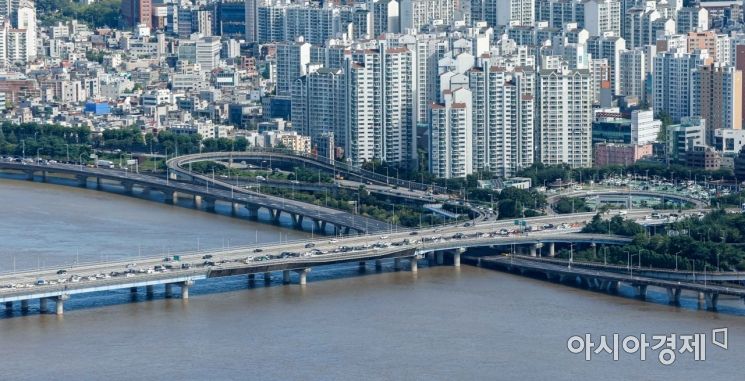
The target areas are the entire sections of Gangbyeonbuk-ro (from Gayang Bridge to Cheonho Bridge, 26.7 km) and Olympic-daero (from Haengju Bridge to Guri Amsa Bridge, 36 km). Until now, Gangbyeonbuk-ro and Olympic-daero have served as expressways for long-distance high-speed travel, playing a role in dispersing urban traffic to the outskirts. However, due to frequent congestion caused by changes in urban structure, their function as arterial roads has deteriorated, leading to increasing calls for linkage measures to overcome the disconnection between the Han River waterfront and the city center.
In response, Mayor Oh Se-hoon announced the "Gangbyeonbuk-ro Restructuring Plan" during his 2022 European tour in Madrid, Spain, which transforms the road into a daily waterfront space similar to the Madrid R?o Park, a citizen leisure space. Subsequently, with the importance of utilizing the Han River and waterfront spaces highlighted by large-scale development projects around the Han River, including the "Great Han River Project," the target section was expanded to draft a restructuring plan for the entire sections of Gangbyeonbuk-ro and Olympic-daero.
This basic plan is expected to include a comprehensive review of measures that can be linked with large-scale development projects around the Han River. By analyzing related development and transportation plans, restructuring measures for Gangbyeonbuk-ro and Olympic-daero will be prepared, and the conversion to general roads and utilization plans for the upper space will also be examined.
Coordination with major development plans around the Han River will also be discussed. The projects include ▲ Yongsan International Business District urban development project ▲ Sangam Re-creation Project ▲ Banpo District Han River Connection Park (Olympic-daero cover park) and cultural facility construction project ▲ Han River Bus (River Bus) project ▲ large-scale maintenance projects in Banpo, Jamsil, and Apgujeong areas ▲ and Dong Seoul Terminal modernization project.
To restore the original function as Han River waterfront arterial roads, efficiency improvement measures for the entry and exit system of Han River bridges will also be reviewed. Since this is a project involving a large budget, rough project costs, funding methods, and project priorities linked with related plans will be derived. Additionally, linkage measures with the "Yangjae~Goyang Expressway Private Investment Project," promoted by the Ministry of Land, Infrastructure and Transport to improve congestion in the metropolitan east-west axis, will be examined. This road is largely constructed as a deep tunnel beneath Gangbyeonbuk-ro, and it is expected to significantly affect future traffic volume changes on the Han River waterfront arterial roads.
Kim Seong-bo, Director of the Seoul Disaster and Safety Office, said, "The Han River waterfront arterial roads, which have driven Seoul's growth for nearly half a century, now have a high need to restructure to reflect the diverse demands of the changing city." He added, "Starting with this service, we will lay the foundation for spatial restructuring of the Han River waterfront arterial roads and, through this, create spaces integrated with the Han River such as parks, thereby improving citizens' quality of life and enhancing the appeal of Seoul as a global city."
© The Asia Business Daily(www.asiae.co.kr). All rights reserved.
![Clutching a Stolen Dior Bag, Saying "I Hate Being Poor but Real"... The Grotesque Con of a "Human Knockoff" [Slate]](https://cwcontent.asiae.co.kr/asiaresize/183/2026021902243444107_1771435474.jpg)
















