Only 109 Certification Bodies
Employers Bear Labor Costs
"Support Level for Employers Must Be Increased"
This year marks the second anniversary of the Household Workers Act, which guarantees minimum wage and other protections to housekeepers registered with government-certified agencies. However, only 3% of household service providers are government-certified, raising concerns about the law's effectiveness.
According to the Ministry of Employment and Labor on the 23rd, as of last month, only 109 out of approximately 3,400 household service providers (3%) were government-certified. The number of housekeepers directly employed by these agencies is estimated at around 1,800. Considering that the estimated number of "household and childcare helpers" based on the Statistics Korea’s regional employment survey was 105,000 in the second half of last year, only 1.7% of all workers belong to government-certified agencies.
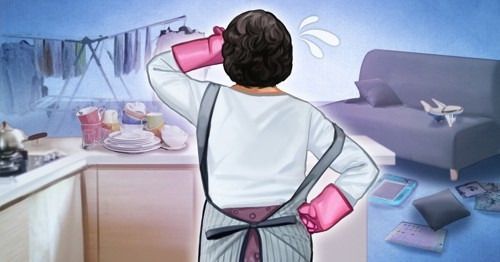
This indicates that the majority of housekeepers are working in vulnerable labor conditions. The Household Workers Act guarantees minimum wage, the four major social insurances, and paid annual leave to workers directly employed by government-certified agencies. Until now, housekeepers were excluded from the Labor Standards Act and did not receive minimum wage, social insurance, or retirement benefits. Currently, except for the 1.7% directly employed, housekeepers remain in a labor blind spot.
Employers Concerned About Increased Labor Costs... High Capital and Employment Requirements
Although the Household Workers Act was established to address these issues, the response from the field has been lukewarm.
Service providers hesitate to apply for government certification due to cost concerns. Becoming a certified agency increases labor costs for employers, including value-added tax, retirement pay, and social insurance premiums. While 80% of employment insurance and national pension costs are subsidized during certification, this support ends after 36 months. Although value-added tax exemption of 10% continues, employers find the potential burden of social insurance premium support termination daunting.

A representative of a job placement agency in Nowon-gu, Seoul, Mr. A, said, "I considered applying for government certification but gave up," adding, "Since it is uncertain whether there will always be customers, paying 100,000 KRW monthly for the worker’s four major insurances is burdensome."
High application thresholds also discourage certification applications. According to the Ministry of Employment and Labor’s standards for household service providers, formal certification requires employing five paid workers. Additionally, the agency must be incorporated and have capital of at least 50 million KRW.
Majority of Workers Are Elderly... Low Appeal of National Pension and Employment Insurance Support
Even the housekeepers themselves do not highly favor the system. Although minimum wage and the four major insurances apply when directly employed by certified agencies, many workers are elderly and thus excluded from national pension and employment insurance coverage after turning 60 or 65, reflecting the industry’s demographic characteristics.
A representative of a job placement agency in Seongbuk-gu, Seoul, said, "Since part of the four major insurance premiums is deducted from wages, elderly employees complain that they have nothing left," adding, "They prefer to find short-term jobs through job applications instead."
The labor community emphasizes the need to improve support measures to enhance the system’s effectiveness. Choi Young-mi, head of the Korea Household Workers Association, pointed out, "Employers face a 30% increase in labor costs when establishing corporations and supporting the four major insurances," adding, "Government support is insufficient compared to the costs they must bear."
She continued, "Considering the industry’s high proportion of elderly workers, it is necessary to consider measures such as providing health insurance support instead of national pension and employment insurance for housekeepers over 60 years old."
© The Asia Business Daily(www.asiae.co.kr). All rights reserved.
![Clutching a Stolen Dior Bag, Saying "I Hate Being Poor but Real"... The Grotesque Con of a "Human Knockoff" [Slate]](https://cwcontent.asiae.co.kr/asiaresize/183/2026021902243444107_1771435474.jpg)

















