No Change in Radioactive Concentration at All Survey Points Before and After Discharge
Imported, Produced, and Distributed Seafood Detected Below Inspection Standards
The city of Busan (Mayor Park Hyungjoon) announced on the 22nd that, as a result of operating a scientific and objective radiation monitoring and analysis system, the sea and seafood of Busan remain "safe" even one year after the discharge of contaminated water from Fukushima.
The city is thoroughly implementing double and triple radiation monitoring and analysis for seawater and seafood, and transparently discloses the results of its monitoring and analysis.
From January 1, 2023 to August 16, 2024, radiation analysis was conducted on 572 samples of coastal seawater and 2,934 samples of seafood and food products.
The city inspects radiation levels in seawater at 25 monitoring points within its waters, and confirmed that radiation concentrations at all sites have remained unchanged both before and one year after the discharge. In particular, to verify the safety of Busan’s sea, a comparative analysis was conducted with seawater from the east, west, and south coasts outside the area.
Of the 25 sites, seawater from 14 coastal locations is analyzed by the Institute of Health and Environment and local university research institutes, and the radiation concentration was found to be much lower than the World Health Organization (WHO) drinking water standards.
At the remaining 11 unmanned rapid monitoring network sites, no radiation was detected in the seawater.
Comparative analysis with seawater from five sites on the east, west, and south coasts?Chojon Mongdol Beach in the South Sea, Jangdeung Beach in Yeosu, Samsan Port in Jangheung, Seonyu Port in Gunsan, and Hupo Port in Uljin?also showed that radiation concentrations in all seawater samples were within the normal range.
For seafood, thorough radiation inspections and monitoring were conducted at every stage of import, production, and distribution to ensure safety. In addition, the city enforced the seafood origin labeling system and promoted seafood consumption campaigns.
The government bans the import of seafood produced in Fukushima Prefecture and eight neighboring prefectures in Japan at the import stage. For seafood from other regions of Japan, radiation is tested at each import, and if any trace of radiation is detected, an additional radioactive nuclide inspection certificate must be submitted.
Accordingly, from last year to August 16 of this year, Busan collected and tested 2,934 samples of seafood at the production and distribution stages, and all were found to be below the standard radiation limits.
From last year to August 16 of this year, the city conducted 15,720 inspections related to the origin labeling system and detected 82 violations (41 cases of no labeling and 41 cases of false labeling).
In particular, an analysis using big data and monthly transaction amounts and counts from credit card companies at 15 major seafood sales areas in the city showed that, compared to July 2023 (before the discharge), both transaction amounts (up 81%) and transaction counts (up 103.3%) increased after the discharge. According to the Korea Maritime Institute (KMI), Busan recorded the highest seafood sales by credit card in 2023 over the past five years.
Since March last year, Busan has established a dedicated response team for the Fukushima contaminated water issue, led by the Deputy Mayor for Administrative Affairs, and has been actively responding while building and operating a scientific and objective radiation monitoring and analysis system.
Furthermore, the city’s Institute of Health and Environment and Fisheries Resources Research Institute are thoroughly conducting radiation inspections of seafood and food products at the distribution stage and seafood at the production stage, respectively.
In addition, the city transparently discloses the results of radiation monitoring and analysis in real time through various media, such as outdoor electronic billboards, bus information terminals, and platform displays (PDP) in the urban railway.
Mayor Park Hyungjoon stated, "Even one year after the discharge of contaminated water from Fukushima, the sea and seafood of Busan are scientifically and objectively safe. We will continue to prioritize the health and safety of our citizens by flawlessly operating the Fukushima contaminated water monitoring and analysis system to further enhance the safety of Busan’s sea and seafood."
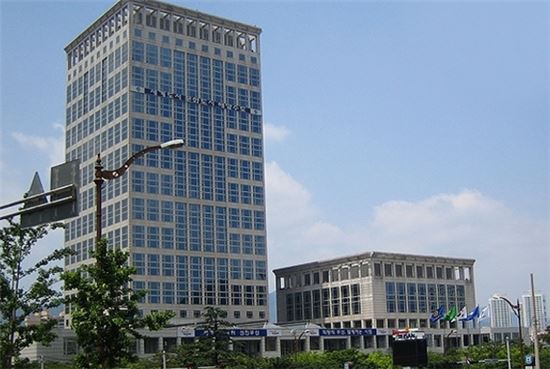 Busan City Hall.
© The Asia Business Daily(www.asiae.co.kr). All rights reserved.
![Clutching a Stolen Dior Bag, Saying "I Hate Being Poor but Real"... The Grotesque Con of a "Human Knockoff" [Slate]](https://cwcontent.asiae.co.kr/asiaresize/183/2026021902243444107_1771435474.jpg)















