Revision of 2030 Urban and Residential Environment Improvement Plan Approved
Re-exhibition from Next Month 5th, Final Announcement Scheduled in September
Introduction of Profitability Adjustment Factor, Recognition of Current Floor Area Ratio... Overlapping Allowed for Reconstruction
Relaxation of Floor Area Ratio Standards for Type 1 & 2 General Residential and Semi-Industrial Areas
Seoul City will reorganize the basic plan for maintenance projects starting in September to enhance project feasibility and expand housing supply. It will introduce a project feasibility correction factor and recognize the current floor area ratio, while reducing the public contribution rate to 10% when zoning is upgraded. The overlapping application of the project feasibility correction factor and current floor area ratio, which had only been applied to redevelopment, will now be partially allowed for reconstruction projects as well.
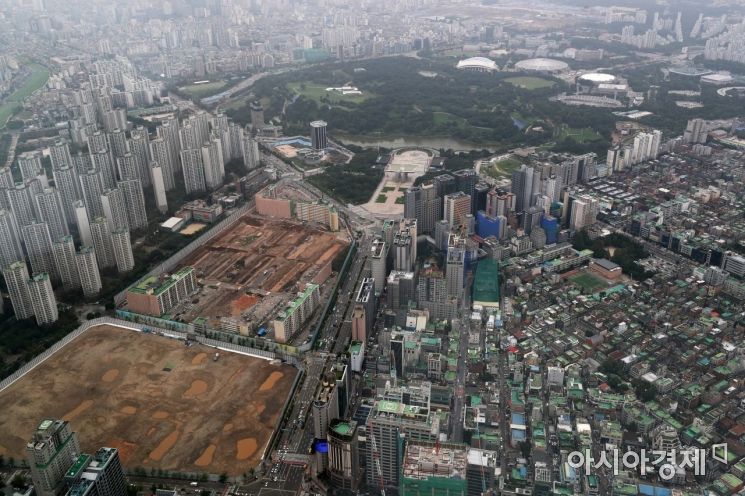
On the 22nd, Seoul City announced that it held the 12th Urban Planning Committee meeting and approved the revision of the "2030 Seoul Metropolitan City Urban and Residential Environment Maintenance Basic Plan (Residential Environment Maintenance Project section)." After a 14-day public reinspection announcement from the 5th of next month, the revised basic plan will be officially promulgated in September.
The 2030 Urban and Residential Environment Maintenance Basic Plan is a fundamental plan established under the Urban and Residential Environment Maintenance Act, aiming to redevelop old and deteriorated housing areas. This revision focuses on revitalizing maintenance projects and supplementing limitations such as rigid floor area ratios, building height plans, and reduction of target areas to stably supply housing.
The revision includes measures to improve project feasibility such as △ introduction of a project feasibility correction factor △ recognition of current floor area ratio △ relaxation of floor area ratio standards in Type 1 and 2 General Residential Areas and Semi-Industrial Areas △ easing of public contribution rates. The current floor area ratio refers to the floor area ratio of housing complexes as recorded in the building register, while the allowable floor area ratio is calculated by adding the base floor area ratio and the floor area ratio provided as an incentive. The maximum floor area ratio is an additional floor area ratio provided when public facilities are offered, summed with the base and allowable floor area ratios.
The project feasibility correction factor is a system that applies a correction factor of up to 2.0 to the allowable floor area ratio, considering not only land prices but also complex size and density, to reduce project feasibility disparities between regions within Seoul and enhance feasibility. The correction factor multiplies the allowable floor area ratio incentive, increasing the incentive range from the current 20% to a maximum of 40% after application.
The formula for the project feasibility correction factor is calculated by adding the official land price correction factor (the average official land price of Seoul divided by the average official land price of the project site), the site area correction factor, and the household density correction factor. However, for redevelopment, only the official land price correction factor is applied.
In reconstruction projects, the lower the official land price and the smaller the site area (land), and the higher the number of small-sized households, the higher the correction factor applied. For example, in a Type 3 General Residential Area where the base floor area ratio is 210% and the allowable floor area ratio is 20%, applying a correction factor of 2.0 raises the allowable floor area ratio to 40%. Consequently, the supply of sale housing increases by 10 percentage points, expanding sales revenue and improving project feasibility.
For complexes or areas already built exceeding the allowable floor area ratio, the current floor area ratio is recognized as the base floor area ratio. In redevelopment, buildings exceeding the ordinance floor area ratio within Type 1 and 2 General Residential Areas (150% for Type 1, 200% for Type 2) are recognized as the base floor area ratio up to the maximum legal ceiling floor area ratio according to the site area ratio. In reconstruction projects, overcrowded complexes can fully secure the current floor area ratio without public contribution. Previously, if the current floor area ratio was higher than the allowable floor area ratio, securing beyond the allowable floor area ratio required public contribution. Currently, there are 149 overcrowded old complexes (87,000 households) in Seoul exceeding the current floor area ratio standards.
Additionally, Seoul City will partially allow the overlapping application of the project feasibility correction factor and current floor area ratio to reconstruction projects. This measure considers fairness between overcrowded reconstruction complexes and general complexes, as well as the practical effect of improving project feasibility. In overcrowded complexes recognized for the current floor area ratio, the project feasibility correction factor can be applied to the allowable floor area ratio incentive amount (up to 20 percentage points) of general complexes. The allowable floor area ratio of complexes with low feasibility can be determined up to 20% higher than the maximum current floor area ratio.
For example, in an overcrowded complex in a Type 3 General Residential Area with a current floor area ratio of 260%, applying a project feasibility correction factor of 1.5 allows an additional 10 percentage points beyond the current floor area ratio, resulting in a final allowable floor area ratio of 270%.
The floor area ratio and building height in Type 1 and 2 General Residential Areas and the densely populated Semi-Industrial Areas will also be relaxed. In Type 1 General Residential Areas, where buildings were previously limited to 4 floors or less, up to 6 floors including pilotis will now be allowed. The legal ceiling floor area ratio will be expanded from the existing 150% to 200%. The allowable floor area ratio in Type 2 General Residential Areas will also be increased from 200% to 210%. The legal ceiling floor area ratio in Semi-Industrial Areas will be relaxed up to 400%, whereas previously it was only applied up to 250%, the same as Type 3 General Residential Areas.
The public contribution rate will be reduced from the existing 15% to 10% when zoning is upgraded. When introducing rental housing and strategic use facilities (such as elderly welfare facilities), the donation coefficient applied to buildings under the maximum floor area ratio will be increased from 0.7 to 1.0. The plan to apply the acquisition price of public rental housing up to 80% of the basic construction cost will be implemented between September and October after the revision of the enforcement decree.
To secure public interest in maintenance projects, Seoul City will increase the number of allowable floor area ratio incentive items from 6 to 12. Incentives will be provided for creating public pedestrian pathways and open complexes, installing care and elderly service facilities, obtaining barrier-free building certification for the disabled, and achieving floor impact sound performance grades to prevent noise between floors. Additionally, incentives will be given for eco-friendly buildings, long-life housing and excellent design, waterfront-friendly spaces, improvements in safety performance (firefighting and evacuation) of apartment complexes, installation of retention basins, and urban air mobility facilities.
To respond to the climate crisis, new incentives will be introduced for Zero Energy Buildings (ZEB) and green building certification. These will be applied linked to land prices, with lower land prices allowing for greater eco-friendly incentives. They can be selectively applied to the maximum or allowable floor area ratio, and when eco-friendly incentives are applied to the maximum floor area ratio, incentives up to twice the amount reflecting land prices will be provided.
Yoo Chang-soo, Seoul City Administrative Deputy Mayor, said, "Through this revision of the ‘2030 Basic Plan,’ Seoul City will take the lead in implementing the recently announced '8·8 Housing Supply Expansion Plan,' significantly improving the maintenance conditions of deteriorated old residential areas and revitalizing projects that have lacked momentum."
© The Asia Business Daily(www.asiae.co.kr). All rights reserved.
![Clutching a Stolen Dior Bag, Saying "I Hate Being Poor but Real"... The Grotesque Con of a "Human Knockoff" [Slate]](https://cwcontent.asiae.co.kr/asiaresize/183/2026021902243444107_1771435474.jpg)
















