Tibetan Plateau Enters a Very Warm and Humid Phase
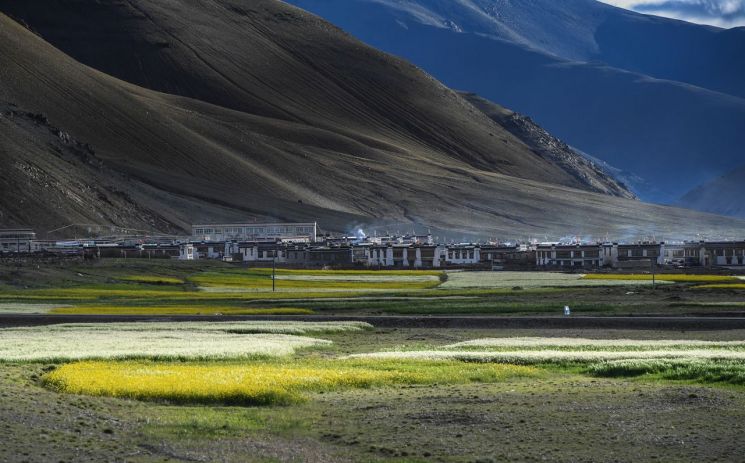
Chinese scientists have warned that due to rapid global warming, more than half of the glaciers on the Tibetan Plateau, known as the "Roof of the World," could melt away by the end of the 21st century.
On the 20th, according to China's state-run Xinhua News Agency and Hong Kong's South China Morning Post (SCMP), a research team led by Yao Tandong, an academician of the Chinese Academy of Sciences, announced the results of the second Qinghai-Tibet Plateau scientific expedition in Lhasa, Tibet Autonomous Region, containing this information.
The research team stated, "The Tibetan Plateau is entering a very warm and humid phase," and pointed out that "by the end of the 21st century, more than half of the glaciers in some areas will melt, and lake levels will rise by more than 10 meters."
According to the study, from 1960 to the early 2010s, over the past 50 years, the Tibetan Plateau's temperature rose by about 0.4 degrees every decade. The researchers noted that this rate is more than twice the average global warming speed during the same period.
The team also revealed that due to global warming, the grassland and forest areas on the Tibetan Plateau have increased by 6% and 12%, respectively, over the past 15 years. While the increase in vegetation helps prevent desertification, it brings long-term changes to the monsoon circulation, resulting in more rainfall during the summer.
Academician Yao Tandong warned, "Significant changes in the Asian monsoon circulation could lead to more frequent extreme abnormal weather events in China." He also advised, "Countries located in the lower reaches of rivers will need to manage water resources more effectively in the future."
© The Asia Business Daily(www.asiae.co.kr). All rights reserved.

















