440,000 People Last July... Highest Since Statistics Began
Top Reason for Not Working: 'No Desired Job Available'
Last month, the number of young people who were neither working nor seeking jobs reached an all-time high as of July.
On the 18th, Statistics Korea announced that the number of young people (aged 15?29) who were 'resting' in July was recorded at 443,000.
This figure is 42,000 higher than the same period last year, surpassing the COVID-19 pandemic period and marking the highest number ever recorded for the same month since related statistics began.
'Resting' refers to those who are not employed or unemployed but are part of the non-economic active population who are not engaged in economic activities despite having no serious illness or disability.
The number of resting youth was in the 200,000 range in July from 2013 to 2017, then exceeded 300,000 in 2018. It continued to rise, reaching 441,000 in 2020, the first year of the COVID-19 pandemic. It decreased to 361,000 in 2022 but has been rising again since last year (402,000).
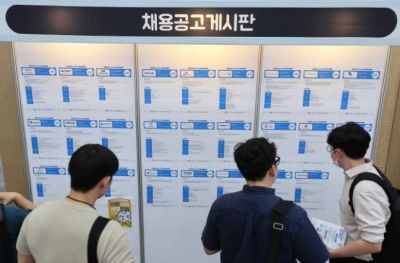
By age group, the number of resting people in their 40s last month was 284,000, the lowest among all age groups. Those in their 30s numbered 288,000, while those in their 50s recorded 394,000. In other words, the youth population is relatively high compared to other age groups.
Among the 8.15 million young people last month, 443,000 were resting, accounting for 5.4%. This is the highest level recorded for July. The rate increased from 4.1% in 2019 to 5.0% in 2020 due to the COVID-19 pandemic, then decreased to 4.2% in 2022, but has risen again since last year (4.8%), reaching the 5% range this year.
According to an analysis of employment trend microdata (MD), not only is the number increasing, but these individuals also show no intention to work. Among the resting youth (443,000), 335,000, or 75.6%, answered that they did not want to work when asked.
The most common reason for not seeking a job was "I think there are no jobs that meet my desired wage level or working conditions," accounting for 42.9%.
This was followed by "I looked before, but there were no jobs" (18.7%), "Lack of education or technical experience" (13.4%), and "I think there are no jobs nearby" (11.1%).
© The Asia Business Daily(www.asiae.co.kr). All rights reserved.
![Clutching a Stolen Dior Bag, Saying "I Hate Being Poor but Real"... The Grotesque Con of a "Human Knockoff" [Slate]](https://cwcontent.asiae.co.kr/asiaresize/183/2026021902243444107_1771435474.jpg)











