800 Billion Won Revenue Last Year, 74% Dependence on China
Diversifying Import Sources to Thailand, Vietnam, etc.
Self-Supply Possible in Zinc Smelting Process
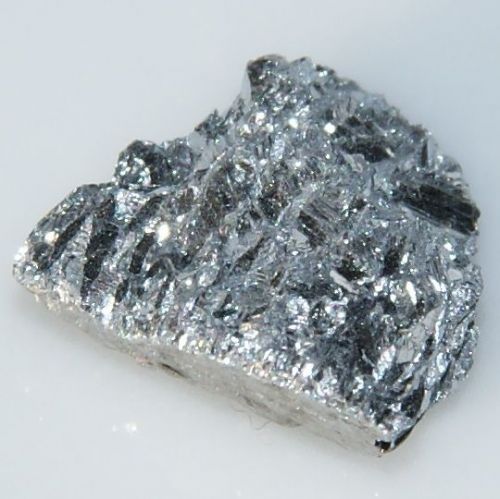
The government forecasted on the 16th that the impact of China's announced export controls on antimony will be limited domestically. The Ministry of Trade, Industry and Energy stated this during the 'Industrial Supply Chain Inspection Meeting' held at the Korea Chamber of Commerce and Industry in Jung-gu, Seoul, with related agencies and industry representatives in attendance.
The meeting included officials from related ministries such as the Ministry of Economy and Finance and the Ministry of Foreign Affairs, as well as representatives from industry associations in sectors including batteries, fine chemicals, electronics, machinery, and semiconductors, the Materials, Parts, and Equipment (SoBuJang) Supply Chain Center, and the Korea Mining and Resources Corporation.
The Chinese Ministry of Commerce announced the day before that it will impose export controls on antimony, a semi-metal used as a raw material for batteries and other products, starting from July 15. China claims that these export controls are measures to protect national security and interests and to fulfill obligations such as international nuclear non-proliferation.
Antimony is a material mainly used in lead-acid batteries and flame retardants. South Korea imported antimony worth $59.2 million (approximately 80 billion KRW) last year. The dependence on imports from China is about 74% ($43.8 million). China is the world's largest producer of antimony, estimated to have accounted for about half of the global antimony production last year.
China's export control this time adds an export licensing procedure rather than a ban on exports. Similar to previous cases with gallium and graphite, imports are possible if an export license is obtained.
As a result of discussions with the industry and others at the meeting, the domestic supply chain impact of this export control is expected to be limited. For antimony (metal) used in lead-acid batteries, import sources have diversified to countries such as Thailand and Vietnam, and for antimony (oxide) used in flame retardants, it was identified that alternative materials exist for antimony below the controlled specification of 99.99% purity.
Furthermore, antimony is also produced domestically as a byproduct during the smelting process of zinc and other metals, making domestic procurement possible. Additionally, the Korea Mining and Resources Corporation holds a stockpile of about 80 days' worth of antimony, which can be used to respond in case of supply disruptions.
Regarding antimony used in semiconductor production, the amount used is minimal, and small quantities are imported from the United States and Japan, so the impact is expected to be minor.
The Ministry of Trade, Industry and Energy also anticipated no direct impact from the ultra-hard material items included in the export control list by the Chinese government this time, as these are imported from the United States and Japan or produced domestically.
Lee Seung-ryeol, Director of Industrial Policy at the Ministry of Trade, Industry and Energy, who chaired the meeting, said, "Despite China's previous export controls on graphite, gallium, and germanium, export licenses for these items destined for South Korea have been issued normally," adding, "We will strengthen monitoring with related ministries and agencies to prevent supply disruptions and cooperate closely with the Chinese government."
© The Asia Business Daily(www.asiae.co.kr). All rights reserved.
![Clutching a Stolen Dior Bag, Saying "I Hate Being Poor but Real"... The Grotesque Con of a "Human Knockoff" [Slate]](https://cwcontent.asiae.co.kr/asiaresize/183/2026021902243444107_1771435474.jpg)
















